Owners Club · Digital service history
Volkswagen ID. Buzz Cargo Owners Club — Maintenance & Provenance
Independent owners’ resource. This page is produced by The Owners Club and is not affiliated with, endorsed by, or sponsored by Volkswagen AG or Volkswagen UK. Information below is gathered from public sources and should be confirmed in your vehicle handbook (VIN) or with an authorised retailer before booking work. ID. Buzz Cargo is the commercial panel-van member of the ID. Buzz family — production from 2022. It shares the electric technology family with passenger ID. Buzz but has a fundamentally different ownership mission: payload, load volume, commercial duty cycle, charging, towing and business uptime. It keeps a separate model hub from passenger ID. Buzz.
Own an ID. Buzz Cargo? Build a digital record of battery health, fleet charging history, payload and conversion documentation, service events, sliding-door/load-area condition and ownership documents. The strongest product path here is EV knowledge → battery & charging record → digital service history → provenance → Transfer Pack.
Arrived from a club search? See the exact-match Volkswagen ID. Buzz Cargo Owners Club landing — then use this hub for platforms, issues and the full guide cluster.
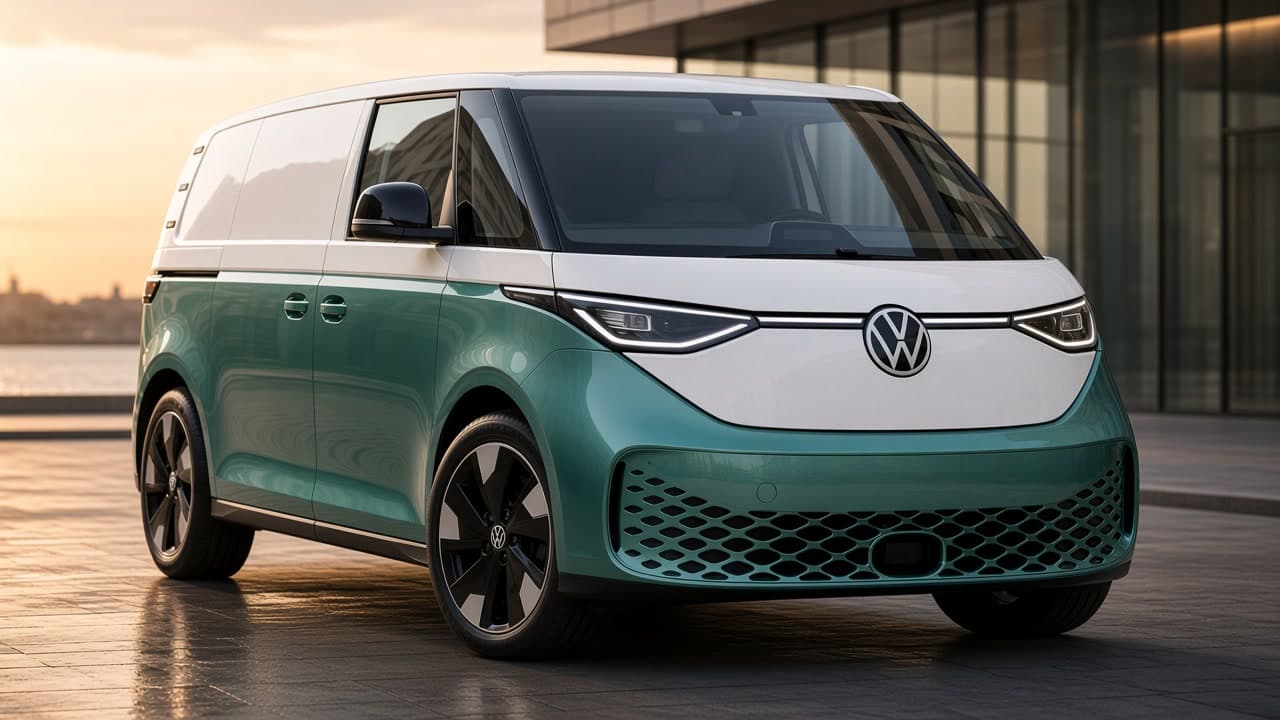
Latest ID. Buzz Cargo News
Updated 2026- Commercial / productGlobal
ID. Buzz Cargo
Dedicated electric commercial van.
2022–Product
- Fleet / provenanceGlobal
Electric business use
Charging and payload records become key fleet-provenance signals.
OngoingOwnership
- Platform / familyGlobal
ID. Buzz family expansion
Passenger Buzz and Cargo share technology but remain separate ownership use cases.
2022–Family
Read first — commercial MEB panel-van ownership framing
For ID. Buzz Cargo, the most important ownership data is battery health, fleet charging history, payload and conversion documentation, commercial duty cycle, sliding-door/load-area condition, software version, 12V, high-voltage systems, brakes/tyres, service history, recalls and market-specific specifications. Do not merge this hub into passenger ID. Buzz. Do not treat one market’s launch sheet as global law. Battery displayed range is not a State-of-Health test.
1. Generations & platform
First generation — 2022–present (MEB commercial)
One production generation under ID. Buzz / MEB-derived electric commercial architecture. Early ID. Buzz Cargo used a 77 kWh-class battery, rear electric drive, 150 kW-class output, AC 11 kW and DC fast charging up to ~170 kW class. Battery, motor, software, payload and market configurations evolve by model year — confirm VIN.
Market naming, equipment and exact outputs vary. Always tie power, battery, charging, payload and towing figures to derivative, model year and market — confirm VIN. Related Vehicles: passenger ID. Buzz shares MEB architecture at high VCE relevance — hubs remain separate; never assume parts identity.
2. Body style
Electric panel van
Dedicated battery-electric commercial panel van — not a passenger ID. Buzz trim. Separate model page and hub. Launch published load space approximately 3,900 litres with load width between arches 1,230 mm and load height 1,279 mm — VIN/market specific.
3. Body & load space
Published launch technical data — exact values must be VIN/market specific. Commercial records should capture how the van was actually used, not just headline litres.
- Length: 4,712 mm · width excluding mirrors: 1,985 mm · wheelbase: 2,989 mm
- Load space: approximately 3,900 litres
- Load width between arches: 1,230 mm · load height: 1,279 mm
- Maximum payload in cited launch configuration: 648 kg — confirm for your VIN and registration class
- Braked towing capacity: up to 1,000 kg on the cited configuration — market-label carefully
Record bulkhead, sliding-door configuration, rear door/tailgate, load floor, tie-down points, shelving, racking, refrigeration and roof equipment in provenance.
4. Battery & high-voltage system
Launch technical data: 77 kWh-class lithium-ion battery with rear electric motor. Later battery configurations may differ. Always distinguish gross capacity from usable/net capacity.
- Store grossCapacityKWh, netCapacityKWh, batteryCode, modelYear, market, payload, wheelbase and body configuration
- Record warranty status, SoH diagnostics, HV warnings and battery-related repairs as separate provenance
- Never infer battery health from displayed range alone
Battery codes, chemistry generation and charging curve details should come from Volkswagen documentation for the VIN — do not invent one universal “Cargo battery size”.
5. Electric drive
Early Cargo technical data — exact motor/output is model-year specific. Confirm handbook and VIN.
Launch configuration (founder framing)
Rear electric motor · rear-wheel drive · 150 kW-class output · single-speed reduction · 77 kWh-class battery. Later evolutions differ by model year and market.
Exact outputs, payload allowances and equipment are model-year and market specific. Use the market selector for regional framing.
6. Charging
- AC 11 kW onboard (launch technical data)
- DC fast charging up to ~170 kW class
- Around 30 minutes 10–80% under suitable conditions
- Commercial use makes charging uptime particularly important — track energy, session duration, peak power, charger, location, cost, charging faults and fleet patterns
- Actual performance depends on SoC, battery temperature, charger capability, ambient temperature, station load and vehicle software
Log depot wallbox, AC/DC sessions, duration, provider and interruptions separately from workshop service stamps — charging history is EV provenance.
7. Fleet duty cycle
This is a major difference from passenger ID. Buzz. Commercial provenance should capture how the van earned its miles.
- Annual mileage · daily mileage · urban vs motorway mix
- Payload history · stop/start frequency · towing
- DC charging frequency · home/depot charging · commercial operating hours
- Refrigeration/conversion loads · roof equipment · fleet telematics where used
A fleet-operated van with complete charging and maintenance records can have a much stronger provenance story than a similar vehicle with an undocumented commercial history.
8. Practicality & load-area records
Commercial records should include equipment and wear beyond passenger-car checklists.
- Load volume · payload · bulkhead · sliding-door configuration
- Rear door/tailgate · load floor · tie-down points · shelving · racking
- Refrigeration · accessibility conversion · signwriting · roof rack
Photograph load-area damage, water ingress and racking fixings for resale provenance.
9. Honest pros
- Zero-tailpipe-emission commercial operation
- High load volume (~3,900 L launch framing)
- Electric urban delivery suitability
- Low-speed refinement and strong access
- Distinctive fleet identity
- Useful depot/home charging potential when infrastructure fits the duty cycle
10. Honest cons / things to consider
- Payload/range trade-off under load
- Large frontal area and heavy vehicle mass
- Commercial duty can increase tyre/brake/suspension wear
- DC charging downtime matters in fleet operation
- Conversion history can complicate provenance
- Specialist HV repair requirements
11. Common owner/fleet themes
Not diagnostic advice — these are discussion categories owners and fleet operators may document. Do not treat them as confirmed defects unless supported by manufacturer documentation, recalls or reliable technical evidence.
Charging
Depot charging, public charging, DC performance, session interruptions and fleet charging patterns.
Range
Payload/range trade-off, speed, temperature, HVAC and equipment loads.
Fleet uptime
Downtime from charging, repairs, sliding doors, conversions and duty-cycle mismatch.
12V system
Low-voltage battery condition, wake/sleep behaviour — weak 12V can mimic HV faults.
Software
Infotainment, vehicle software, OTA updates and connected services.
Sliding doors
Sliding-door hardware wear, latches, runners and fleet stop/start use.
Load-area wear
Floor damage, bulkhead integrity, tie-downs, water ingress and racking stress.
Tyres & suspension
Wear on a heavy commercial EV, load ratings, stop/start urban use and alignment.
Payload & towing
Rated payload history, towing use and registration-class limits — VIN/market specific.
Conversion equipment
Refrigeration, racking, electrical mods, accessibility equipment and signwriting provenance.
12. Service & maintenance (commercial EV)
Do not copy an ICE service schedule onto an EV. Intervals and inspection requirements vary by market, model year, registration class and derivative — always verify the VIN-specific Volkswagen maintenance schedule.
| Item | Typical interval | Notes |
|---|---|---|
| Scheduled EV inspection / service | Per Volkswagen VIN schedule (often calendar-led) | MEB ID. family — not ICE Fixed 9,300-mile cycle. UK: ID. family inspection every 2 years with no mileage limit under normal use — confirm handbook. |
| Brake fluid | Calendar (often ~24 months) | Fluid absorbs moisture even when regen reduces pad wear. |
| 12V battery test | Every service / sooner if symptoms | Load-test — separate from HV pack provenance. |
| Cabin / pollen filter | Often ~12 months | Annual habit on most EVs. |
| Tyres & alignment | Regular / every service | Heavy commercial EV — watch wear, load ratings and stop/start urban use. |
| Brake pads / discs / corrosion | Every service | Regen can leave discs under-used — inspect for corrosion. |
| Suspension & steering | Every service / as needed | Payload and pothole wear — log with invoices. |
| Coolant circuits / thermal system | Per Volkswagen schedule | HV and cabin thermal loops — specialist EV work. |
| High-voltage system inspection | Per Volkswagen schedule / campaign | Authorised EV technician — log warnings and repairs. |
| Software / OTA check | At service or when prompted | Record version + date in Digital Service History. |
| Sliding-door hardware & load-area inspection | Every service / as needed | Commercial wear item — runners, latches, floor, bulkhead, tie-downs, water ingress. |
| Conversion equipment & fleet charging records | Owner / fleet / at service | Refrigeration, racking, electrical mods, recall/campaign check; log depot/public charging separately from workshop stamps. |
Service intervals and inspection requirements vary by market, model year and registration class. Always verify the VIN-specific Volkswagen maintenance schedule.
13. EV battery health & provenance
Battery health is a first-class provenance category for ID. Buzz Cargo. Distinguish manufacturer diagnostic results, owner-reported range estimates and third-party battery tests.
- SoH % / diagnostic report, date, mileage, test provider
- Charging behaviour notes and software version at test time
- Warranty status, HV warnings, module repairs and battery-related work
- Store documents against the vehicle for resale / Transfer Pack
Never infer battery health from displayed range alone. Charging records should stay separate from workshop service stamps.
14. Inspection & roadworthiness
Commercial registration may change inspection frequency, weight requirements, tax, usage rules, speed limits and driver licensing requirements. Terminology adapts by country — never title every market’s test “MOT”.
- Use the vehicle’s actual registration class and market — not passenger-car assumptions
- Record the local certificate separately from manufacturer service stamps
- EV-specific items (HV isolation warnings, tyre/brake condition, suspension, load-area safety) still matter at inspection
Confirm requirements for the vehicle’s registration market.
15. Recalls & campaigns
- Check VIN on official Volkswagen / national safety portals for your market
- Log campaign ID, completion date and software version after work
- Do not assume a campaign from one market applies to every Cargo worldwide
Recall and campaign availability can vary by market, production date, software version and VIN. Never display “this van has no recalls” unless the specific VIN has been checked against an authoritative source.
16. Official resources
Official links are for convenience. The Owners Club has no commercial relationship with Volkswagen AG. Confirm manuals, charging and battery terms against your own documentation. Prefer VIN-specific Volkswagen Owner’s Manual lookup over invented deep links.
- Volkswagen Owner’s Manual — VIN-specific lookup and model/year selection (use Volkswagen’s official manual system for your market)
- Volkswagen technical/model information for specifications, charging, battery, payload and equipment
- Regional government recall databases (NHTSA, GOV.UK/DVSA, EU/national systems)
17. Buying a used ID. Buzz Cargo
- Commercial history: fleet use · previous operator · annual mileage · delivery duty cycle · payload history · towing · conversion
- Vehicle: VIN · battery health · charging · 12V · software · HV warnings · tyres · brakes · suspension · steering
- Load area: floor · bulkhead · doors · locks · tie-downs · water ingress · racking · refrigeration · electrical modifications
- Documents: service · fleet invoices · recall history · inspection · battery report · charging records · conversion documentation · original equipment
18. Related Vehicles
Passenger ID. Buzz shares MEB / ID. Buzz technology at platform level — Related Vehicles in the Vehicle Context Engine, not automatic component compatibility.
- Passenger ID. Buzz hub: ID. Buzz — separate ownership use case and hub
- Other MEB models (ID.3, ID.4, ID.5, ID.7) may appear at lower relevance — hubs stay separate
Shared MEB architecture creates related-vehicle context, not automatic parts identity.
19. Own an ID. Buzz Cargo? Protect its resale value
For a commercial EV panel van, the ownership story is more than mileage. Battery health, fleet charging history, payload/conversion records, load-area condition, servicing and documented repairs can all become part of the vehicle’s provenance. Know your car. Record its history. Connect with owners. Keep its story.
- Add ID. Buzz Cargo to Garage — free digital ownership record
- Record battery health, fleet charging history and software versions
- Track servicing, inspections, sliding doors, load area, conversions, tyres/brakes and recalls with invoices
- Build a Transfer Pack for the next operator
Guides & checklists
More Volkswagen models
Compare platforms, service themes and digital service history tools across the range.
FAQ
Is ID. Buzz Cargo fully electric?+
Yes. ID. Buzz Cargo is a battery-electric commercial panel van with no combustion engine — rear electric motor, rear-wheel drive, single-speed reduction on launch configurations.
Is it the same as passenger ID. Buzz?+
No. It is a separate commercial body/configuration within the wider ID. Buzz family. Passenger Buzz and Cargo share technology but remain separate ownership use cases and separate Owners Club hubs.
Does payload affect range?+
Yes. Load, speed, temperature and equipment (including conversions and roof gear) can materially affect consumption. Always confirm figures for your VIN and market.
Should commercial duty cycle be recorded?+
Yes. Annual mileage, payload history, delivery duty cycle, towing and fleet charging patterns are important for used-vehicle provenance — especially on ex-fleet vans.
Should conversions be recorded?+
Yes — including refrigeration, racking, electrical systems, accessibility equipment, signwriting, bulkhead changes and body modifications. Conversion history can complicate provenance if undocumented.
What load volume and dimensions were published at launch?+
Volkswagen launch technical data lists approximately 3,900 litres load capacity. Published dimensions include length 4,712 mm, width excluding mirrors 1,985 mm, wheelbase 2,989 mm, load width between arches 1,230 mm and load height 1,279 mm. Maximum payload in the cited launch configuration: 648 kg. Braked towing up to 1,000 kg on the cited configuration — exact values are VIN/market specific.
ID. Buzz Cargo owner discussions
Latest conversations from Volkswagen ID. Buzz Cargo owners in the club.
No discussions yet for the ID. Buzz Cargo. Be the first owner to start a conversation!
Ask a Question / Post PhotoJoin the Volkswagen Owners Club Community
Add it to The Owners Club for free to track its maintenance timeline, import UK MOT history, and transfer verified provenance when you sell.