Owners Club · Digital service history
Volkswagen Golf Owners Club — Maintenance & Provenance
Independent owners’ resource. This page is produced by The Owners Club and is not affiliated with, endorsed by, or sponsored by Volkswagen AG or Volkswagen UK. Confirm the vehicle handbook (VIN) or an authorised retailer before booking work. The Golf is Volkswagen’s compact family hatch from 1974 through eight official generations. Current generation is Mk8 (2019–present); the 2024 product/technical update is a stage of Mk8, not Mk9.
Own a Volkswagen Golf? Add it to your Garage. Record service history, maintenance, repairs, tyres, parts, documents, inspection records, recalls and ownership milestones. Know your Golf. Record its history. Connect with owners. Keep its story.
Arrived from a club search? See the exact-match Volkswagen Golf Owners Club landing — then use this hub for platforms, issues and the full guide cluster.
Latest Golf News & Lifecycle Updates
Updated 2024–2026- Global developmentGlobal
Golf Mk8 technical update (not Mk9)
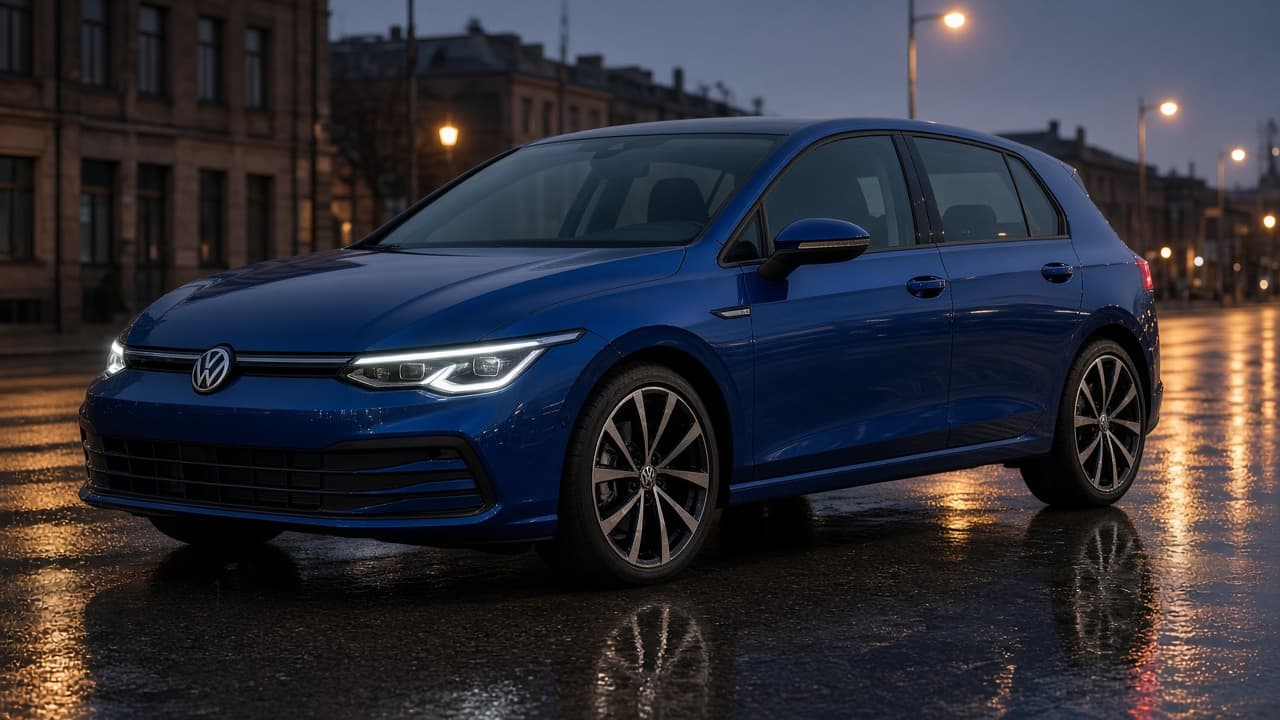
Volkswagen substantially updated the eighth-generation Golf for 2024 with revised exterior details, a new infotainment generation, illuminated controls and updated lighting. This is an update to Mk8, not a new generation.
- TechnicalGlobal
Golf GTI Clubsport — 221 kW / 300 PS
The updated Golf GTI Clubsport uses a 2.0-litre turbocharged petrol engine producing 221 kW (300 PS) and 400 Nm, with an electronically controlled front differential lock. Still a Golf GTI derivative — not a separate generation.
TechnicalVolkswagen →
- Technical / performanceGlobal
Golf R — 245 kW, 4MOTION
The updated Golf R and Golf R Variant use 245 kW (333 PS), 4MOTION all-wheel drive and R-Performance torque vectoring. Golf R remains a high-performance Golf derivative.
ProductVolkswagen →
Read first — global Golf identity
Eight official generations from 1974. Current generation is Mk8 (2019–present). The 2024 change is a major product/technical update (golf-mk8-2024-update), not Golf Mk9. GTI, GTD, GTE and R are derivatives; Variant/Estate is a body-style derivative; e-Golf is Mk7, not ID.3. Market is context, not a wall. Confirm VIN.
1. Generations & platforms
Golf Mk1 — 1974–1983
Front transverse engine / front-wheel drive. Hatchback, Cabriolet and market-specific derivatives. Giorgetto Giugiaro design. GTI established the hot-hatch concept. Diesel and later Syncro developments followed. Volkswagen records first production in March 1974 and dealer availability from May 1974.
Golf Mk2 — 1983/84–1991
Larger evolution of Mk1 with GTI, GTI 16V, G60, diesel/turbo-diesel and Syncro derivatives.
Golf Mk3 — 1991–1997
Major safety step: airbags, ABS and improved crash protection. Introduced VR6, TDI/SDI developments, Syncro, the first Golf Variant/Estate and later Cabriolet derivatives.
Golf Mk4 — 1997–2003
Fully galvanised body, refined interior, navigation/xenon availability, 4MOTION on selected versions, GTI and R32. A major Volkswagen design milestone.
Golf Mk5 — 2003–2008
PQ35 family. Multi-link rear suspension, DSG, TSI direct-injection turbo petrol technology, GTI, GTD, Golf Plus, Golf Variant, CrossGolf and BlueMotion.
Golf Mk6 — 2008–2012
PQ35 evolution with improved cabin quality, TSI/TDI engines, DSG, GTI, GTD, R, Variant, Cabriolet and BlueMotion derivatives.
Golf Mk7 — 2012–2019/20 depending on market
MQB platform. Major architectural change and approximately 100 kg lighter than its predecessor at launch. Petrol, diesel, plug-in hybrid, electric and performance applications. Derivatives include Golf, Variant/Estate, Sportsvan, Alltrack, GTI / GTI Performance, GTD, GTE, R and e-Golf. e-Golf should also be linked to Volkswagen’s electric taxonomy — it is not ID.3.
Golf Mk8 — 2019–present
MQB / MQB Evo-era development. Hatchback and Variant/Estate derivatives, with market-specific body variants. Depending on market/year: TSI, eTSI mild hybrid, TDI, eHybrid/GTE plug-in hybrid, GTI, GTI Clubsport and R.
Mk8 2024 update — not Mk9
Volkswagen substantially updated the eighth-generation Golf for 2024 with revised exterior details, a new infotainment generation, illuminated controls and updated lighting. Taxonomy: golf-mk8 · golf-mk8-early · golf-mk8-2024-update. Do not create Golf Mk9.
Always identify generation, technical stage, derivative and market before applying a theme. Exhaustive engine-code matrices are deferred (V2).
2. Market & model information
- Use the market selector for engines, service and inspection panels
- Germany, France, Italy and China selector rows are deferred — Europe/Global framing applies until curated
- Grey imports must use the original-market handbook and VIN schedule
Golf engines, trims, transmissions, emissions standards, service schedules and body styles vary significantly by market and model year. Never present one country’s specification as universal. Pricing varies by market.
3. Powertrains / engines / transmissions
Global overview only. Exact outputs are market- and year-specific. Confirm VIN.
Petrol
MPI/TSI families across generations; modern GTI and R applications use 2.0 TSI engines.
Diesel
SDI and TDI families, including GTD and BlueMotion applications — availability is market- and generation-specific.
Hybrid
eTSI mild hybrid and GTE/eHybrid plug-in hybrid applications where offered.
Electric
e-Golf — Mk7 derivative. Not the ID.3 MEB family.
Transmissions
Manual, conventional automatic on selected historical applications, and DSG dual-clutch transmissions. Fluid intervals are gearbox-code specific.
Drivetrain
Primarily FWD; 4MOTION on selected derivatives including R and some historical Syncro/4MOTION versions.
Body styles
Hatchback is the core Golf. Variant/Estate is the long-roof derivative. Alltrack is a raised Variant on selected generations. Cabriolet is historical — do not assume continuation into Mk8. Golf Plus / Sportsvan are tall-body derivatives.
Performance derivatives
GTI, GTI Performance, GTI Clubsport, GTD, R32 and R. The 2024 GTI Clubsport has 221 kW/300 PS and 400 Nm with an electronically controlled front differential lock; the Golf R has 245 kW/333 PS, 4MOTION and R-Performance torque vectoring — market/MY labelled; confirm VIN.
Do not treat one country’s engine list as global. Exhaustive codes are a V2 database item.
4. Honest Pros
- Huge global owner community
- Excellent parts and specialist ecosystem
- Wide engine and powertrain range
- Practical packaging
- Strong performance derivatives
- MQB creates valuable technical relationships across VW Group
- Strong used-car recognition and resale demand
- Extensive technical information
5. Honest Cons
- Large specification variation by market/year
- Many engine/transmission combinations
- DSG maintenance is configuration-dependent
- Generation-specific engine and cooling issues exist
- Newer cars have greater software/electronics complexity
- GTI/R examples may be modified or heavily used
- Service-history quality varies widely
6. Owner-reported themes
Investigation themes, not blanket failure claims and not diagnostic advice. Always filter by engine code, model year, transmission, market and technical stage. Never invent failure rates.
Mk4–Mk6
Electrical faults, cooling systems, window regulators, suspension wear, turbo/boost faults on relevant engines, DSG/mechatronic concerns on relevant configurations, timing-belt/chain maintenance depending on engine.
Mk7
Water pump/thermostat concerns on relevant petrol engines, DSG servicing, infotainment/electronics, suspension/brakes and direct-injection carbon buildup on relevant engines. e-Golf and GTE need EV/PHEV provenance fields.
Mk8
Software/infotainment, driver-assistance calibration, 12V/electrical behaviour, charging/hybrid systems on GTE/eHybrid, connectivity, tyres/brakes/suspension on GTI/R. Distinguish early Mk8 from the 2024 update stage.
7. Service & maintenance
Never publish one universal Golf service interval. Record VIN, market, model year, generation, engine code/family, fuel/powertrain, transmission, drivetrain, mileage/date, oil specification, filters, plugs, timing, DSG, brakes/coolant/battery/tyres, software updates, recalls and invoices.
| Item | Typical interval | Notes |
|---|---|---|
| Manufacturer schedule | VIN / market | Handbook, cluster and retailer system are authoritative |
| UK Fixed oil + inspection | ~9,300 miles / 12 months | UK-labelled framing only — not global |
| UK Flexible / LongLife oil | Up to ~18,600 miles / 24 months | UK-labelled; follow the service display |
| DSG fluid | Gearbox-code specific | Wet vs dry clutch are different jobs |
| Brake fluid | Often ~2 years | Typical VW Group — confirm VIN |
| Timing belt / chain | Engine-code specific | Never one claim for every Golf |
| Spark / glow plugs | Per engine schedule | Log specification and mileage |
| Coolant | Per handbook | Pump/thermostat jobs are provenance items |
| e-Golf inspection | e-Golf booklet | Not the ID. family 2-year-only rhythm |
| GTE / eHybrid HV checks | Alongside ICE cycle | Charging and battery-health records |
| Software / campaigns | When issued / at service | Especially Mk8 infotainment and ADAS |
| Tyres / brakes (GTI/R) | Condition-based | Performance derivatives wear these faster |
Use the market selector. UK miles are not a global rule. Intervals are whichever comes first unless noted.
8. Inspection & roadworthiness
Use market-specific terminology. Never title this “MOT” globally. Inspection history belongs to the individual vehicle.
- United Kingdom — MOT
- Germany — TÜV / Hauptuntersuchung (HU)
- Spain — ITV
- Poland — periodic inspection
- Hungary — periodic inspection
- Turkey — TÜVTÜRK
- United States — state-specific inspection / emissions
- Australia/NZ — state/territory rules
Record certificates separately from manufacturer service stamps.
9. Recalls & campaigns
- Check manufacturer recall resources for the VIN and market of registration
- UK: GOV.UK vehicle recall checker (where applicable)
- US: NHTSA VIN recall search for US-market cars
Store VIN-specific or market-specific information where supported: campaign number, market, production range, component, risk, remedy, completion status, source and check date. Never show one recall as applicable to every Golf.
10. Official resources
Priority: Volkswagen owner/service information; Volkswagen recall/campaign information; national recall authorities; roadworthiness authorities; manufacturer technical campaigns; reputable specialist sources; owner communities. Volkswagen’s official Golf history is a primary source for generation taxonomy.
- Volkswagen owner manuals / regional sites for non-UK markets
- Service schedule and maintenance records in your Digital Garage
- National roadworthiness portals via the market selector
11. Buying a used Golf
- Identity: VIN, registration, exact model year, generation, engine/gearbox code, drivetrain, market/import status
- Mechanical: cold start, oil/coolant leaks, turbo, clutch/DSG, brakes, suspension, steering, tyres
- Electrical: battery, infotainment, parking sensors, cameras, windows, central locking, lighting and ADAS
- GTI/R: modification/tuning history, ECU, turbo, brakes, tyres, 4MOTION/Haldex service where applicable, accident and track-use history
- PHEV: charging, HV battery condition, warranty, cable, electric range, software and charging history
- e-Golf: battery/charging record — do not apply an ID.3 checklist
- Variant/Alltrack: body identity and practical-use wear (load area, suspension)
- Documents: service history, invoices, recalls, inspections, ownership docs
12. Own a Golf? Protect its resale value
Track purchase/ownership dates, mileage timeline, service invoices, inspection/MOT, repairs, tyres, brakes, recalls, software campaigns, modifications, accident/bodywork, photographs, parts and diagnostic reports. Know your Golf. Record its history. Connect with owners. Keep its story.
- Add Golf to Garage — generation, derivative, body style, powertrain and drivetrain
- Build digital service history with invoices and mileage
- Track inspections, recalls, DSG/timing/PHEV/e-Golf work, parts and documents
- Build a Transfer Pack PDF for the next owner
- Join the community — tags such as golf-mk8, gti, gte, golf-r, dsg, e-golf, variant
Guides & checklists
- DQ200 dry-clutch DSG service (before mechatronic assumptions) →
- Timing belt vs wet belt (EA211 engine codes) →
- DSG Maintenance Guide (DQ250 / DQ381) →
- EA288 TDI timing belt, oil-pump belt & water pump (Master Supreme) →
- Essential DIY Garage Tools — Starter Kit →
- How to Prep Your Car for Its Annual MOT →
- How to Prove Full Service History When Selling →
More Volkswagen models
Compare platforms, service themes and digital service history tools across the range.
FAQ
Is Golf Mk8 still the current generation?+
Yes. The 2024 change is a major Mk8 update, not Mk9.
Is Golf GTI a separate model?+
For The Owners Club it is a Golf derivative with its own taxonomy and community filtering — still connected to the Golf family.
Is Golf R the same model?+
Golf R is a high-performance Golf derivative. It stays connected to Golf while retaining derivative taxonomy (including 4MOTION).
Is Golf Variant the same car?+
It is part of the Golf family with a distinct body-style/practical-use taxonomy (Variant/Estate, Alltrack where offered).
Is e-Golf the same as ID.3?+
No. e-Golf is a Mk7 Golf derivative; ID.3 is a separate electric model family on MEB.
How often should you service a Golf?+
Never from one universal table. Intervals vary by market, year, engine code, transmission and Fixed vs Flexible coding. Confirm the VIN schedule. UK mile examples are market-labelled only.
Golf owner discussions
Latest conversations from Volkswagen Golf owners in the club.
Mk7 GTI buying — water pump, PCV, and stage-1 telltales?
Club Editorial · No replies
Just bought a Mk7 Golf — sensible first 1,000 miles service list?
Club Editorial · 1 reply
1.5 TSI wet belt — inspection or replace at what age/miles?
Club Editorial · No replies
DQ200 dry-clutch DSG — low-speed shudder after a fluid service?
Club Editorial · 1 reply
DQ381 vs DQ200 — which does my 2.0 TDI actually have and does it change the service interval?
Club Editorial · No replies
Join the Volkswagen Owners Club Community
Add it to The Owners Club for free to track its maintenance timeline, import UK MOT history, and transfer verified provenance when you sell.