
Resale · Provenance
How to Prove Full Service History (FSH) When Selling Your Car
Three letters can make or break your asking price: FSH — Full Service History. A messy or missing trail can wipe 15–20% off resale value. Here’s how to prove consistent maintenance.

Paper binder beside a digital timeline — keep invoices, certificates and the service log in clear date order.
Editorial photo.
1. What counts as “full” service history?
Genuine FSH means manufacturer intervals were met and documented:
- Routine servicing: oil, filters, plugs on schedule.
- Major milestones: cambelt/timing belt, water pump, gearbox oil, Haldex fluid where applicable.
- Invoices: stamps help — itemised parts and fluids are gold.
2. Collect and organise the paper trail
- Gather every invoice, parts receipt and MOT certificate.
- Sort chronologically — buyers want a logical mileage timeline.
- Missing paperwork? Many independents keep digital backups and can re-issue invoices.
3. DIY provenance can beat a weak stamp
Buyers worry about DIY without a dealer stamp. Thorough documentation often beats a vague book entry:
- Keep receipts for the exact oil grade, filters and OEM parts.
- Photo the new parts next to the odometer reading.
- Log date, mileage, labour time and cost in one place as you go.
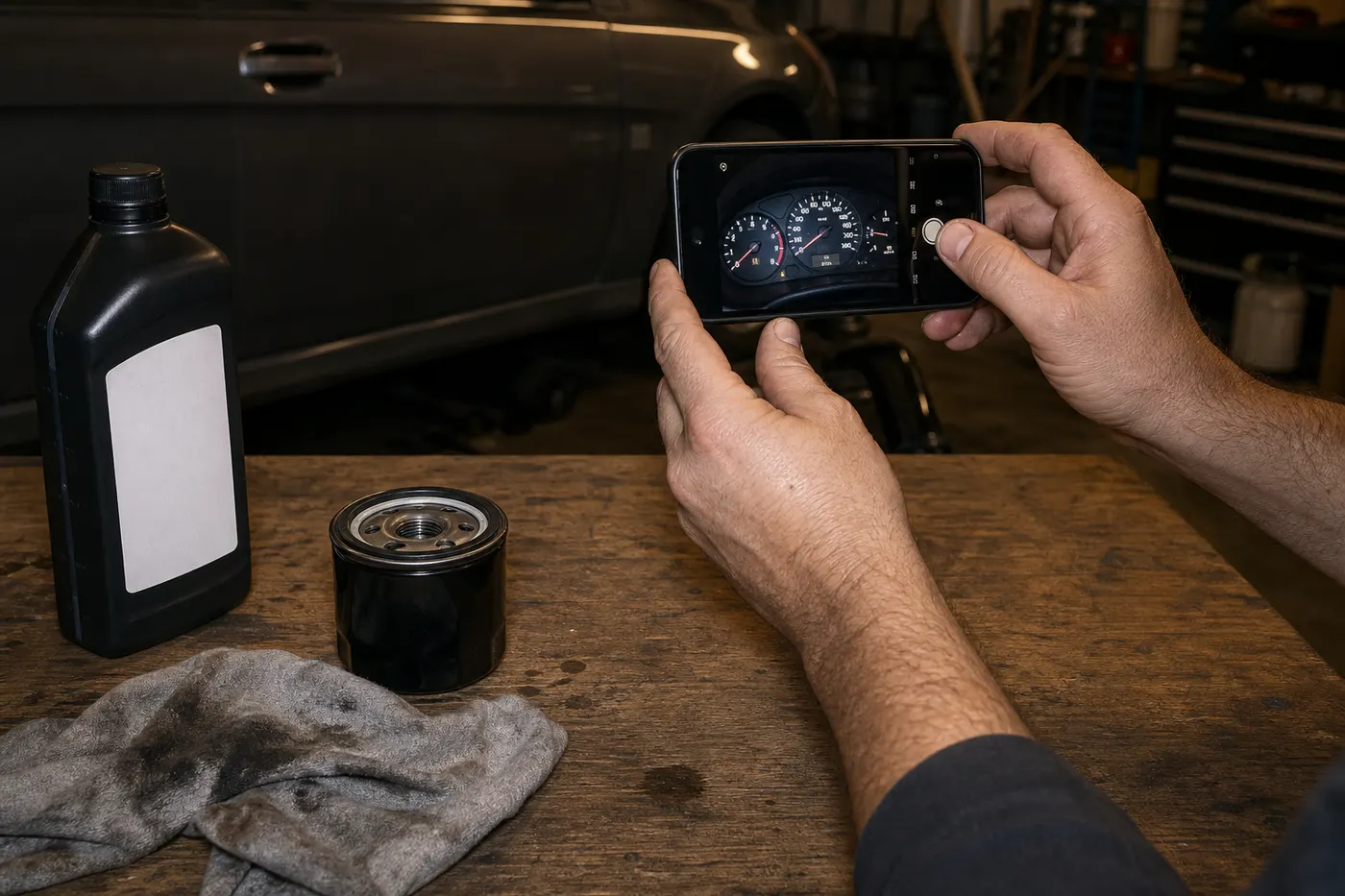
Buyers trust DIY more when you photo the parts against the odometer.
4. Present digital, verified service history
A glovebox of crumpled receipts doesn’t inspire confidence. A clean chronological archive does.
With The Owners Club you can import official MOT mileage history (UK), log every service and DIY repair, then hand buyers a structured Transfer Pack — not a shoebox.
Model-specific hubs (e.g. Volkswagen Tiguan) help you see platforms and common service themes before you log the work.
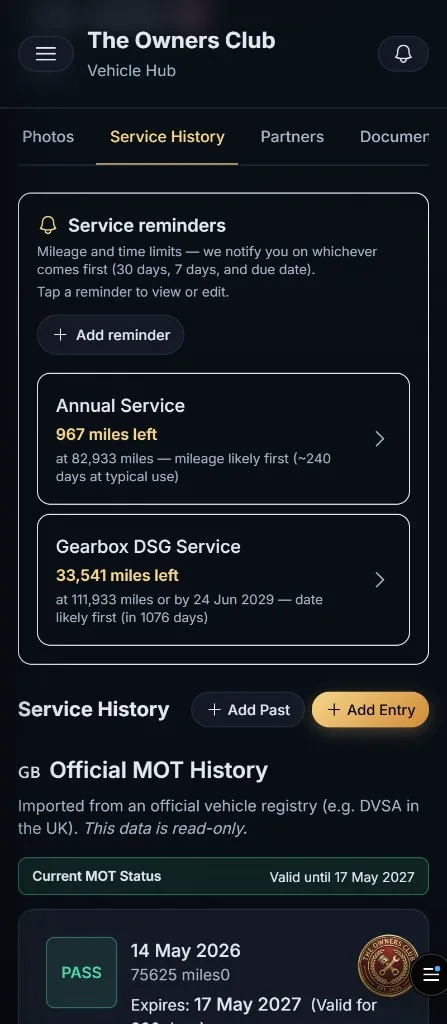
Real app screenshot — a chronological log is easier to share than a glovebox of receipts.
Keep it in one digital service history
Import official DVSA MOT history, log DIY and garage work, and build provenance buyers trust — free to start.