Owners Club · Digital service history
Volkswagen ID.7 Owners Club — Maintenance & Provenance
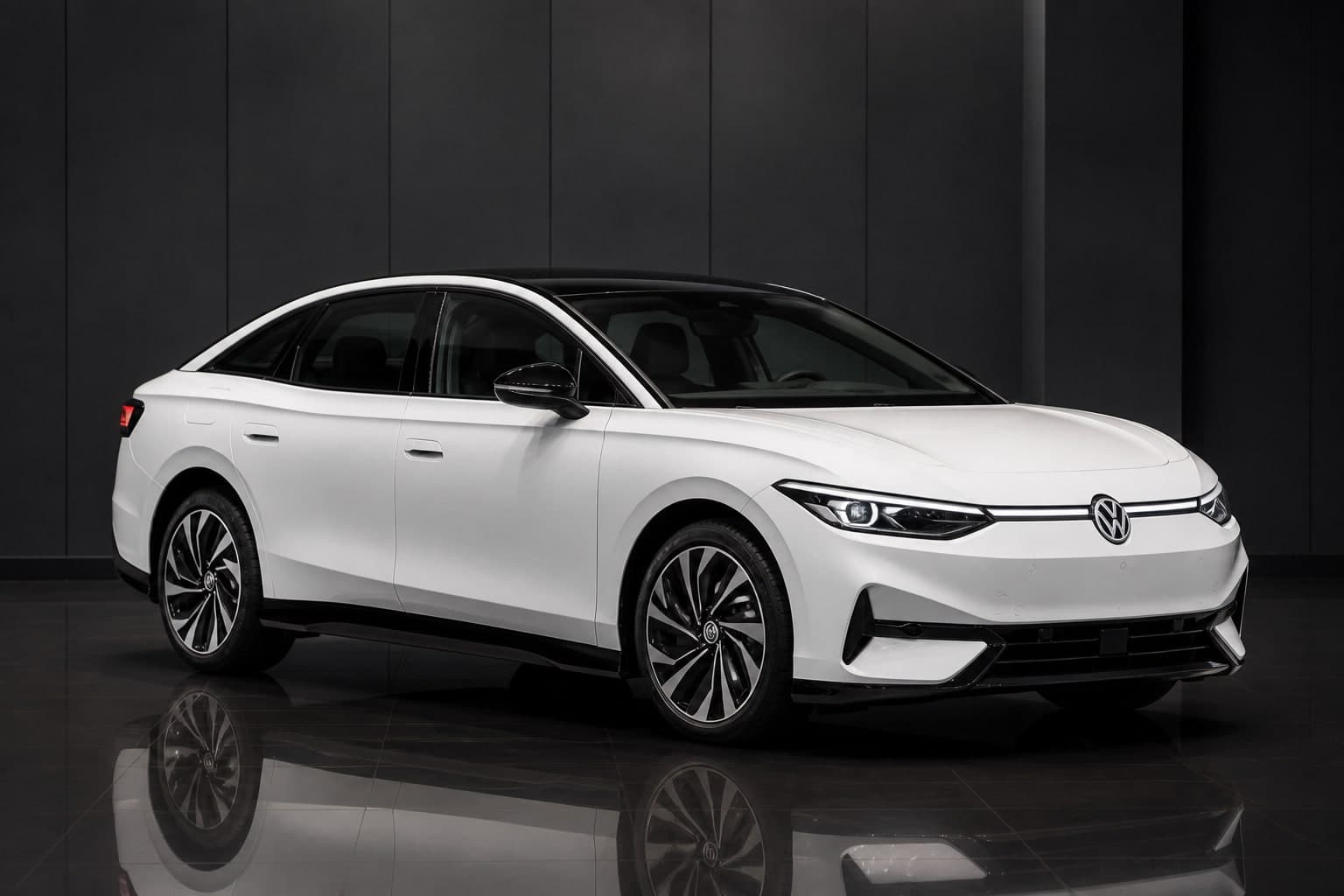
Independent owners’ resource. This page is produced by The Owners Club and is not affiliated with, endorsed by, or sponsored by Volkswagen AG or Volkswagen UK. Information below is gathered from public sources and should be confirmed in your vehicle handbook (VIN) or with an authorised retailer before booking work. The ID.7 is Volkswagen’s large electric touring saloon on the MEB platform — production from 2023, one first-generation family with Pro, Pro S and GTX stages. It sits above ID.3/ID.4/ID.5 in the ID passenger-car range and keeps a distinct hub from the ID.7 Tourer estate.
Own an ID.7? Build a digital record of battery health, charging history, service events, software/OTA updates, thermal management, brake/tyre work and ownership documents. The strongest product path here is EV knowledge → battery & charging record → digital service history → provenance → Transfer Pack.
Arrived from a club search? See the exact-match Volkswagen ID.7 Owners Club landing — then use this hub for platforms, issues and the full guide cluster.
Latest ID.7 News
Updated 2026- Global development / technicalGlobal
ID.7 Pro S
86 kWh net / 91 kWh gross battery, 210 kW rear drive, up to 709 km WLTP and up to 200 kW DC — Volkswagen’s efficiency-focused long-distance ID.7.
2024Global / technical
- TechnicalGlobal
ID.7 GTX
250 kW / 340 PS dual-motor 4MOTION, 86 kWh net, 0–100 km/h in 5.4 seconds, up to 595 km WLTP and up to 200 kW DC.
2024Technical
- Global development / technicalGlobal
Efficiency test — Pro S
Volkswagen recorded 941 km in an efficiency test with a standard ID.7 Pro S, well above its WLTP figure. This is a test result, not a certified range claim.
Test resultGlobal / technical
Read first — MEB saloon ownership framing
For ID.7, the most important ownership data is battery health, charging history, software/infotainment generation, thermal management, 12V, high-voltage systems, brakes/tyres, service history, recalls and market-specific specifications. One generation (MEB, 2023–). Do not merge this hub into ID.7 Tourer. Do not treat UK technical data as the global ID.7 specification.
1. Generations & platform
First generation — 2023–present (MEB)
One production generation. Volkswagen positions the ID.7 as its large electric touring model above ID.3/ID.4/ID.5: floor-mounted HV battery, rear electric motor on Pro/Pro S, dual motors on GTX, single-speed reduction. 2023 launch Pro (77 kWh, 210 kW), 2024 Pro S (86 kWh, 210 kW) and 2024 GTX (86 kWh, 250 kW 4MOTION) are derivative/battery stages of this first generation — not new generation codes.
Market naming, equipment and exact outputs vary. Always tie power, battery, range and charging figures to derivative, model year and market — confirm VIN. Related Vehicles: ID.7 Tourer is the strongest sibling (same family, separate estate hub). ID.5 / ID.4 / ID.3 share MEB architecture — hubs remain separate; never assume parts identity.
2. Body style
Five-door fastback / large electric saloon
The standard ID.7 is a five-door fastback/saloon — not the Tourer estate. Current UK technical data lists approximately 4,961 mm length, 2,971 mm wheelbase and 532 litres boot volume — market/MY labelled; confirm VIN.
3. Battery & high-voltage system
Always distinguish gross capacity from usable/net capacity. Two published classes sit inside one generation: 77 kWh (launch Pro) and 86 kWh net / 91 kWh gross (Pro S and GTX).
- 77 kWh class — launch ID.7 Pro
- 86 kWh net / 91 kWh gross — Pro S and GTX; Volkswagen documents 13 battery modules on this pack
- Up to 200 kW DC on the 86 kWh battery class under suitable conditions
- Record warranty status, SoH diagnostics, HV warnings and battery-related repairs as separate provenance — never infer health from displayed range alone
Battery codes, chemistry generation and charging curve details should come from Volkswagen documentation for the VIN — do not invent one universal “ID.7 battery size”.
4. Derivatives & powertrains
Pro/Pro S: rear electric motor integrated into the rear axle, rear-wheel drive, single-speed reduction. Current UK specifications list 210 kW / 545 Nm for Pro/Pro S. GTX: dual-motor 4MOTION. Outputs below are Volkswagen-documented framing — market-label carefully; confirm model year and VIN.
Pro — 77 kWh
2023 launch family: 77 kWh net battery, 210 kW / 286 PS rear electric drive. UK examples quote up to approximately 185 kW DC. Range sits in a roughly 590 km class depending on configuration.
Pro S — 86 kWh
Efficiency-focused long-distance version: 86 kWh net / 91 kWh gross, 210 kW / 286 PS rear drive, up to 709 km WLTP and up to 200 kW DC. Volkswagen identifies Pro S as the long-distance efficiency derivative.
ID.7 GTX (4MOTION) — 86 kWh
250 kW / 340 PS dual-motor 4MOTION, 86 kWh net, 545 Nm, 0–100 km/h in 5.4 s, 250 km/h maximum speed on relevant specification, up to 595 km WLTP, up to 200 kW DC. Volkswagen describes GTX as one of its most powerful electric vehicles at launch.
Exact outputs, range and equipment are model-year and market specific. Use the market selector for regional framing — do not treat one country’s sheet as global.
5. Charging
- Pro 77 kWh: up to approximately 185 kW DC (UK example framing)
- Pro S 86 kWh: up to approximately 199/200 kW DC
- GTX 86 kWh: up to approximately 199/200 kW DC
- AC: 11 kW typical onboard
- Volkswagen quotes around 26–28 minutes for 10–80% on the 86 kWh battery under suitable conditions
- Actual performance depends on SoC, battery temperature, charger capability, preconditioning, ambient temperature, station load and vehicle software
Log home wallbox, AC/DC sessions, duration, provider and interruptions separately from workshop service stamps — charging history is EV provenance.
6. Range — WLTP vs real-world
Always distinguish official test range from real-world distance. Official figures are not guaranteed trip distances. An efficiency-test result is not a certified range claim.
- Pro: up to roughly 590 km class depending on configuration
- Pro S: up to 709 km WLTP
- GTX: up to 595 km WLTP
- Volkswagen recorded 941 km in an efficiency test with a standard ID.7 Pro S, well above its WLTP figure — this is a test result, not a certified range claim
- Range depends on wheels, tyres, temperature, speed, equipment, homologation and battery ageing. Real-world motorway range is below WLTP
Do not invent other markets’ figures from one country’s sheet. Displayed range is not a battery-health measurement.
7. GTX
ID.7 GTX is the dual-motor performance derivative on the same first-generation MEB saloon: 250 kW / 340 PS, 4MOTION, 86 kWh net, 545 Nm, 5.4 s 0–100 km/h, up to 595 km WLTP and up to 200 kW DC. GTX-specific chassis tuning does not change the need for battery, charging and software provenance.
8. Recuperation & braking
Regenerative braking recovers energy during deceleration and coordinates electric and friction braking. Regen reduces conventional brake use but does not eliminate inspection of discs, pads, calipers, fluid, lines and corrosion — low-mileage EVs can still develop disc corrosion if friction brakes are used infrequently.
9. Software & infotainment
- Track softwareVersion, infotainmentVersion, navigationVersion, OTA/dealer update dates and campaign IDs
- Infotainment, connectivity and ADAS calibration quirks are ownership discussion themes — not blanket defects
- Charging campaigns and thermal-management software matter for long-distance DC sessions
Software is a core ownership component. Track software version, infotainment version, navigation database, OTA/dealer updates and charging campaigns. Key technologies may include a 15-inch infotainment display, augmented-reality HUD, Travel Assist, Park Assist and IQ.LIGHT — market/trim dependent.
10. Thermal management
- Log battery cooling faults, charging temperature warnings and preconditioning behaviour
- Track heat-pump status where equipped and HVAC/heating faults separately from HV pack SoH
- Thermal-management repairs belong in service history with software version at time of work
The ID.7 is particularly dependent on thermal management for long-distance efficiency and charging. Track battery cooling, battery preconditioning, HVAC and heat pump.
11. Interior, comfort & ADAS
Equipment may include intelligent automatic climate control, massage seats, wellness functions, Travel Assist, Park Assist and IQ.LIGHT. Exact equipment is market/trim dependent — confirm VIN rather than assuming a global pack.
12. Suspension, wheels & brakes
Depending on trim: standard suspension, DCC, progressive steering, large efficiency or performance wheel packages, and GTX-specific chassis tuning. Track tyres, alignment, brake discs/pads, suspension and steering.
13. Related Vehicles
Shared MEB architecture creates related-vehicle context, not automatic component compatibility. Hubs stay separate.
- ID.7 Tourer — strongest sibling: same ID.7 family as an estate/body-style member, dedicated model page (not a second generation)
- ID.5 — MEB SUV-coupé; related at platform/battery/powertrain level
- ID.4 — MEB SUV sibling; related at platform level
- ID.3 — MEB hatch; related at platform level where technically relevant
14. Honest pros
- Excellent long-distance EV concept
- Strong aerodynamic efficiency
- 77 / 86 kWh battery choices
- Up to 709 km WLTP Pro S
- Up to 200 kW DC
- Comfortable touring character
- GTX performance option
- Strong MEB ecosystem
15. Honest cons / things to consider
- Large and heavy
- Specification variation by market and derivative
- Software complexity
- Real-world motorway range below WLTP
- Large tyres can affect efficiency and cost
- High-voltage repairs require specialist equipment
16. Common owner-reported themes
Not diagnostic advice — these are discussion categories owners may document. Do not treat them as confirmed defects unless supported by manufacturer documentation, recalls or reliable technical evidence.
Infotainment
Central display, connectivity and control quirks — log software version.
OTA / software
Updates, campaigns, navigation database and connected services.
Charging
DC performance vs headline peaks, AC behaviour, public-charger compatibility and interruptions.
Battery preconditioning
Preconditioning behaviour before DC sessions — thermal management is first-class ID.7 data.
12V system
Low-voltage battery condition, wake/sleep behaviour — weak 12V can mimic HV faults.
HVAC / heat pump
Cabin heating, heat-pump status where fitted, winter energy use.
Travel Assist
ADAS calibration and driver-assist behaviour — not a defect claim.
Tyres
Wear, load/speed ratings, efficiency vs performance packages.
Brakes
Disc corrosion from regen under-use, pad/disc wear, fluid age.
Suspension
DCC, alignment, GTX chassis tuning, bushes and dampers.
Range
WLTP vs motorway/winter distance — keep trip logs separate from SoH tests.
DC charging
Peak kW, 10–80% times, station conditions and software version at the session.
17. Service & maintenance (EV)
Do not copy an ICE service schedule onto an EV. Intervals and inspection requirements vary by market, model year and derivative — always verify the VIN-specific Volkswagen maintenance schedule.
| Item | Typical interval | Notes |
|---|---|---|
| Scheduled EV inspection / service | Per Volkswagen VIN schedule (often calendar-led) | MEB ID. family — not ICE Fixed 9,300-mile cycle. UK: ID. family inspection every 2 years with no mileage limit under normal use — confirm handbook. |
| Brake fluid | Calendar (often ~24 months) | Fluid absorbs moisture even when regen reduces pad wear. |
| 12V battery test | Every service / sooner if symptoms | Load-test — separate from HV pack provenance. |
| Cabin / pollen filter | Often ~12 months | Annual habit on most EVs. |
| Tyres & alignment | Regular / every service | Torque-rich EV — watch wear and load ratings; GTX performance tyres add load. |
| Brake pads / discs / corrosion | Every service | Regen can leave discs under-used — inspect for corrosion. |
| Suspension & steering | Every service / as needed | Dampers, bushes, alignment, DCC / progressive steering where fitted — log with invoices. |
| Coolant circuits / thermal system / heat pump | Per Volkswagen schedule | HV and cabin thermal loops — specialist EV work; log preconditioning faults. |
| High-voltage system inspection | Per Volkswagen schedule / campaign | Authorised EV technician — log warnings and repairs. |
| Software / OTA check | At service or when prompted | Record version + date in Digital Service History. |
| Battery health / diagnostic (where offered) | Owner / retailer / third-party | Separate provenance event — not “range looks fine”. |
| Charging system / port / cable | Every service / as needed | AC/DC behaviour notes belong in charging history. |
Service intervals and inspection requirements vary by market, model year and derivative. Always verify the VIN-specific Volkswagen maintenance schedule.
18. EV battery health & provenance
Battery health is a first-class provenance category for ID.7. Distinguish manufacturer diagnostic results, owner-reported range estimates and third-party battery tests. Displayed range is not a State-of-Health test.
- SoH % / diagnostic report, date, mileage, test provider
- Charging behaviour notes and software version at test time
- Warranty status, HV warnings, module repairs and battery-related work
- Store documents against the vehicle for resale / Transfer Pack
Never infer battery health from displayed range alone. Charging records should stay separate from workshop service stamps.
19. Charging history
Log AC vs DC, energy, SoC window, peak power, duration, location type and provider. Charging history is EV provenance, not a workshop stamp.
- Home wallbox vs public DC vs workplace
- Interruptions, preconditioning used, ambient conditions
- Keep original cables and charging accessories with the car
20. Inspection & roadworthiness
Terminology adapts by country — never title every market’s test “MOT”. UK MOT, Spain ITV, Poland/Hungary periodic inspection, Turkey TÜVTÜRK, US state systems, and other local rules.
- Record the local certificate separately from manufacturer service stamps
- Use the market selector for the local system name and authority links
- EV-specific items (HV isolation warnings, tyre/brake condition, suspension) still matter at inspection
Confirm requirements for the vehicle’s registration market.
21. Recalls & campaigns
- Check VIN on official Volkswagen / national safety portals for your market
- Log campaign ID, completion date and software version after work
- Do not assume a campaign from one market applies to every ID.7 worldwide
Recall and campaign availability can vary by market, production date, software version and VIN. Never display “this car has no recalls” unless the specific VIN has been checked against an authoritative source.
22. Official resources
Official links are for convenience. The Owners Club has no commercial relationship with Volkswagen AG. Confirm manuals, charging and battery terms against your own documentation. Prefer VIN-specific Volkswagen Owner’s Manual lookup over invented deep links.
- Volkswagen Owner’s Manual — VIN-specific lookup and model/year selection (use Volkswagen’s official manual system for your market)
- Volkswagen technical/model information for specifications, charging, battery, range and equipment
- Regional government recall databases (NHTSA, GOV.UK/DVSA, EU/national systems)
23. Buying a used ID.7
- Identity: VIN · model year · derivative (Pro / Pro S / GTX) · drive (RWD vs 4MOTION) · battery class (77 vs 86 kWh) · market · options · import history
- Battery: health evidence, warranty, HV warnings, charging performance, repairs/replacements
- Charging: AC/DC test where practical, connector/flap, cables, charging history, preconditioning behaviour
- Chassis: tyres, uneven wear, brakes, suspension, steering alignment
- Electrical: 12V, stored faults, displays, cameras, ADAS, climate/heat pump where fitted
- Software: version, infotainment, OTA/dealer campaigns, navigation, connected services
- Documents: Volkswagen service history, invoices, recalls, battery reports, charging records, inspections, keys, manuals, original cables
24. Own an ID.7? Protect its resale value
For a long-distance EV saloon, the ownership story is more than mileage. Battery health, charging history, software, servicing, brake/tyre records and documented repairs can all become part of the vehicle’s provenance. Know your car. Record its history. Connect with owners. Keep its story.
- Add ID.7 to Garage — free digital ownership record
- Record battery health, charging history and software/OTA versions
- Track servicing, inspections, repairs, tyres/brakes and recalls with invoices
- Build a Transfer Pack for the next owner
Guides & checklists
More Volkswagen models
Compare platforms, service themes and digital service history tools across the range.
FAQ
Is the Volkswagen ID.7 fully electric?+
Yes. The ID.7 is a battery-electric five-door fastback/saloon with no combustion engine — rear electric drive on Pro/Pro S; GTX uses dual-motor 4MOTION.
Is the ID.7 based on MEB?+
Yes. The ID.7 uses Volkswagen’s Modular Electric Drive Matrix (MEB) — floor-mounted high-voltage battery, single-speed reduction gearing and electric-specific packaging.
Is Pro rear-wheel drive?+
Yes. Pro and Pro S are rear-wheel drive. GTX is dual-motor 4MOTION all-wheel drive.
What is the Pro S battery size?+
Pro S uses an 86 kWh net / 91 kWh gross battery (13 modules in Volkswagen documentation). GTX uses the same 86 kWh net class. Launch Pro uses the 77 kWh class — confirm VIN.
What is Pro S WLTP range?+
Up to 709 km WLTP on relevant Pro S specification. GTX is quoted up to 595 km WLTP. Pro sits in a roughly 590 km class depending on configuration. Range depends on wheels, tyres, temperature, speed, equipment and homologation.
What is GTX output?+
250 kW / 340 PS dual-motor 4MOTION, 86 kWh net, 545 Nm, 0–100 km/h in 5.4 seconds on relevant specification, up to 200 kW DC.
ID.7 owner discussions
Latest conversations from Volkswagen ID.7 owners in the club.
No discussions yet for the ID.7. Be the first owner to start a conversation!
Ask a Question / Post PhotoJoin the Volkswagen Owners Club Community
Add it to The Owners Club for free to track its maintenance timeline, import UK MOT history, and transfer verified provenance when you sell.