UK · MOT prep
How to Prep Your Car for Its Annual MOT: The Ultimate Checklist
Around 28% of cars fail the first MOT attempt. Lighting is still the biggest slice of recorded defects — and many fails are things you can catch on the driveway in 15 minutes.

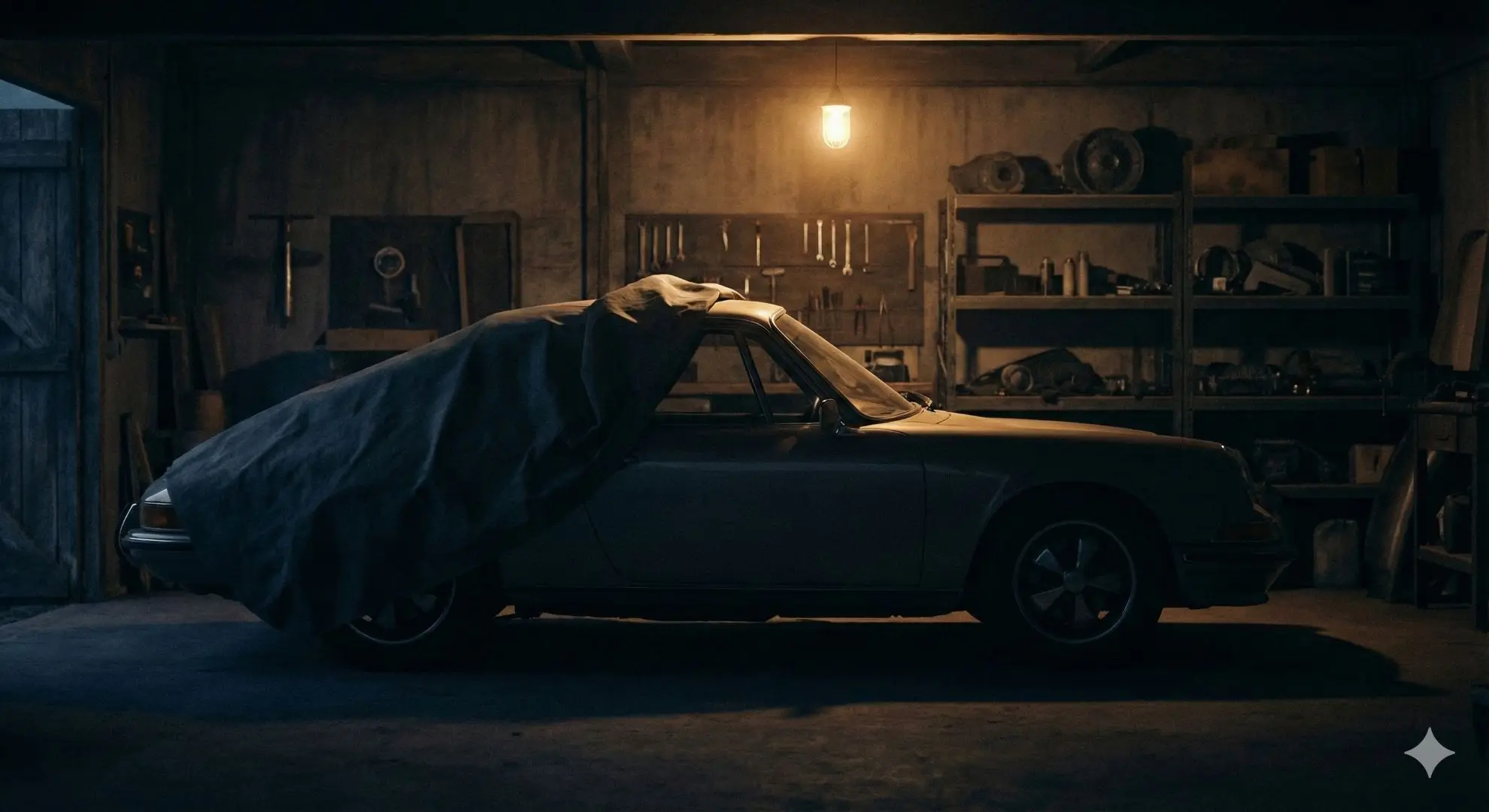
Raised on the two-post lift — lights, underbody and safety checks at a premium inspection bay.
Editorial photo.
What actually fails MOTs
DVSA publishes MOT testing data for Great Britain. For cars and light vans (Class 3 and 4), lighting still dominates. Figures below are each category’s share of recorded defects in 2025/26 Q1 (April–June) — not the share of cars that fail.
| Category | Share of defects |
|---|---|
| Lamps, reflectors and electrical equipment | 24.8% |
| Suspension | 19.9% |
| Brakes | 15.3% |
| Tyres | 12.9% |
| Driver’s view of the road | 8.5% |
A failed test often lists more than one defect. Source: DVSA MOT testing data for Great Britain.
1. Lights and indicators (most common fail)
Headlights, brake lights, indicators, hazards, fogs and number-plate lamps all have to work — and headlights must be aimed so they don’t dazzle. LED clusters still fail if a lamp is out.
- Action: Park facing a wall, ignition on. Check dipped and main beam, tails, indicators and hazards. Use a helper or the wall reflection for brake lights.
- Pro tip: Don’t skip rear number-plate lamps or the dashboard tell-tale for rear fog (required on cars built after 1986).
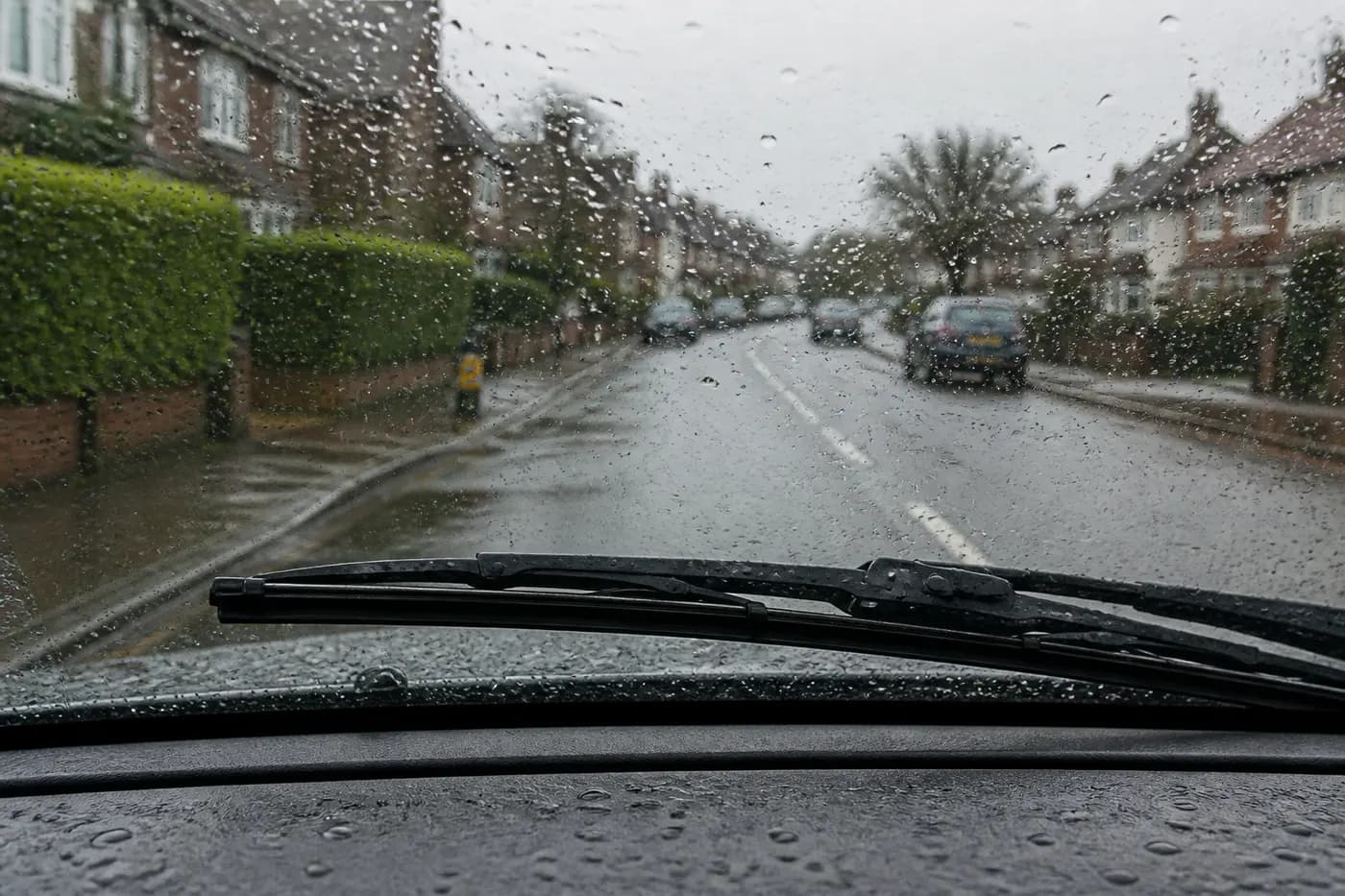
2. Windscreen, wipers and washer fluid
Your view of the road must be unobstructed.
- Wipers: Replace blades that tear or smear.
- Windscreen: A chip or crack larger than 10mm in the driver’s swept vision (or 40mm elsewhere in the swept area) is an immediate fail.
- Washers: Top up screenwash — empty washers are a silly but common fail.
3. Wheels and tyres
Test centres treat tyres with zero tolerance. Matching sizes on the same axle matter too.
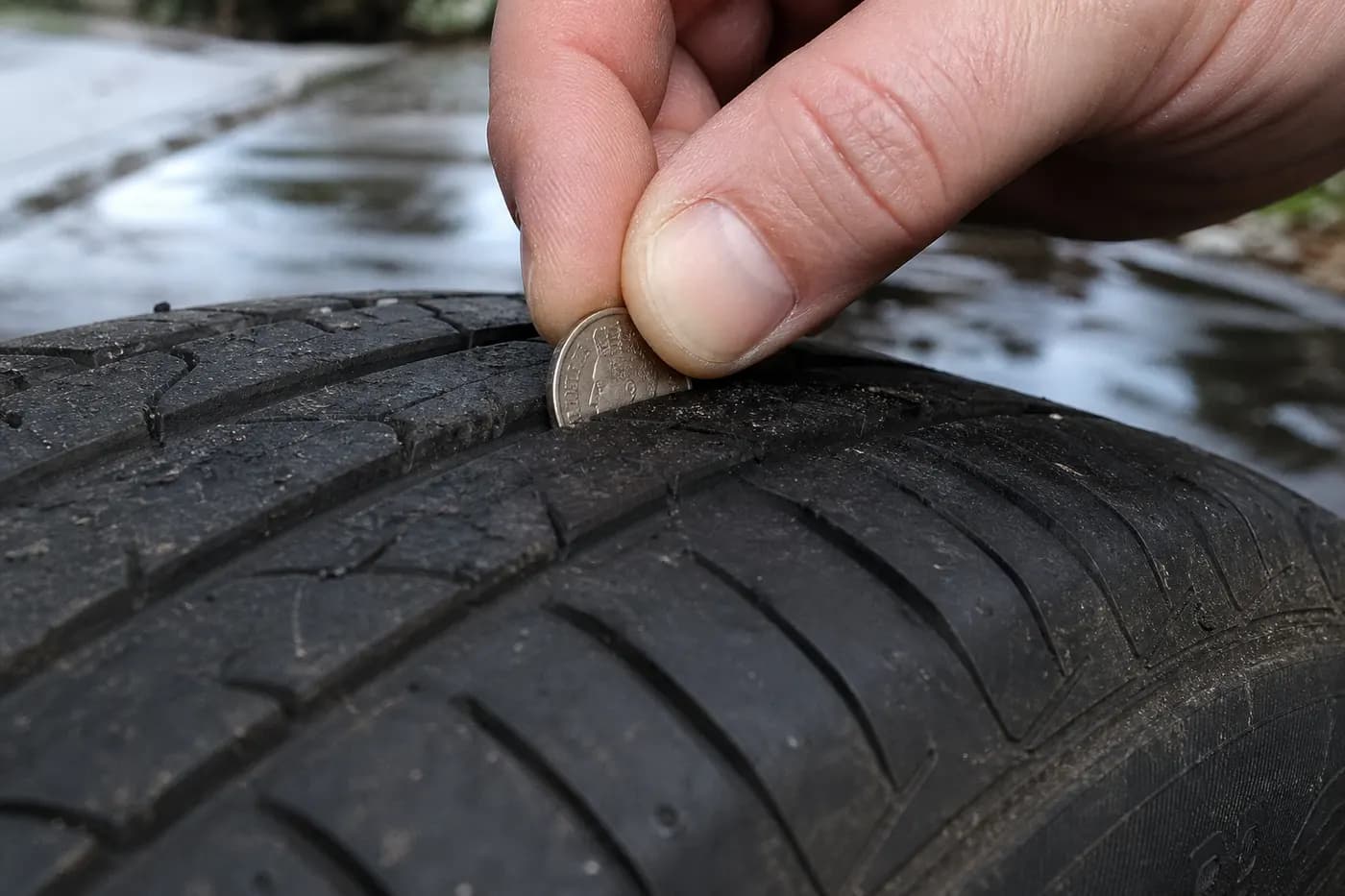
- Tread depth: Legal minimum is 1.6mm across the central three-quarters. Use the 20p test — if the outer band of the coin is visible in the tread, replace the tyre.
- Condition: Check sidewalls for bulges, cuts or exposed cords. The spare is not part of the MOT unless it is mounted outside the car — then it must be secure.
4. Fluids, oil and fuel
The tester needs to run the engine for emissions.
- Engine oil and coolant between Min and Max.
- Enough fuel for the test — roughly a quarter tank is a safe rule of thumb.
5. Two-minute extras people skip
- Horn: it must work and be a single-tone warning — novelty tunes fail.
- Number plates: clean, securely attached, correct colour and spacing. Unreadable plates fail.
- Mirrors: present, secure, and not so damaged that they block the view.
- Seatbelts: webbing not cut or frayed; buckles lock; inertia reels retract.
- VIN: the chassis number on the car must be present and match the V5C.
- Keep the boot usable and the car reasonably clean — testers can refuse a test if they cannot inspect it.
Rules that catch people out
- In Great Britain a car usually needs its first MOT by the third anniversary of registration, then every year. Northern Ireland has its own timetable — check nidirect.
- You can test up to a month minus a day before expiry and keep the same renewal date.
- There is no 14-day grace period. Once the MOT has run out you cannot drive on the road except to a pre-arranged MOT or to a place of repair.
- Driving without a valid MOT can mean a fine of up to £1,000. You also cannot tax the car if the MOT has expired.
Pass, advisory, major, dangerous
Since 2018, MOT results use four buckets. Knowing them helps you read last year’s printout before you book this year’s test.
- Advisory: not a fail yet — often tyres or pads getting close. Ignore these and they become next year’s fail.
- Minor: a current defect that is not serious enough to fail. Still repair it.
- Major: a fail. If your old MOT is still in date and nothing is marked dangerous, you can usually drive away — get it fixed before expiry.
- Dangerous: a fail and you must not drive the car until it is repaired, except on a transporter.
After you pass: track advisories
Advisories aren’t fails — but ignoring them is how next year’s bill grows. With The Owners Club you can import official MOT history from the DVSA, turn advisories into a maintenance checklist, and log DIY fixes with receipts so the work is proven.
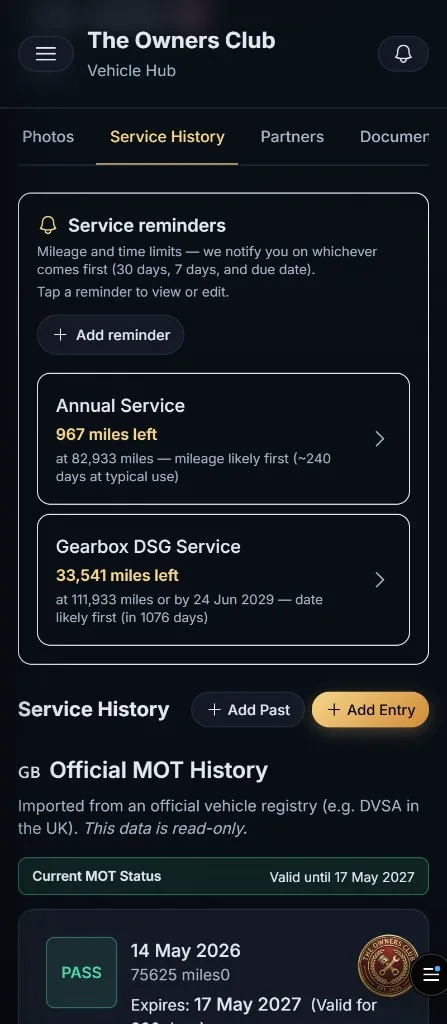
Import DVSA MOT history and turn last year’s advisories into a checklist.
Keep it in one digital service history
Import official DVSA MOT history, log DIY and garage work, and build provenance buyers trust — free to start.