Owners Club · Digital service history
BMW 5 Series Owners Club — Maintenance & Provenance
Independent owners’ resource. This page is produced by The Owners Club and is not affiliated with, endorsed by, or sponsored by BMW AG or BMW UK. Confirm figures in the handbook for your VIN or with an authorised BMW retailer. The 5 Series spans eight generations: E12, E28, E34, E39, E60/E61, F10/F11, G30/G31/G38 and G60/G61. BMW identifies G60 as the eighth generation. More than ten million 5 Series had been built by 2023. Never collapse generations. Never merge i5, M5 and combustion 5 Series into one spec.
Own a BMW 5 Series? Record generation, chassis code, engine or battery, transmission, drivetrain, CBS events, recalls and documents. The path here is generation clarity, then digital service history, provenance and a Transfer Pack.
Arrived from a club search? See the exact-match BMW 5 Series Owners Club landing — then use this hub for platforms, issues and the full guide cluster.
Latest 5 Series news
Updated 2026- Current rangeGlobal
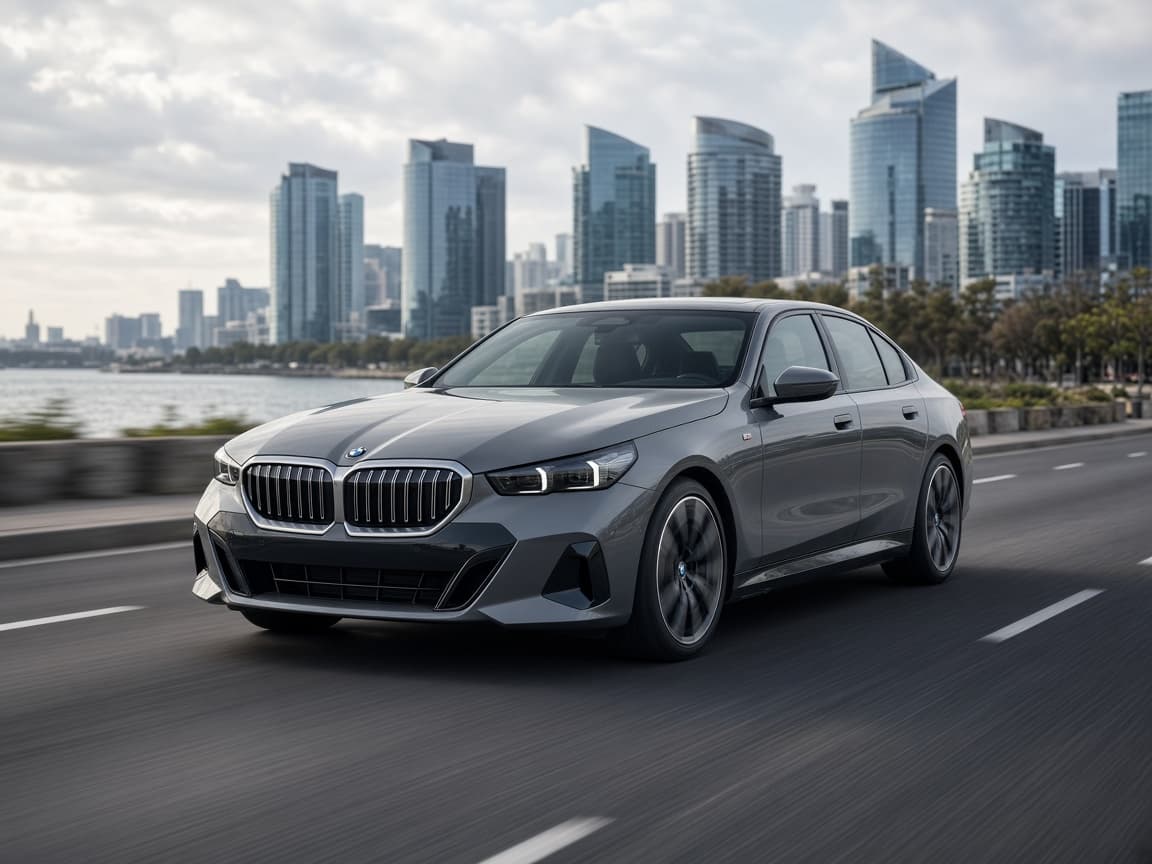
Current eighth-generation 5 Series range
BMW continues to offer the eighth-generation 5 Series with combustion, plug-in hybrid and fully electric i5 powertrains. 2025/2026 equipment changes stay inside G60/G61.
2023–2026BMW Group / product
- Body and i5 TouringGlobal
5 Series Touring and i5 Touring
The G61 Touring expanded the eighth-generation family with combustion, PHEV and electric i5 variants. UK launch framing had Touring joining in 2024. Keep saloon and Touring dimensions separate.
2024BMW / launch documentation
- M5 familyGlobal
M5 and M5 Touring
The current 5 Series family also includes the high-performance M5 and M5 Touring. They need separate M-specific technical and service data (S68 on the current cars) and stay inside the 5 Series family.
2024–2026BMW M / product
Read first — eight generations, not one global spec
Bind every technical fact to generation, chassis code, production stage, market and model year, plus engine code or battery, transmission, drivetrain and body. RWD is the historical identity. Touring starts with E34 in 1991. 525iX is the first AWD 5 Series. i5, 530e/550e and M5 are distinct identities inside the G60 family where they exist. CBS replaces guesswork on modern cars. Owner reports are not recalls.
1. Generations
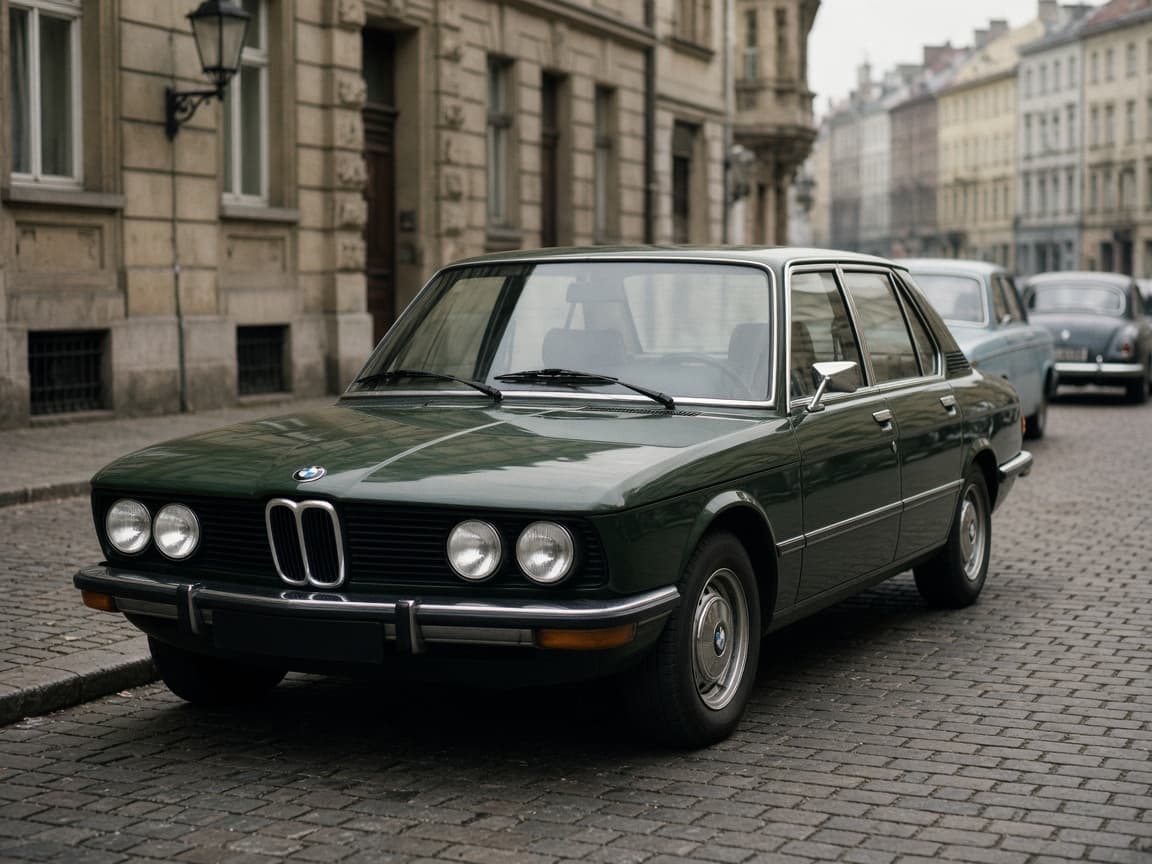
Studio illustration Generation 1 — E12 (1972–1981)
First BMW to carry the 5 Series name, and the three-digit badge system. Saloon only. 518/520/520i/525/528 and market derivatives, rear-wheel drive. M535i is an early high-performance derivative, not an M5. BMW records nearly 700,000 saloons. Do not apply CBS, xDrive or PHEV checklists here.
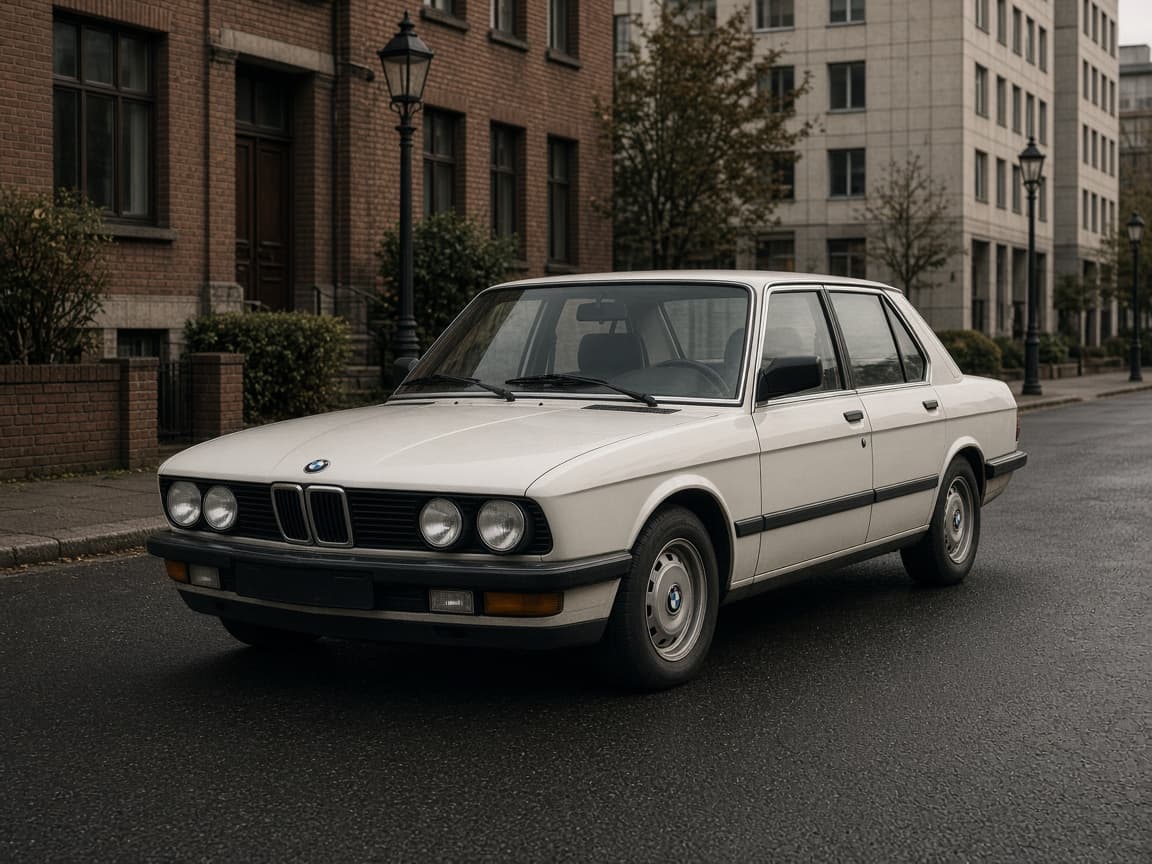
Studio illustration Generation 2 — E28 (1981–1988)
Evolutionary body with a substantial technical revision. First diesel 5 Series: 524td (M21). First M5, introduced in 1985. Rear-wheel drive. Manual and automatic depending on engine and market. BMW records more than 722,000 E28 vehicles and identifies the E28 M5 as the first M5 generation.
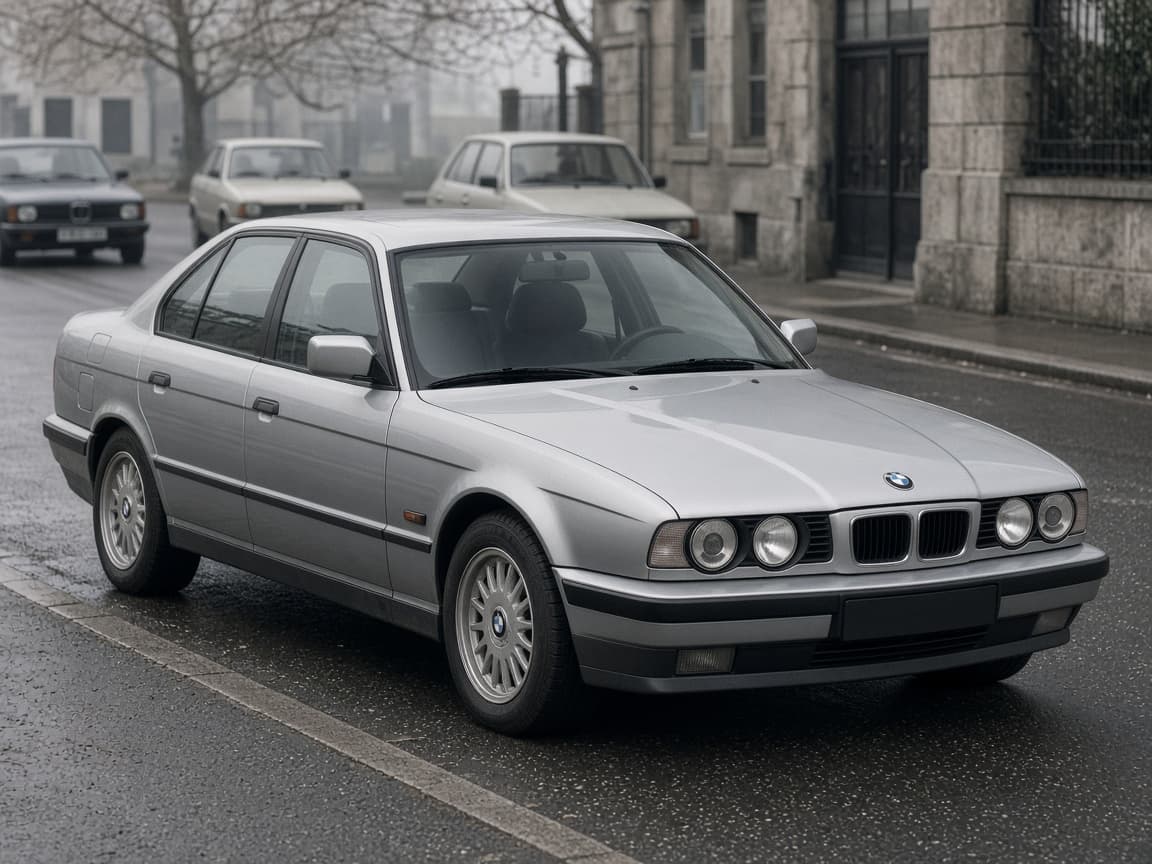
Studio illustration Generation 3 — E34 (1988–1996)
More refinement, space and aerodynamic efficiency. First 5 Series Touring in 1991. 525iX is the first all-wheel-drive 5 Series — store that drivetrain explicitly. V8 petrol arrived later in the generation. M5 available. Do not treat Touring or 525iX as a new generation.
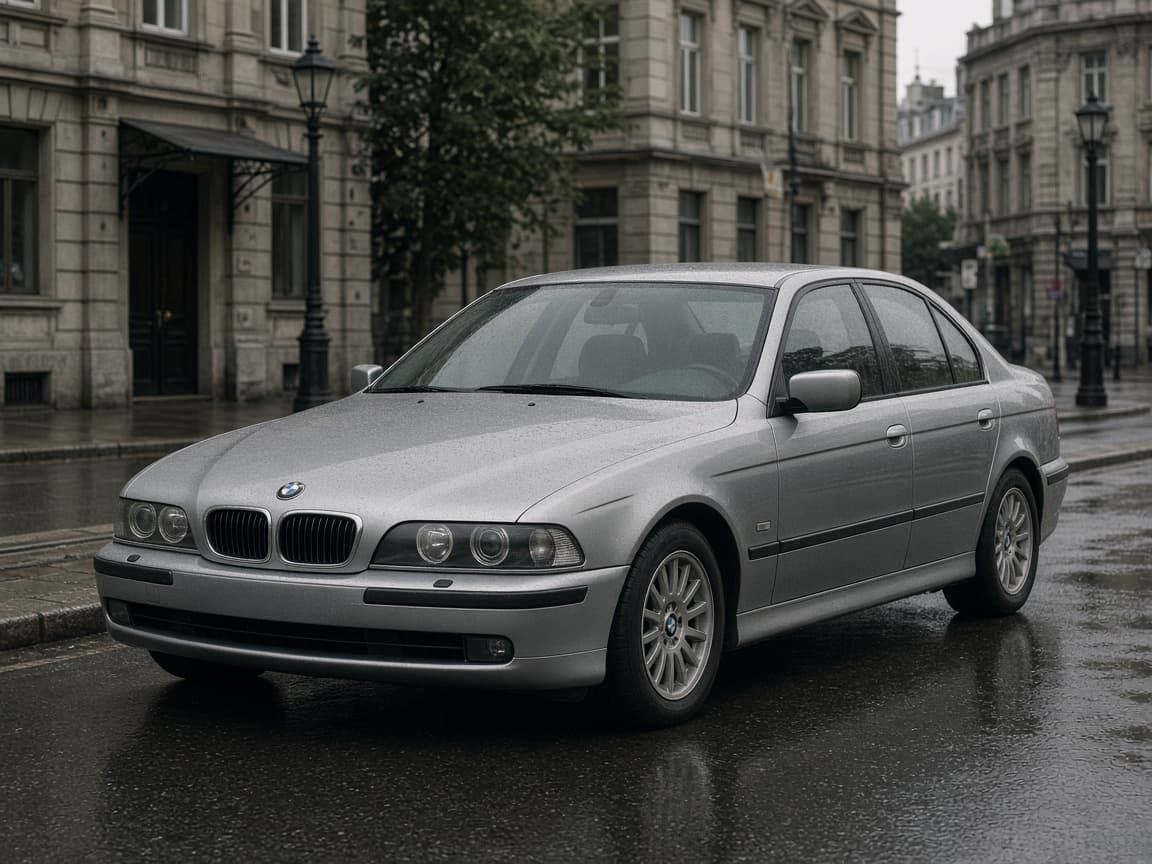
Studio illustration Generation 4 — E39 (1995–2004)
Lightweight construction and chassis refinement. Saloon and Touring. Six-cylinder and V8 petrol, diesels and M5. Rear-wheel drive; xDrive was not the general architecture. Aluminium-intensive suspension is a major feature and is configuration-specific, not a promise that every bushing is aluminium.
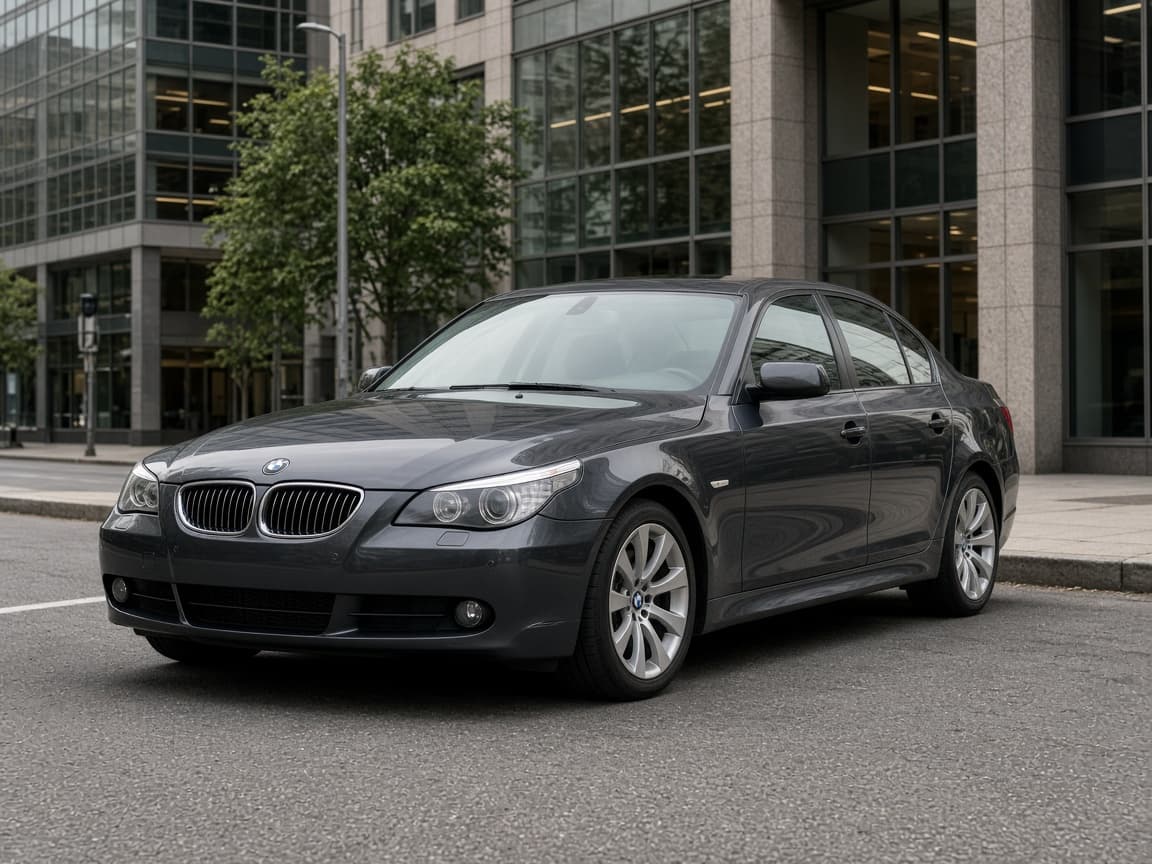
Studio illustration Generation 5 — E60 / E61 (2003–2010)
E60 Saloon and E61 Touring. New design language and a much heavier electronic architecture. Six-cylinder and V8 petrol, diesels, and the M5 V10. xDrive on selected derivatives. Active Steering and Dynamic Drive where specified. BMW reported more than one million units sold worldwide by the end of 2007. iDrive faults on this generation are not G60 software issues.
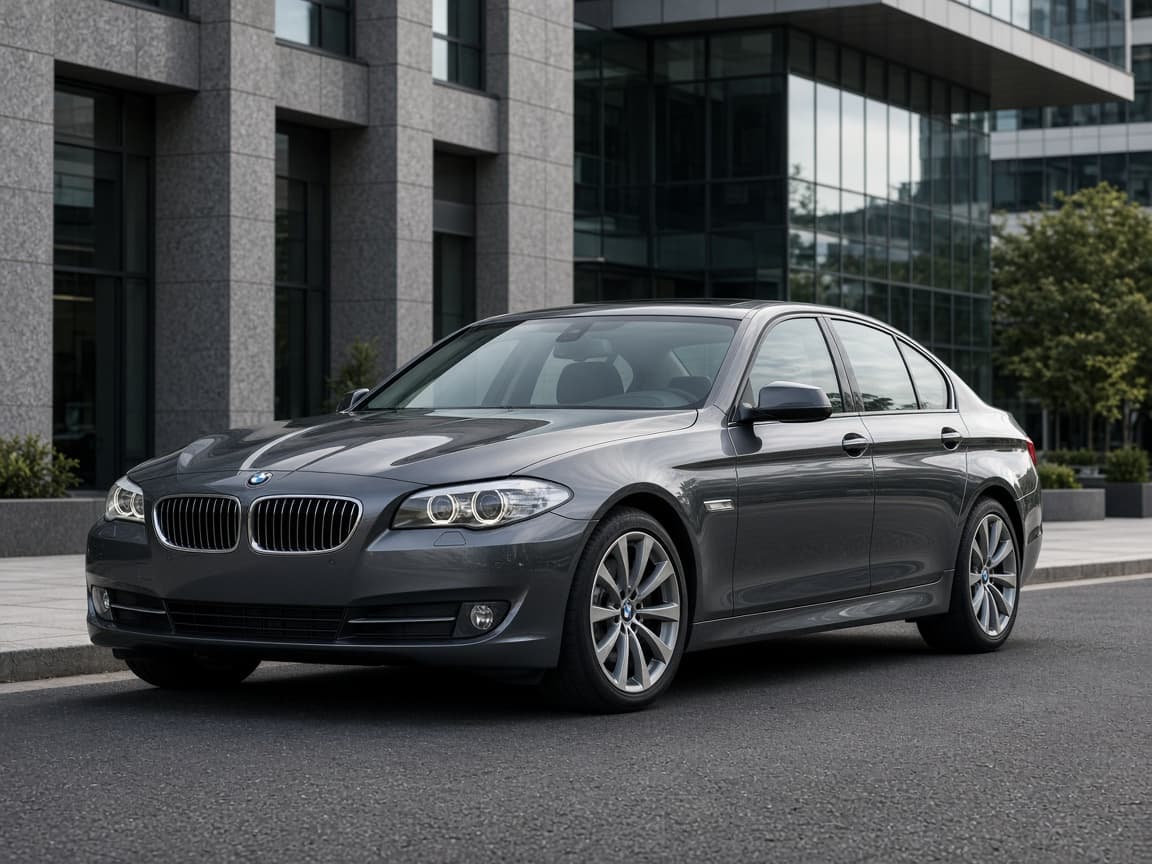
Studio illustration Generation 6 — F10 / F11 (2010–2017)
F10 Saloon and F11 Touring. Rear-wheel drive and xDrive. Four-, six- and eight-cylinder engines by market. 520d became a major European diesel. Later model years added 520e/530e-style electrified variants where the market offered them. F10 M5 uses the S63 4.4-litre twin-turbo V8. F07 5 Series Gran Turismo shares the era but is not a ninth generation.
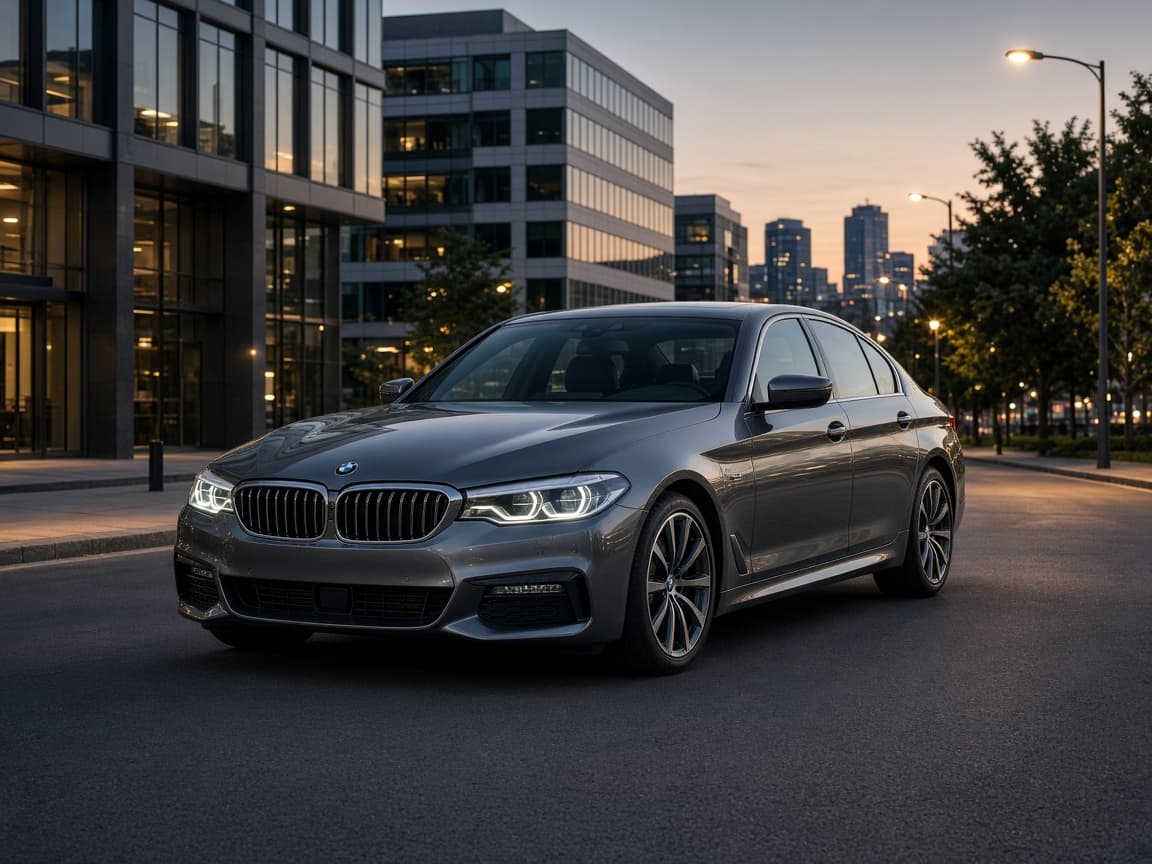
Studio illustration Generation 7 — G30 / G31 / G38 (2017–2023)
G30 Saloon, G31 Touring, G38 long-wheelbase saloon for selected markets, on CLAR. Petrol, diesel, plug-in hybrid (530e and related derivatives) and M5. The F90 chassis is the M5 of this generation, not a separate 5 Series generation. xDrive on many configurations. The 2020 facelift / LCI is a product update, not generation 8. 48V appears only where specified — do not infer it from the badge.
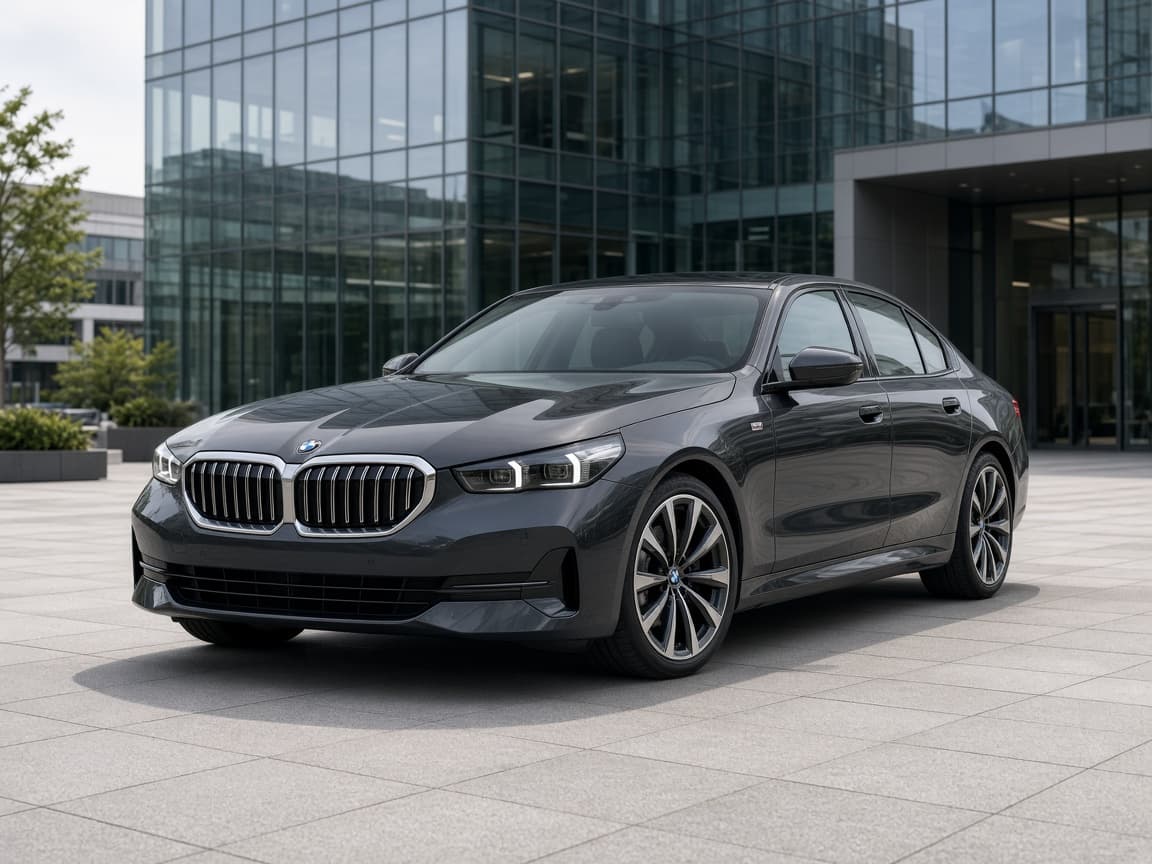
Studio illustration Generation 8 — G60 / G61 (2023–present)
Official eighth generation. G60 Saloon and G61 Touring, larger than G30/G31. Petrol and diesel, 48V mild hybrid where specified, 530e and 550e xDrive plug-in hybrids, fully electric i5 eDrive40 and i5 M60 xDrive, plus M5 and M5 Touring (S68). Curved Display, Interaction Bar and connected assistance are specification items, not universal standard. 2025/2026 model-year changes are updates, not a ninth generation. Primary saloon production: BMW Group Plant Dingolfing.
Always confirm VIN. VCE must not hand an E39 owner F10 or G60 technical threads merely because both cars are called 5 Series. Overlap years (1981, 1988, 1995, 2003, 2010, 2017, 2023) need a chassis code before a generation is assumed.
2. Family separation
5 Series vs i5
The i5 is the fully electric member of the eighth-generation family and has its own page at i5. Battery, charging and range figures live there. This 5 Series page keeps the G60/G61 relationship and does not host the i5 specification sheet. G68 India Long Wheelbase is not a global 5 Series generation.
5 Series vs M5
M5 is a high-performance derivative with its own identity, engines (from the 1985 E28 M5 through S63 and current S68) and ownership content, and it remains inside the 5 Series family. M5 Touring is a body-specific M record, not a volume Touring with an M badge guessed from options.
5 Series vs 6 Series
Do not merge historical 5 Series saloons or Tourings into the 6 Series. BMW hierarchy changed over time. Follow the VIN and model identity.
5 Series vs 7 Series
The 5 Series stays the executive / upper-mid-size line below the 7 Series, even as G60 dimensions and equipment have grown.
Related vehicles
The i5 is a separate electric hub. This page stays the 5 Series family record.
- BMW i5 (G60 Saloon / G61 Touring) — electric specifications, charging and battery health: i5
- i5 M60 xDrive and eDrive40 are derivatives on that hub, not combustion 5 Series engines
- G68 i5 Long Wheelbase is an India taxonomy and is not a global 5 Series generation
530e/550e plug-in hybrids stay on this 5 Series page. They are not the i5.
3. Body styles
Saloon / sedan
The defining body from E12 onward. Luggage and dimensions change by generation and by PHEV or i5 packaging. Do not copy G60 saloon litres onto an E39.
Touring / estate
Introduced on the E34 in 1991, then E39, E61, F11, G31 and G61. Self-levelling or air rear suspension appears only on selected Touring specifications. G61 (from 2024 in UK launch framing) can include combustion, PHEV and i5 Touring — each is its own powertrain record.
Long-wheelbase saloon
Offered on selected generations and markets, including G38. Store market and wheelbase explicitly. It is not a new generation.
4. i5, PHEV and M5 — distinct identities
These derivatives share a family relationship. They do not share one technical record.
i5 eDrive40
Fully electric G60/G61 member. Outputs, battery and range are published on the i5 hub (i5) for the derivative and market, not on this page. Record SoH, charging and software on the i5 record.
i5 M60 xDrive
Dual-motor performance i5. Power, torque and range live on the i5 hub for that derivative and body. It is electric all-wheel drive — not an S68 M5 and not an eDrive40.
530e and 550e xDrive
G30/G31 530e and related market derivatives, plus G60/G61 530e and 550e xDrive. Store gross/net battery, motor output, system output, AC charging and electric range for the production stage and market. 48V mild hybrid is a different system.
M5
High-performance derivative from the E28 (1985) onward. Notable later codes include the E60 V10 M5, F10 S63 twin-turbo V8, F90 (G30 generation — not a ninth 5 Series) and the current S68 M5. Brakes, cooling and transmission service follow the M specification, not the volume 520d.
M5 Touring
The current family includes M5 Touring as well as M5 saloon. Keep Touring body, S68 (or the applicable M engine) and M-specific chassis data on the record. Do not merge it with a G61 520d Touring.
5. Powertrains by generation
Engine-code mapping is production-stage and market aware. Families below are typical, not a promise that every car in the generation has every code.
E12 petrol
M10/M30-era fours and sixes depending on market, plus M535i. Rear-wheel drive. No diesel in this generation.
E28 petrol, 524td and first M5
Petrol sixes continue. M21 diesel arrives as 524td. The 1985 M5 is the first M5. Manual and automatic by engine and market.
E34 sixes, later V8, 525iX
M20/M30/M50 era petrols, diesels, later V8s and M5. 525iX is the AWD exception. Touring from 1991 uses the same generation, not a new one.
E39 six, V8, diesel, M5
M52/M54 and related sixes, V8 petrol, M57-era diesels where fitted, and M5. RWD architecture. Aluminium suspension components are a chassis feature, not an engine code.
E60/E61 six, V8, diesel, V10 M5
N52/N53/N54-family petrols by stage, M57/N47 diesels, V8s, and the S85 V10 M5. xDrive on selected derivatives only.
F10/F11 N20/N47/N55/N57 and S63 M5
Four-, six- and eight-cylinder by market. 520d is the volume European diesel story. Later 520e/530e-style PHEVs are model-year and market specific. F10 M5 is S63 4.4 twin-turbo V8.
G30/G31/G38 B47/B48/B58, 530e, F90 M5
CLAR petrol and diesel, 48V only where specified, 530e PHEV, and M5 on the F90 chassis. 2020 LCI does not change the generation or automatically add 48V.
G60/G61 combustion, 48V, 530e/550e, i5, S68 M5
UK launch documentation listed 520i, 530e, 550e xDrive, i5 eDrive40 and i5 M60 xDrive, with Touring joining in 2024. 48V applies to specified combustion models only. Availability still varies by country, emissions certification, model year and body.
Diesel emissions equipment (EGR, DPF, SCR/AdBlue) and petrol injection/turbo layout change by engine code. Do not infer 48V, PHEV or i5 from the 5 Series name.
6. Transmissions
Depending on generation and engine: 4-speed automatic, 5-speed automatic, 6-speed automatic, 8-speed ZF automatic, manuals on many historical derivatives, and dual-clutch or specialist units on selected cars. Current G60/G61 combustion and hybrid transmission data must be tied to the exact powertrain and production stage. i5 drive units are not ZF 8HP services.
7. Drivetrain
RWD is fundamental to the historical 5 Series. xDrive arrived on selected generations and derivatives. E34 525iX is the first all-wheel-drive 5 Series and must be stored as its own signal. Current G60/G61 models can use xDrive by derivative. PHEV and i5 layouts (including i5 M60 xDrive versus eDrive40) are explicit records, not guesses from the badge. xDrive cars need matched tyre circumference.
8. Chassis, suspension and steering
- Conventional steel springs on the historical core
- Self-levelling rear suspension on selected Touring models
- Adaptive suspension, Adaptive Drive / Dynamic Drive where fitted (notably selected E60-era cars)
- Integral Active Steering and rear-wheel steering only where the VIN has them
- Air suspension on selected configurations — often a Touring or executive option, not every car
- M Sport suspension and M Adaptive suspension are packages, not the volume chassis
- E39 aluminium-intensive suspension is a generation feature; bush and arm wear is still car-specific
Equipment is configuration-specific. Do not mark a system as standard for a whole generation.
9. Brakes and steering
- Volume saloon brakes are not M5 or i5 M60 brakes
- Regenerative braking changes pad wear patterns on PHEV and i5 — log it separately from hydraulic disc measurements
- Steering system and rear-wheel steering are options/stages, not generation defaults
Store front and rear disc diameter, disc type, M Sport or M Performance brake option, and regenerative braking on PHEV/i5. Tie the package to VIN, model year and wheel package.
10. G60 technology (specification, not standard-on-all)
- BMW Curved Display and BMW Interaction Bar
- Operating System / iDrive generation for the production stage
- Live Cockpit Professional, Head-Up Display, ConnectedDrive, OTA updates, Digital Key
- Driving Assistant and Parking Assistant packages
- Adaptive LED / Matrix LED and Iconic Glow kidney grille where fitted
- Panoramic glass roof where fitted
Later G60 cars can include the items below depending on market and trim. Do not assume every car has every item. Earlier generations use the iDrive generation of their production stage.
11. Charging — PHEV and i5
Charging equipment is market and derivative specific. A home wallbox invoice belongs in the record.
- 530e / 550e: record AC capability, cable and whether public charging was used — do not copy i5 DC behaviour onto a PHEV
- i5: log AC sessions and DC sessions separately, including pre-conditioning, interruptions and indicated power
- UK i5 eDrive40 launch framing up to 356 miles WLTP, and i5 M60 xDrive about 284.6–315.7 miles, are certification figures for that market sheet — not a guaranteed trip
- 12V battery health still matters on PHEV and i5; a weak 12V is not traction-battery state of health
Store software version at the time of any battery-health test.
12. Software
- Do not treat model year as software generation
- PHEV electric-range complaints are often software, 12V or usage — log the version before calling it a battery failure
- i5 thermal-management and charging-curve behaviour can change with software stage
iDrive generation, map/ConnectedDrive status and OTA or dealer campaigns are production-stage facts. E60 iDrive, G30 iDrive and G60 Operating System are not interchangeable. Record version, date and campaign identifier.
13. Owner-reported themes (not recalls)
These are generation- and engine-specific categories owners discuss. They are not confirmed defects and they are not a single global fault list.
Cooling system
Pumps, thermostats and expansion tanks differ from E12 mechanical systems to later electric pumps and PHEV/i5 thermal loops.
Oil leaks
Valve-cover, sump and filter-housing leaks depend on engine family. Photograph the leak and record the code.
Timing chain on selected engines
N47 and some later chain engines have their own history. It is not an E39 M62 topic and not an i5 topic.
Diesel EGR, DPF and SCR
M57, N47, N57, B47 and B57 do not share one aftertreatment layout. AdBlue equipment is market and year specific. Ask about short-trip use.
Turbocharging
Later petrol and diesel turbos (N20, N55, B48, B58, N57 and similar) fail differently from naturally aspirated E12/E28 engines.
Automatic transmission servicing
Fluid spec, pan and mechatronic history for the actual gearbox. Harsh shifts are not automatically a failed 8HP.
xDrive transfer case and driveline
Binding, tyre-diameter mismatch and transfer-case fluid apply to xDrive cars, including the historical 525iX as its own hardware generation.
Bushes, arms and air springs
Control-arm and bush wear is common with age and mileage. Air suspension is only the cars that have it — often selected Tourings.
Modules and iDrive
E60-era electronics and later head-unit faults are generation specific. Log the module and the software version.
12V battery
A weak 12V causes warning cascades on modern cars and charging quirks on PHEV/i5 even when the high-voltage pack is healthy.
PHEV charging, battery and software
Charging tests, electric-range consistency, cable condition and software history. Do not invent state of health without a test.
i5 charging, software and thermal management
DC performance, AC charging, software version, thermal limits and accident repairs near the battery enclosure. Owner reports stay labelled as reports.
14. Service — CBS, not one global interval
Modern 5 Series cars use Condition Based Service. Older cars follow the booklet of their market and engine. The rows below are a provenance checklist, not a universal mile chart.
| Item | Typical interval | Notes |
|---|---|---|
| Engine oil and filter | CBS or booklet | Engine-code specific. Not applicable as an ICE oil service on i5. |
| Air filter and cabin microfilter | CBS / often annual cabin | Confirm VIN. i5 still has a cabin filter. |
| Spark plugs | Petrol / PHEV handbook | Not diesel. Not i5. |
| Diesel fuel system, DPF, EGR, SCR | Where fitted | AdBlue only if the car has SCR. |
| Brake fluid | CBS, often ~24 months | Calendar item. Moisture does not wait for pad wear. |
| Coolant | Per thermal system | ICE, PHEV and i5 loops are different. |
| Transmission service | Per gearbox code | 4/5/6/8-speed and manuals differ. i5 drive unit is not an 8HP. |
| xDrive transfer case and differentials | Where fitted | Includes 525iX hardware of its own era. Match tyres. |
| Brakes, suspension, steering | Every service / as worn | M packages and air springs are configuration specific. |
| 12V battery | Test, do not guess | Separate from PHEV/i5 high-voltage health. |
| PHEV high-voltage and i5 battery/charging | Per BMW schedule and campaigns | Capacity, range, cables, SoH test, software version. |
| Software campaigns and recall completion | At service and when a campaign opens | VIN, market and production-date applicability. Not a global recall list. |
Trust iDrive or the retailer printout over a forum interval. Tag generation and chassis on every stamp.
15. Inspection and roadworthiness
Use the registration jurisdiction. Do not call every test an MOT.
- UK: MOT normally begins after the first three years, then annually. Record date, mileage, advisories and failures.
- UK: keep emissions results and brake/suspension observations next to CBS invoices.
- Europe: use the national periodic inspection (TÜV, ITV, contrôle technique and local equivalents).
- United States and Canada: inspection and emissions rules vary by state or province.
- Other markets: follow the authority where the car is registered, including imports.
An inspection pass is not a BMW service stamp, and a service stamp is not an MOT.
16. Recalls and campaigns
- VIN applicability and market/country
- Production date range and model year
- Campaign identifier, component, risk and remedy
- Remedy availability, completion status, source and date checked
Never show one global 5 Series recall list as if it applied to every car. Prefer official BMW recall tools and the national authority.
17. Dimensions
G60 saloon figures below are BMW launch framing versus G30. Touring and other markets differ.
- G60 saloon length about 5,060 mm
- Width about 1,900 mm
- Height about 1,505–1,515 mm depending on version
- Wheelbase about 2,995 mm
- BMW states G60 is 97 mm longer, 32 mm wider and 36 mm taller than its predecessor, with a 20 mm longer wheelbase
Store Touring luggage separately from saloon. PHEV and i5 packaging can change the boot. Do not treat these millimetres as E39 or F10 dimensions.
18. Used buying checklist
Identity first, then the powertrain that is actually on the VIN.
- VIN decoded, production date, model year, engine code, transmission, drive configuration, market specification and body style
- Cold start, oil leaks, cooling system, turbo operation where fitted, exhaust/emissions and service history
- Diesel: DPF, EGR, SCR/AdBlue if fitted, and short-trip history
- Petrol: oil consumption, cooling, ignition, turbo and the timing system for that engine family
- Automatic and xDrive: shift quality, fluid history, transfer case, differential noise, matched tyres
- PHEV: charging test, HV battery health where available, electric-range consistency, cables, 12V and software history
- i5: battery health, charging history, DC performance, AC charging, software version, underbody/battery enclosure and accident repairs
19. Provenance and Transfer Pack
Own a BMW 5 Series? Add it to your Garage. Record service, inspections, repairs, recalls, tyres, brakes, modifications and documents. Know your car. Record its history. Connect with owners. Keep its story.
- Vehicle identity — VIN, market, generation, chassis, engine or battery
- Ownership timeline and mileage chronology
- Service history, including BMW digital records and independent invoices
- Inspection history (MOT or the local test) and recall completion
- Major repairs, accident declarations, tyres and brakes
- Software updates and, where applicable, PHEV/i5 battery records
- Modifications, photos and original equipment
- Transfer Pack PDF: identity, ownership, mileage, service, inspection, recalls, major repairs, battery records if applicable, modifications, supporting documents
20. Community
Discussions should prefer the exact generation, engine and powertrain, while still allowing technically relevant cross-generation threads. Recommended categories:
- General 5 Series discussion
- E12 · E28 · E34 · E39
- E60/E61 · F10/F11 · G30/G31 · G60/G61
- M5 · i5
- Maintenance and DIY · Troubleshooting and repairs · Builds and mods
- Buying and selling · Touring / estate owners · PHEV and EV ownership · Guides and resources
21. Why owners stay
- Eight-generation executive saloon and Touring lineage with a clear chassis-code history
- RWD core, with xDrive and 525iX available to record rather than assume
- G60 keeps combustion, PHEV, i5 and M5 available as distinct choices in one family
- CBS plus a Transfer Pack gives used buyers something better than a vague full-history claim
22. What trips buyers up
- Treating every 5 Series as the same engine, gearbox and service interval
- Calling a facelift a new generation, or calling F90 a ninth generation
- Copying UK i5 miles or G60 dimensions onto other markets and generations
- Ignoring xDrive tyre matching, diesel aftertreatment or PHEV/i5 battery evidence
23. Official resources
Preferred order: BMW owner documentation, BMW technical data for the exact market and model year, BMW recall information, national recall authority, national roadworthiness authority, BMW press technical releases, then independent data. Owner communities stay labelled as owner-reported.
- BMW press and owner literature for generation history and G60 positioning — confirm the market sheet before treating a figure as universal
24. Data quality rules
Never store a 5 Series specification without generation, chassis code, production stage, market, model year, engine code or battery identity, powertrain, transmission, drivetrain and body style where they are known. Never one global service interval. Never treat a facelift as a new generation unless BMW says so. Never merge i5, M5 and standard 5 Series specs. Never treat owner-reported issues as confirmed defects.
25. V2 technical database
V2 adds structured records rather than prose alone. ICE: engine code and family, turbo, injection, oil spec and capacity, cooling layout, timing type, emissions stage, SCR/AdBlue, DPF. PHEV: gross/net battery, motor and system output, AC charging, electric range, HV health, charging history. i5: gross/net battery, motor configuration, inverter generation, charging curve, AC/DC capability, chemistry where BMW documents it, SoH, software generation, thermal-management stage. Chassis: suspension code, adaptive hardware, steering, brake package, wheels/tyres, xDrive hardware. Ownership: service, inspection, recalls, repairs, battery health, charging events, tyres, brakes, software, documents and photos.
Guides & checklists
More BMW models
Compare platforms, service themes and digital service history tools across the range.
FAQ
How many BMW 5 Series generations are there?+
Eight: E12, E28, E34, E39, E60/E61, F10/F11, G30/G31/G38 and G60/G61. BMW identifies G60 as the eighth generation. A facelift, including the 2020 G30 LCI and 2025/2026 G60 equipment changes, is not a new generation.
When did the BMW 5 Series start?+
1972, with the E12 saloon. BMW records production of that generation ending in 1981.
When did the 5 Series first get a Touring?+
1991, during the E34 generation. Earlier 5 Series cars in this lineage are saloons.
When did the 5 Series first get all-wheel drive?+
The E34 525iX introduced all-wheel drive. Later xDrive is a different, generation-specific system. Do not treat every 5 Series as AWD.
When did the 5 Series become electric?+
The eighth-generation G60/G61 introduced the fully electric i5 (eDrive40 and M60 xDrive, plus later market derivatives). Plug-in hybrids such as 530e/550e are not the i5.
Is the i5 a separate model?+
For The Owners Club the i5 should keep its own model page and taxonomy while staying strongly linked to the G60/G61 5 Series family. Do not merge i5 battery data into a combustion 5 Series record.
5 Series owner discussions
Latest conversations from BMW 5 Series owners in the club.
No discussions yet for the 5 Series. Be the first owner to start a conversation!
Ask a Question / Post PhotoJoin the BMW Owners Club Community
Add it to The Owners Club for free to track its maintenance timeline, import UK MOT history, and transfer verified provenance when you sell.