Owners Club · Digital service history
Ford Puma Owners Club — Maintenance & Provenance
Independent owners’ resource. This page is produced by The Owners Club and is not affiliated with, endorsed by, or sponsored by Ford Motor Company. Specifications, service intervals, recalls and software campaigns can change by model year and build date. Always verify vehicle-specific information using the VIN, Ford service records and the official recall checker.
Compact crossover · 2019–present · ICE / mHEV / ST only. Completely unrelated mechanically to the original 1997–2002 Puma Coupé. Puma Gen-E is a separate battery-electric model with its own hub. Initial UK range centred on 1.0 EcoBoost Hybrid; also 1.0 EcoBoost, 1.5 EcoBlue, Puma ST and later Powershift / facelift versions.
Arrived from a club search? See the exact-match Ford Puma Owners Club landing — then use this hub for platforms, issues and the full guide cluster.
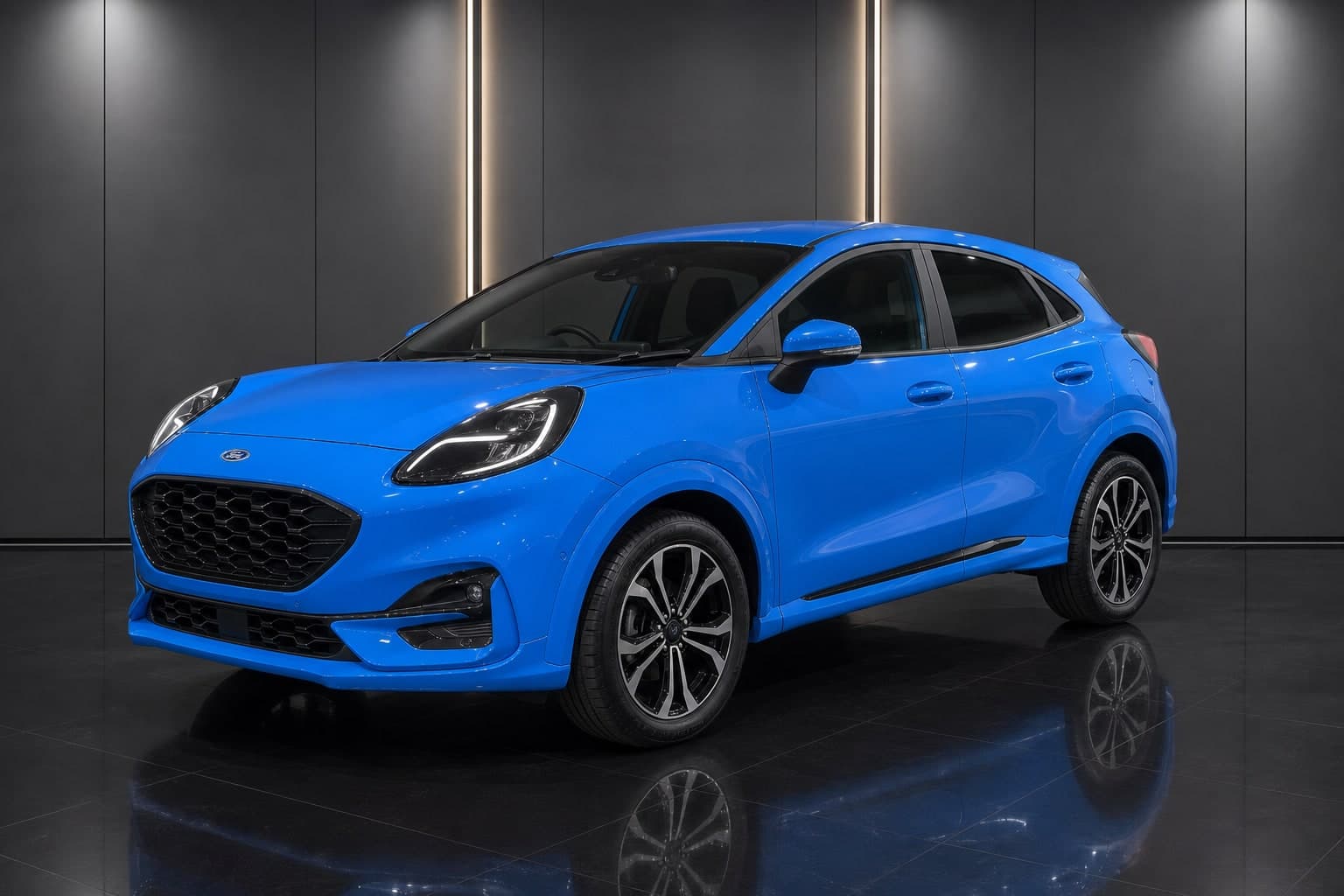
Read this first: this is the modern Puma
The modern Ford Puma is completely unrelated mechanically to the original 1997–2002 Puma Coupé. Ford introduced the modern Puma as a compact crossover in 2019 — five-door body on modern Ford compact-car architecture, with the initial UK range centred on the 1.0-litre EcoBoost Hybrid powertrain. The modern range has included 1.0 EcoBoost, 1.0 EcoBoost Hybrid / mHEV, 1.5 EcoBlue diesel, Puma ST, Puma ST Powershift, later facelifted versions, and Puma Gen-E as a separate battery-electric model.
The modern Puma is a compact crossover designed around practicality and driving dynamics. Original specification themes included five doors, five seats, 1.0-litre three-cylinder EcoBoost, 48V mild-hybrid on mHEV models, 125 PS and 155 PS versions, MegaBox storage, FordPass Connect and driver-assistance systems. The mild-hybrid system uses a belt-driven integrated starter/generator and a 48V lithium-ion battery — recovering energy during braking/coasting and providing electric torque assistance. Ford highlights an 80-litre MegaBox and more than 450 litres of luggage capacity with five people onboard in the 2024 version.
1. Generations & platforms
Modern Puma — 2019–2023
Early UK specifications included 1.0 EcoBoost Hybrid 125 PS and 155 PS, 6-speed manual, later automatic configurations, 1.5 EcoBlue and Puma ST 1.5 EcoBoost. Ford’s own maintenance documentation identifies the 2020 Puma with both 1.0 EcoBoost and 1.0 EcoBoost mHEV, plus 1.5 EcoBlue and Puma ST 1.5 EcoBoost.
Puma facelift — 2024+
Ford’s 2024 Puma introduced a revised interior and exterior, larger digital displays and updated connectivity. Range included 1.0 EcoBoost Hybrid 125 PS and 155 PS, 1.0 EcoBoost Hybrid 170 PS in Puma ST Powershift, and 7-speed Powershift automatic on specified versions.
Puma Gen-E — a separate model
Puma Gen-E is the fully electric version of the Puma — a genuinely different car mechanically, with its own high-voltage battery, charging system, electric motor and EV-specific warranty and recall history. If you're researching a battery-electric Puma rather than the petrol/hybrid crossover covered on this page, see the Puma Gen-E page instead.
2. Puma crossover: ownership strengths
- Compact crossover format with practical boot and MegaBox storage
- 1.0 EcoBoost mHEV availability — 125 PS and 155 PS early mHEV versions
- Manual and Powershift automatic availability depending on model/year
- Puma ST performance version (incl. ST Powershift on later cars)
- Modern connectivity and a strong Ford dealer/service network
- Good availability of vehicle-specific diagnostic information
3. Puma crossover: things to watch
- Documented UK safety recalls spanning driver airbag, MHEV battery connections, eCall, oil separator, fuel-line chafing, instrument-cluster / restraint / hybrid / rear-view camera software — build date and VIN are critical
- Not every Puma is affected by every campaign — never assume from model year alone
- mHEV 48V system is integral to the powertrain — monitor hybrid warnings, Stop & Start, regen, gauge and electrical behaviour
- Do not use one generic oil interval — follow Service Portfolio and IOLM; short trips/city/load/towing/hills can shorten oil-change requirement
- Battery-electric Gen-E is a different car — HV battery, charging and EV warranty themes belong on the Gen-E hub
4. Known issues — check these before assuming a fault
Not diagnostic advice. Separate confirmed UK recalls (with campaign numbers below), MOT statistics and individual reports. Always verify for your exact build date and VIN.
MHEV battery connections — early cars
Recall R/2020/248 concerned certain Puma mild-hybrid vehicles built from November 2019 to July 2020. Concern: hybrid battery connections might not have been torqued to Ford specification. Remedy: check and torque correctly. Campaign covered 428 vehicles. A second campaign, R/2021/008, concerned a smaller group of MHEV vehicles built in September–October 2020 and required inspection of the 48V battery cable connections.
eCall system
Multiple eCall-related campaigns. R/2021/177 covered certain Pumas built July 2019–February 2021 (eCall software). R/2022/239 covered February–July 2022 builds where eCall could stop working because of a malfunction — remedy: Telecommunications Module replacement; Puma allocation 9,388 vehicles. Check eCall warning, emergency-call functionality, telecommunications module, Ford connectivity and recall completion.
Engine oil separator
Recall R/2022/171 covered certain Pumas built June 2020–May 2022. The engine oil separator could have been damaged before engine assembly. Remedy: inspection and replacement where damage or leakage was found. Campaign covered 9,818 vehicles across the affected Ford applications.
Fuel-line chafing
Recall R/2025/084 concerns certain Puma, Fiesta and Courier vehicles built within the specified production window. The fuel-line support shield could chafe against the fuel line and damage it. Remedy: replace the support shield and inspect/rework the fuel line where required.
Instrument-cluster software
Recall R/2024/278 concerns instrument-panel-cluster software on affected Puma vehicles. Listed as a software/compliance campaign. On used cars, check outstanding software campaigns have been completed — a functioning dashboard does not prove the campaign was addressed.
Restraint-control software
Recall R/2023/264 affected certain Puma vehicles built in 2023. Concerned configuration of the Restraint Control Module; required a configuration update. Affected population approximately 13,487 vehicles.
2024 mHEV hybrid-system software
Recall R/2025/196 affected certain Puma mHEV vehicles built April–September 2024. Potential symptoms: loss of torque assistance, loss of regenerative braking, loss of Stop & Start, hybrid gauge not operating, reduced performance, reduced fuel economy. Remedy: Battery Energy Control Module software update.
Rear-view camera software
Recall R/2025/359 concerns software that can cause rear-view camera behaviour problems, including reduced rear visibility or the camera remaining active after reversing. Remedy: software update.
Driver airbag retention (R/2020/045)
UK recall table includes R/2020/045 — driver airbag retention. As with all campaigns, apply only to specific vehicles/build ranges — check VIN/registration.
Evidence — MOT (2020 Pumas)
For 2020 Pumas, UK MOT data records 27,774 vehicles, 53,557 tests, 40,515 recorded faults and 75.6 faults per 100 tests (model-year average 91.3). Brakes: 51.1 faults per 100 tests vs 50.8 average. Most common recorded issues included tyre tread, tyre damage, brake discs/drums, brake pads and headlamp alignment. MOT evidence — not a diagnosis of an individual Puma. For 2023 Pumas the available dataset is much smaller — do not treat individual fault counts as representative of the entire fleet. Owner surveys are another source and should be kept separate from MOT evidence.
UK recall examples (VIN-specific)
R/2020/045 driver airbag retention · R/2020/248 MHEV battery connections · R/2021/008 48V battery connections · R/2021/177 eCall software · R/2022/171 engine oil separator · R/2022/239 eCall telecommunications module · R/2023/264 restraint-control configuration · R/2024/278 instrument-cluster software · R/2025/084 fuel-line chafing · R/2025/196 mHEV hybrid-system software · R/2025/359 rear-view camera software. These apply to specific vehicles/build ranges — VIN/registration checking takes priority via GOV.UK / Ford.
5. UK service interval at a glance
| Maintenance | Interval | Notes |
|---|---|---|
| Scheduled service | Vehicle/engine specific | Ford: intervals vary by model and engine — use Service Portfolio / Ford Account / maintenance schedule. |
| Engine oil | Vehicle-specific + IOLM | Correct Ford specification. Short trips, city, load, towing, hills can shorten requirement. |
| Oil change warning | Within 1,000 miles or 1 month | Whichever comes first after “Oil change required” appears (Ford guidance). |
| Oil / air filters; spark plugs | Per schedule | Where applicable. |
| 48V mHEV system | Monitor continuously | Hybrid warnings, Stop & Start, regen, gauge, battery-related warnings. |
| Brakes / tyres / suspension | Regular inspection | Align with MOT watchpoints (tyres, discs/pads). |
| eCall / cameras / cluster | Function + recall status | Software campaigns may apply. |
| Recall / VIN check | Before purchase + when notified | Not a one-time stamp. |
Ford does not recommend one generic service interval for all Puma versions. Exact schedule depends on model year, engine, powertrain, transmission and configuration. Confirm in the Service Portfolio before booking work. Gen-E EV schedules don't apply to ICE/mHEV cars.
6. Official sources & independent evidence
Official links are for convenience. The Owners Club has no commercial relationship with Ford and cannot confirm pricing, availability or booking. Always verify recalls and intervals against your VIN.
- Ford UK — service intervals depend on vehicle model and engine; use Service Portfolio / Maintenance Schedule
- Ford official Puma material — 48V mHEV system, 125/155 PS engines, technical architecture
- GOV.UK / DVSA — registration/model/year safety recall checking
- MOTSearch / MOT statistics — 2020 Puma fault rates cited above (GOV.UK-based)
- Related: Puma Coupé 1997–2002 · Fiesta · Puma Gen-E · Kuga · Focus
7. What to actually keep on top of
- Service history — oil, filters, plugs, brake fluid, coolant, brakes, tyres, suspension, transmission requirements, software updates, recall completion
- Oil changes — correct Ford specification; respond to IOLM / oil-change warning within 1,000 miles or one month
- 48V mild-hybrid system on mHEV cars — warnings, Stop & Start, regen, gauge, unusual electrics
- Brakes and tyres — MOT evidence flags tread, damage, discs/drums and pads as common items
- VIN recall status for airbag, MHEV connections, eCall, oil separator, fuel-line, restraint/cluster/hybrid/camera software
- If you're looking at a Gen-E, use that model's hub — high-voltage and charging records aren't part of ICE/mHEV provenance
8. Own a Ford Puma? Protect its resale value
Add it to The Owners Club for free to track its maintenance timeline, import UK MOT history, and transfer verified provenance when you sell. VIN recall completion, IOLM-aligned oil records and mHEV/ST notes are exactly what the next researched buyer will ask for.
- Verified maintenance timeline with garage invoices
- UK MOT import (DVSA)
- VIN recall, mHEV, software and ST event tracking
- Verified Transfer Pack PDF for sale
Guides & checklists
More Ford models
Compare platforms, service themes and digital service history tools across the range.
FAQ
Is the modern Puma the same car as the 1997 Puma?+
No. The modern Puma is a compact crossover launched in 2019. The original Puma was a three-door sports coupé produced from 1997–2002 — see the Puma Coupé page.
Is every Puma a mild hybrid?+
No. Ford’s early UK range included both 1.0 EcoBoost and 1.0 EcoBoost Hybrid, as well as 1.5 EcoBlue.
What is the 48V system?+
The mHEV system uses a belt-driven integrated starter/generator and 48V lithium-ion battery to recover energy and provide torque assistance.
Does the Puma have an automatic gearbox?+
Yes. Later Puma versions are available with Ford’s seven-speed Powershift automatic, including specified 125/155 PS versions and the Puma ST Powershift.
What should I check before buying a used Puma?+
At minimum: VIN recall check, full service history, correct engine oil history, warning lights, 48V system on mHEV, eCall, instrument cluster, cameras, brakes, tyres, suspension, MOT history/advisories, accident/repair history and outstanding software campaigns.
Is the Puma Gen-E on this page?+
No. This page covers 2019–present ICE / mHEV / ST only. Puma Gen-E (BEV) has its own hub at the Puma Gen-E page so HV battery, charging and EV themes stay separate.
Puma owner discussions
Latest conversations from Ford Puma owners in the club.
No discussions yet for the Puma. Be the first owner to start a conversation!
Ask a Question / Post PhotoJoin the Ford Owners Club Community
Add it to The Owners Club for free to track its maintenance timeline, import UK MOT history, and transfer verified provenance when you sell.