Owners Club · Digital service history
Ford Focus Owners Club — Maintenance & Provenance
Independent owners’ resource. This page is produced by The Owners Club and is not affiliated with, endorsed by, or sponsored by Ford Motor Company. Specifications and intervals change — always confirm against your handbook (VIN) or an authorised Ford dealer before booking work. The Focus was Europe’s benchmark family hatchback for a generation — genuinely class-leading handling across every generation, and for years one of the UK’s best-selling cars. Ford officially ended Focus production on 14 November 2025 at its Saarlouis plant in Germany, a week ahead of the originally announced date, with no direct replacement planned. Ford has confirmed a new mid-sized crossover is coming in 2027, but it will be sold alongside the Kuga rather than replacing the Focus, and there’s no indication the Focus name will continue. This makes the Mk4 (2018–2025) the final Focus — there is no Ford Focus 2026 — closing a nameplate that ran for 27 years.
This site covers the two generations most relevant to today’s used-car buyers and owners: Mk3 (2011–2018) — the generation with the largest surviving population on UK roads, and the one carrying the most significant known issues — and Mk4 (2018–2025), the final generation on an all-new C2 platform with meaningfully different (and generally improved) engineering, though not without its own quirks.
Arrived from a club search? See the exact-match Ford Focus Owners Club landing — then use this hub for platforms, issues and the full guide cluster.
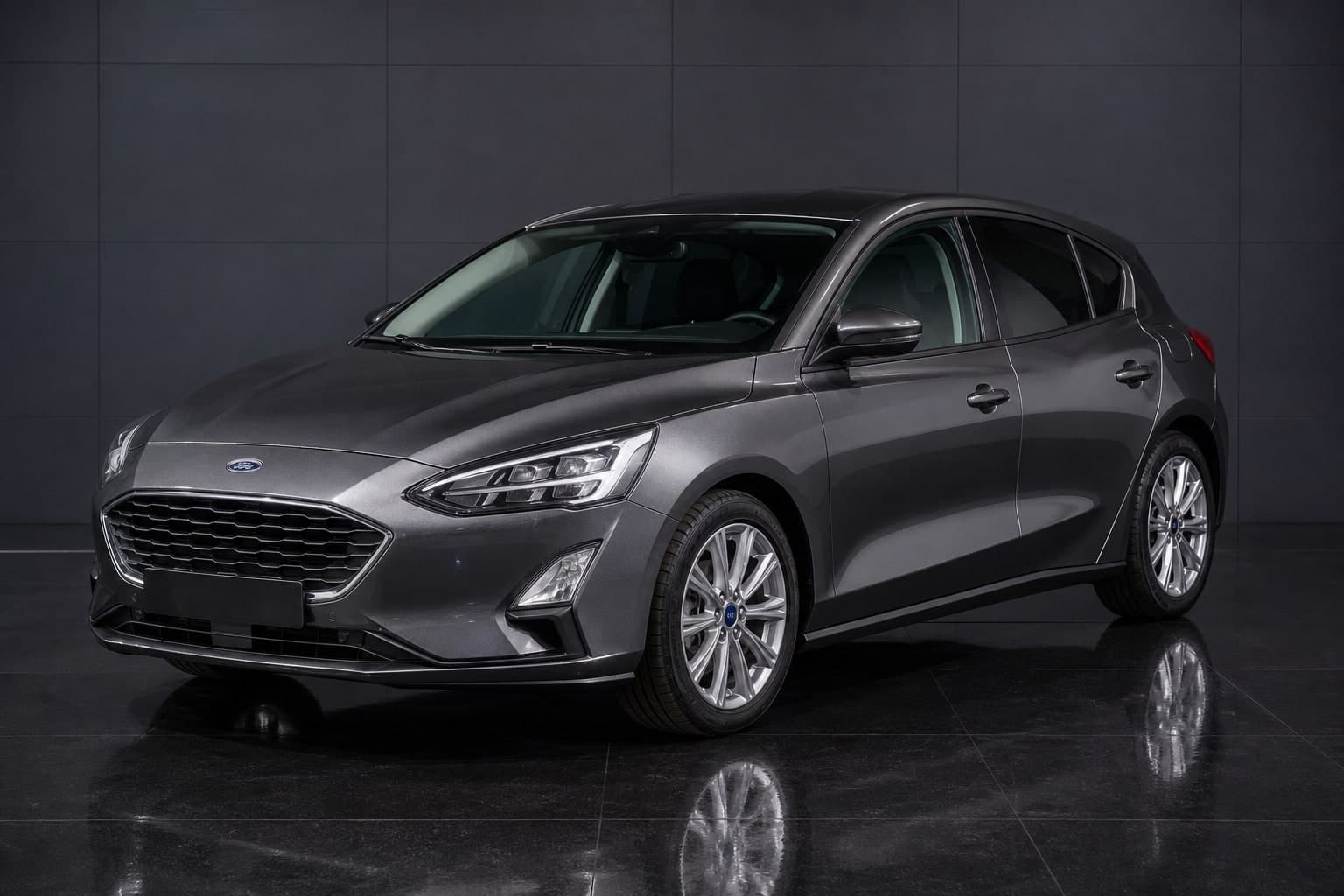
1. Generations & platforms
Focus Mk3 (2011–2018)
Ford EcoBoost · Ford Duratorq (diesel) · Ford PowerShift. Introduced the 1.0 EcoBoost engine to the Focus range, alongside Control Blade independent rear suspension for class-leading handling. Performance range included the Mk3 ST (2.0 EcoBoost, 250bhp) and the Mk3 RS (2016–2018, 350bhp, four-wheel drive). Early (2011–2013) 1.0 EcoBoost cars also carry the degas-hose coolant recall theme.
Focus Mk4 (2018–2025)
Ford C2 platform · Ford EcoBoost. An all-new, wider and lower platform with multi-link rear suspension replacing the Mk3’s twist-beam setup on lower trims. Engine range included the revised 1.0 EcoBoost (timing chain for camshaft from December 2019, though the oil pump remains belt-driven), 1.5 EcoBoost, and 1.5/2.0 EcoBlue diesels, with mild-hybrid (mHEV) 1.0 EcoBoost variants arriving in 2020. Dropped PowerShift for a classic 8-speed torque-converter automatic. The final Focus — production ended 14 November 2025 at Ford’s Saarlouis plant, Germany, with no successor planned.
Mk4 years on this site are 2018–2025 only. Production ended permanently on 14 November 2025; there is no Focus 2026 model year and no direct replacement in Ford’s European range.
2. Focus: the Honest Pros
- Consistently rated among the best-handling cars in its class across both generations — genuinely rewarding to drive, not just a sensible choice
- Huge parts and independent-garage support given how many were sold over 27 years — this keeps running costs down versus rarer rivals even now that production has ended
- Mk4’s multi-link rear suspension (replacing Mk3’s cheaper twist-beam setup on lower trims) is a genuine engineering step up in ride and handling
- Mk4’s 8-speed torque-converter automatic is a much more dependable design than the PowerShift dual-clutch it replaced
- Genuinely fast, characterful performance variants exist at both ends of the range — the Mk3 RS (350bhp, all-wheel drive, launched with a widely publicised “drift mode”) is a particular high point
3. Focus: the Honest Cons
- The 1.0 EcoBoost’s wet-belt design is the single most important thing to check on any Mk3, and still partially applies to the Mk4 (cam chain from Dec 2019, oil-pump belt remains)
- PowerShift automatic gearboxes on the Mk3 have a genuinely poor reliability reputation — most specialists recommend avoiding this transmission entirely rather than treating it as a minor risk
- Early Mk4 automatics (2018–2019) had software calibration issues causing hesitation and judder at low speed, before later software updates improved behaviour
- Mk4 petrol EcoBoost engines can suffer gasoline particulate filter (GPF) clogging on cars used mainly for short urban trips — a newer, emissions-related issue that didn’t affect the Mk3
- Mk4 mild-hybrid (mHEV, 2020 onward) variants have documented 48V battery drain issues
- Production has permanently ended with no successor — while this currently supports resale value, it also means no further model-year updates or continued dealer focus on Focus-specific parts long-term
4. Known issues — check these before assuming a fault
Not diagnostic advice — themes owners often document in service history. Always verify for your exact engine and year. If you’ve had something fixed that isn’t listed, post it in the Focus discussion board.
1.0 EcoBoost wet-belt (Mk3, and partially Mk4)
As with the Fiesta and Puma, the Mk3’s 1.0 EcoBoost drives its oil pump via a belt that runs inside the engine, submerged in oil rather than externally. Ford recommends replacement at 10 years or 100,000 miles, though most independent specialists advise every 8 years regardless of mileage — by now, every surviving Mk3 will be at or past the point where this is relevant. Confirm before buying whether it’s already been done; budget at least £1,000 if not. The Mk4 improved this partially: from December 2019, the 1.0 EcoBoost switched to a timing chain for camshaft drive, addressing the main wet-belt failure mode — but the oil pump on these engines is still belt-driven internally, so don’t assume a Mk4 is entirely free of this concern. Confirm exactly which specification your Mk4’s engine uses. See the dedicated Ford & Stellantis wet-belt guide linked below.
Degas hose coolant leak (early Mk3, 2011–2013 1.0 EcoBoost)
A specific, documented quality issue on the earliest 1.0 EcoBoost Mk3s: a small plastic coolant pipe (the “degas hose”) was subject to a dealer service recall after reports of it splitting, particularly at speed — a split can lead to coolant loss and, in the worst cases, serious engine damage. Distinct from the wet-belt theme. Given how much time has passed, most surviving cars from this window should already have had the modification, but it’s worth confirming specifically rather than assuming.
PowerShift (DPS6) dual-clutch automatic — Mk3 only
This is the single thing most specialists recommend avoiding outright on a used Mk3, rather than just checking carefully. Symptoms range from annoying judder and hesitation pulling away to complete clutch failure. A meaningful nuance: early cars used a dry-clutch design, later replaced by a more robust wet-clutch version — if you’re set on a PowerShift Mk3, confirm which type it has and insist on evidence of the recommended three-year fluid and filter change. Most buying guides simply recommend the 6-speed manual instead.
Mk4 automatic — early software calibration (2018–2019)
The Mk4 replaced PowerShift with a conventional 8-speed torque-converter automatic — a fundamentally better design — but early production cars had software controlling shift points and pull-away behaviour that could cause hesitation or a brief judder at low speed. This was substantially improved through software updates; confirm current software version on any 2018–2019 automatic Mk4 you’re considering.
Cooling and turbo pipes
EcoBoost cars weep at plastic coolant parts and charge pipes. Invoice the complete repair, not a top-up. On early Mk3s, confirm the degas hose recall specifically rather than treating every coolant weep as the same job.
Control Blade rear suspension wear (Mk3)
The sophisticated independent rear suspension that gives the Mk3 its class-leading handling is harder on its rubber components than a simpler setup. Clunking over speed bumps or ramps, or visible misting/leaking on the rear shocks, is a common and straightforward DIY-fixable issue — replacement shocks and bushings are widely available and affordable.
GPF clogging on short trips (Mk4 petrol EcoBoost)
Like a diesel DPF, the gasoline particulate filter fitted to Mk4 EcoBoost engines to meet emissions regulations can clog if the car is mainly used for short urban journeys without a regular longer run to let it regenerate properly. A newer issue that didn’t affect the Mk3.
mHEV 48V battery drain (Mk4, 2020 onward)
Mild-hybrid Mk4 variants have a documented pattern of excessive drain from the 48V system’s battery, particularly relevant if the car sits unused for extended periods. Distinct from the conventional 12V battery.
5. UK service interval at a glance
| Service | Miles / months | Notes |
|---|---|---|
| Scheduled service (Ford Focus) | 10,000 / 12 | Whichever comes first for many UK handbooks. Confirm exact figure for your engine/year. |
| 1.0 EcoBoost wet-belt (Mk3) | 100,000 (Ford) / 96 (8yr specialists) | Don’t exceed this regardless of low mileage — belt condition is time-based as much as mileage-based. Mk4: confirm chain vs wet-belt oil-pump specification. |
| PowerShift fluid and filter (Mk3, where fitted) | — / 36 | Critical for longevity; don’t skip on a used Mk3 with this gearbox. Confirm dry- vs wet-clutch type. |
| GPF/DPF check (Mk4 petrol/diesel) | — / At every service | Especially relevant on cars mostly used for short trips. |
| mHEV 48V battery check (Mk4, 2020+) | — / 12, or sooner if symptoms | Distinct from the conventional 12V battery. |
| Cabin pollen filter | — / 12 | Standard interval for any vehicle. |
The Focus follows Ford’s standard combustion service scope. Intervals are whichever comes first (miles or months) unless noted. They vary by engine, model year, market and service regime. Confirm in the handbook, service booklet or dealer system for your VIN before you book work.
6. Official Ford resources
Official links are provided for convenience and accuracy. The Owners Club has no commercial relationship with Ford and cannot confirm pricing, availability or booking on their behalf — please verify directly with an authorised dealer. As a discontinued model, there’s no current Focus overview page on Ford UK — link owners to the general service/owner section instead.
- Owner’s handbook and service schedule for your VIN — follow the edition matched to your model year, engine and market
7. What to actually keep on top of
- 1.0 EcoBoost wet-belt history on any Mk3, and confirm the exact specification (chain vs wet-belt oil pump) on any Mk4 — the single most consequential check across both generations
- Degas hose modification status on any 2011–2013 Mk3 1.0 EcoBoost
- Avoid PowerShift-equipped Mk3 automatics unless you have strong evidence of diligent fluid/clutch maintenance — and confirm dry- vs wet-clutch type if you’re considering one anyway
- Software version on early (2018–2019) Mk4 automatics, given the documented early calibration issues
- Rear suspension condition on the Mk3 — a clunk over bumps is usually a cheap, known fix, not a reason to walk away, but worth factoring into a purchase price
- GPF regeneration history on Mk4 petrol EcoBoost, and 48V battery health on mHEV variants, particularly if the car is mostly used for short trips or sits idle for weeks at a time
- Given production has permanently ended, thorough documented history is arguably more valuable for resale now than it was even a year ago — there’s no new model to compare against or wait for
8. Own a Ford Focus? Protect its resale value
Add it to The Owners Club for free to track its maintenance timeline, import UK MOT history, and transfer verified provenance when you sell. Wet-belt notes, degas-hose proof, PowerShift invoices, Mk4 auto software updates, GPF/mHEV records and cooling-pipe replacements are exactly what the next buyer cannot reconstruct from a badge alone.
- Verified maintenance timeline with garage invoices
- UK MOT import (DVSA)
- EcoBoost wet-belt, PowerShift, degas hose, GPF and 48V event tracking
- Verified Transfer Pack PDF for sale
Guides & checklists
More Ford models
Compare platforms, service themes and digital service history tools across the range.
FAQ
How often should you service a Ford Focus?+
Most UK cars use an annual service or ~10,000 miles, whichever comes first. Confirm the exact figure for your specific engine and generation in the handbook.
What platforms does the Ford Focus use?+
The Mk3 (2011–2018) uses Ford’s established EcoBoost/Duratorq/PowerShift-era engineering. The Mk4 (2018–2025) moved to the Ford C2 platform, an all-new, wider and lower design with genuinely improved rear suspension — a bigger engineering step than the badge change alone suggests.
Is the Ford Focus still in production?+
No. Ford permanently ended Focus production on 14 November 2025 at its Saarlouis plant in Germany, closing a 27-year nameplate with no direct successor. A new mid-sized crossover is planned for 2027 but will be sold alongside the Kuga rather than replacing the Focus. There is no Ford Focus 2026.
Should I avoid PowerShift automatic Focus models entirely?+
Most specialists recommend it, specifically on the Mk3 — the PowerShift dual-clutch gearbox has a genuinely poor reliability reputation, ranging from judder to complete failure. Early Mk3 units used a dry-clutch design; later wet-clutch versions are more robust. If you want an automatic Focus, the Mk4’s 8-speed torque-converter unit is a considerably more dependable design, aside from some early (2018–2019) software calibration quirks that later updates addressed.
How do I prove service history for a Ford Focus?+
Given the 1.0 EcoBoost wet-belt issue and PowerShift’s reputation, dated, itemised invoices for both are the most valuable things you can show a buyer — vague notes like “gearbox serviced” are far less reassuring than a specific fluid-and-filter record. With production now permanently ended, thorough documentation carries even more weight for resale than it did while the model was still current.
Is this page affiliated with Ford?+
No. The Owners Club is an independent owners’ resource. Official Ford links are for convenience only — we have no commercial relationship with Ford and cannot confirm pricing, availability or booking on their behalf.
Focus owner discussions
Latest conversations from Ford Focus owners in the club.
No discussions yet for the Focus. Be the first owner to start a conversation!
Ask a Question / Post PhotoJoin the Ford Owners Club Community
Add it to The Owners Club for free to track its maintenance timeline, import UK MOT history, and transfer verified provenance when you sell.