Owners Club · Digital service history
Ford Puma Gen-E Owners Club — Maintenance & Provenance
Independent owners’ resource. This page is produced by The Owners Club and is not affiliated with, endorsed by, or sponsored by Ford Motor Company. Specifications and intervals change — always confirm against your handbook (VIN) or an authorised Ford dealer before booking work. The Puma Gen-E is Ford’s answer to demand for an affordable, practical small electric SUV — an electric powertrain fitted into the existing petrol Puma platform rather than a dedicated EV architecture. Same badge family as the EcoBoost Puma, different maintenance story entirely: do not apply EcoBoost wet-belt or PowerShift checklists to a Gen-E.
Order books opened in December 2024; UK production began at Ford’s Craiova plant (Romania) in March 2025, with first UK deliveries shortly after. A significantly updated 2026 model year arrived in May 2026 with a more efficient battery, longer range, and optional BlueCruise (previously Mach-E exclusive). Gen-E inherits the petrol Puma’s large boot and compact dimensions — and that platform’s rear-seat packaging trade-off — while sidestepping the EcoBoost wet-belt oil-pump issue entirely. Early cars (~43 kWh usable / ~233 mi WLTP) and later 251–259 mi cars differ meaningfully; confirm battery generation when buying used. Cross-link Mustang Mach-E for EV↔EV themes and the combustion Puma hub only for badge disambiguation.
Arrived from a club search? See the exact-match Ford Puma Gen-E Owners Club landing — then use this hub for platforms, issues and the full guide cluster.
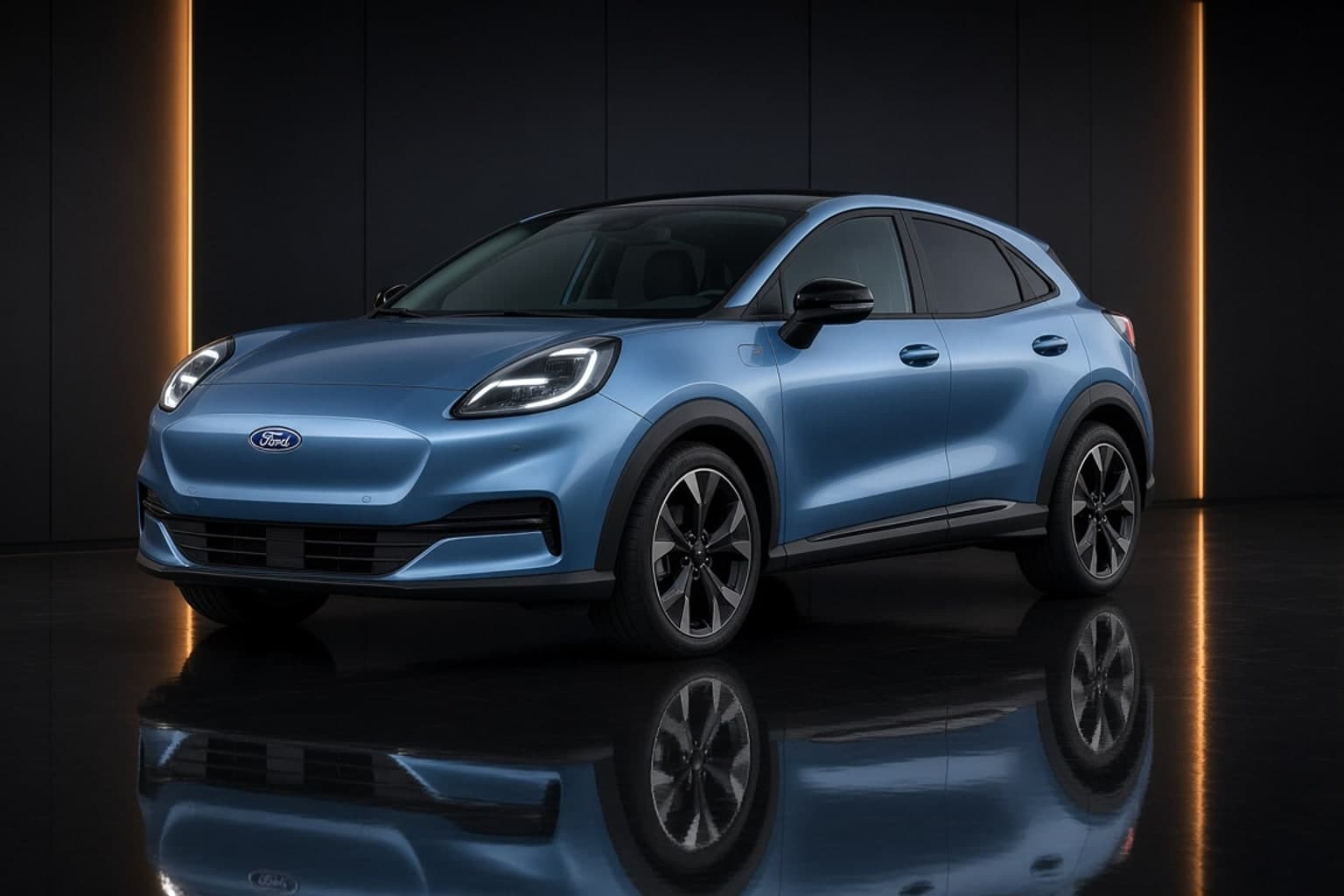
1. Generations & platforms
Puma Gen-E early build (2024–2025) · ~43 kWh usable · ~233 mi WLTP
Based on the petrol Ford Puma’s platform (itself derived from the previous-generation Fiesta). Single front-mounted 165 bhp (168 ps) electric motor, FWD only — no AWD option; 0–62 mph officially 8.0 seconds. Trims: Select (entry) and Premium (mid-spec). Usable battery ~43 kWh for ~233 miles WLTP. DC charging tops out at 100 kW (realistic 10–80% in around 23 minutes); a 7 kW home wallbox takes roughly 7 hours for a full charge. Production at Ford Craiova, Romania; electric drive units from Ford Halewood, UK.
2026 model year onward · 251–259 mi WLTP · BlueCruise available
Updated, more efficient battery raises official WLTP to between 251 and 259 miles depending on trim and wheel size. BlueCruise Edition adds Ford’s hands-free motorway driving assistance. Externally the car still reads as a Puma — buyers must verify generation, battery package and BlueCruise fitment from documentation, not from a badge restyle. Because this was a genuine mid-production battery update, older and newer cars have meaningfully different real-world range.
Always confirm battery capacity, WLTP claim, BlueCruise fitment and software version for your VIN in the handbook, FordPass or dealer system — published sheets, including this one, are indicative across a mid-cycle change.
2. Puma Gen-E: the Honest Pros
- Genuinely large boot for the class — up to 566 litres including the signature GigaBox underfloor storage and a small front trunk (frunk), directly inherited from the standard Puma’s best-known strength
- Very strong real-world urban / around-town efficiency — testers have matched or slightly beaten Ford’s claimed figures in city driving, among the most efficient EVs tested in this class for short trips
- Agile, genuinely enjoyable handling for a small SUV — reviewers consistently note it drives more like a “proper Ford” than some rivals built on borrowed platforms
- Competitive pricing, and the first EV to qualify for the full £3,750 UK Government Electric Car Grant, thanks to its electric powertrain being partly manufactured in the UK (Halewood)
- Familiar territory for existing Puma / Ford owners moving to an EV — same general size, character and dealer network, without EcoBoost wet-belt risk
3. Puma Gen-E: the Honest Cons
- Range trails most direct rivals — even the updated 251–259 mile WLTP figure sits behind Kia EV3, Skoda Elroq, VW ID.3 and others, and real-world range is closer to 180–220 miles depending on driving style and conditions
- Motorway efficiency drops off noticeably compared with the excellent urban figures — much more of a short-trip / commuter EV than a long-distance one
- Reviewers consistently flag a firm ride and mixed interior quality / refinement as weaknesses versus rivals like the Renault 4
- Rear seat space is cramped — a known trade-off of building Gen-E on the existing, smaller Puma platform rather than a dedicated EV architecture
- Standard vehicle warranty is only 3 years / 60,000 miles — noticeably shorter than rivals like Kia EV3 (7 years) — though the HV battery carries more typical 8-year / 100,000-mile cover separately
- Ford’s brand-level owner satisfaction and reliability survey rankings have been middling to poor in recent UK surveys — relevant context even though it doesn’t necessarily predict Gen-E-specific issues
4. Known issues — what we know so far
Gen-E is still a young model, and being absent from major UK reliability surveys so far (as of the most recent What Car? Reliability Survey), there’s no meaningful body of long-term owner-reported faults yet. Themes below prioritise documented caveats and cross-model EV precautions over invented fault folklore — and will be updated as real ownership reports come in. If you own a Gen-E and something comes up, post it in the discussion board; real reports are unusually valuable right now.
Confirm which battery generation you have (pre- vs post-2026 update)
Early cars (~43 kWh usable / ~233 mi WLTP) and later more efficient 251–259 mi cars (plus BlueCruise on newer builds) can look identical from across a car park. This affects range expectations and isn’t always obvious from the outside — ask for VIN confirmation of battery package and ADAS options.
Gen-E does NOT inherit the petrol Puma’s wet-belt issue
There is no combustion engine, so EcoBoost wet-belt oil-pump and PowerShift stories must not be pasted onto Gen-E. Don’t apply advice written for the petrol Puma’s EcoBoost engine — the maintenance profile is genuinely different. Keep the Ford & Stellantis wet-belt guide bookmarked only as a “does not apply” cross-link.
Urban efficiency vs motorway drop-off
Independent reviews consistently praise city efficiency and warn that motorway cruising costs more range than the brochure’s best figure. Knowing your own car’s real-world figures — especially on a mix of urban and motorway driving — is more useful here than trusting the WLTP number alone.
12V battery health (standard EV precaution)
Treat Gen-E like Mach-E and other EVs: load-test the 12V, especially after short trips or weeks unused. Log any test or replacement with mileage. See the 12V battery drain guide on this site.
Software / firmware currency (Mach-E caution)
This is a first-generation EV built on an adapted combustion platform. Reviewers have specifically flagged that Ford’s previous EV efforts (Mustang Mach-E) had genuine early software teething problems — check software version at every service rather than assuming the car is current. Do not invent Gen-E-specific fault folklore that isn’t documented yet.
3y/60k vehicle cover vs longer-cover rivals
Ford’s typical vehicle warranty (3 years / 60,000 miles) is shorter than some EV competitors (e.g. Kia EV3’s 7-year positioning). HV battery cover is a separate, longer package (commonly 8 years / 100,000 miles). Keep the distinction clear in your paperwork and when comparing deals.
5. UK service interval at a glance (Gen-E EV)
| Service | Miles / months | Notes |
|---|---|---|
| Scheduled service (Ford Puma Gen-E) | 10,000 / 12 | Whichever comes first for many UK handbooks. Confirm exact figure in the booklet for your model year — Ford EV service scope without ICE oil changes. |
| Brake fluid | — / 24 | Time-based regardless of mileage — standard across the Ford EV range. |
| 12V battery test | — / 12, or sooner if symptoms appear | Load test, not just voltage. |
| Software / firmware check | — / At every service | Particularly relevant given Ford’s EV software track record on other models (notably Mach-E). |
| Cabin pollen filter | — / 12 | Standard interval for any vehicle. |
| Tyre tread / alignment check | ~10,000 / 6 | EV weight and torque accelerate front tyre wear versus the petrol Puma. |
The Puma Gen-E follows Ford’s standard EV service scope. Intervals are whichever comes first (miles or months) unless noted. They vary by model year and service regime. Confirm in the handbook, service booklet or dealer system for your VIN before you book work — do not assume Gen-E matches EcoBoost Puma.
6. Official resources
Official links are for convenience and accuracy. The Owners Club has no commercial relationship with Ford Motor Company and cannot confirm pricing, availability or booking on their behalf. Warranty and battery terms should always be confirmed against your own documentation.
- Owner’s manual and FordPass / dealer system for your VIN — follow the edition matched to your model year and battery package
- Live Ford UK configurator / order guide for current WLTP, BlueCruise and warranty wording — mid-production figures changed
7. What to actually keep on top of
- Software / firmware version — check for updates at every service rather than assuming the car is current (Mach-E software track record)
- 12V battery health, tested under load, as standard EV precaution pending any Gen-E-specific data
- Real-world range logging, especially on a mix of urban and motorway driving — more useful here than trusting WLTP alone
- Which battery / model-year generation you have — particularly important when buying used given the mid-production battery update
- Tyre wear — instant torque and extra weight versus the petrol Puma accelerate front tyre wear
- Do not demand EcoBoost wet-belt invoices on a Gen-E — wrong checklist; keep vehicle vs HV battery warranty paperwork distinct
8. Own a Ford Puma Gen-E? Protect its resale value
Add it to The Owners Club for free to track its maintenance timeline, import UK MOT history, and transfer verified provenance when you sell. Battery-generation notes, software versions and 12V history are exactly what the next buyer cannot reconstruct from a badge alone — and with such a young model, thorough records carry unusual weight.
- Verified maintenance timeline with dealer and specialist invoices
- UK MOT import (DVSA)
- Battery package, software versions, 12V tests and ADAS / BlueCruise notes
- Verified Transfer Pack PDF for sale
Guides & checklists
- EV ownership: what servicing means with no engine →
- 12V battery drain — what to check before assuming a fault →
- How to Prep Your Car for Its Annual MOT →
- How to Prove Full Service History When Selling →
- Ford & Stellantis — Wet Belt, PowerShift & Provenance Guide →
- Essential DIY Garage Tools — Starter Kit →
More Ford models
Compare platforms, service themes and digital service history tools across the range.
FAQ
How often should you service a Ford Puma Gen-E?+
Most UK cars use an annual service or ~10,000 miles, whichever comes first. Confirm in the handbook for your VIN and log every visit.
What platform does the Puma Gen-E use?+
It’s built on the existing petrol Ford Puma’s platform — itself derived from the previous-generation Fiesta — rather than a dedicated, purpose-built EV architecture. That keeps the car’s compact size and large boot but means less rear-seat space than some rivals on dedicated EV platforms.
Does the Puma Gen-E have the same wet-belt issue as the petrol Puma?+
No. The wet-belt oil pump issue affects the petrol Puma’s EcoBoost engine specifically. The Gen-E has no combustion engine, so this doesn’t apply — its maintenance priorities are entirely EV-specific instead. The Ford & Stellantis wet-belt guide is useful context for combustion Puma buyers only.
Why is my Gen-E’s range worse on the motorway than around town?+
This is a widely reported pattern on this specific model — reviewers note excellent urban efficiency but a noticeable drop at motorway speeds. Plan longer journeys with that in mind rather than assuming the WLTP figure applies equally in all conditions.
How do I prove service history for a Ford Puma Gen-E?+
Given the model’s youth, a documented history of software updates and 12V battery checks is unusually valuable right now — there’s no established long-term pattern yet for buyers to rely on otherwise, so your own thorough records carry real weight. Log battery generation, BlueCruise fitment and real trip averages too.
Puma Gen-E owner discussions
Latest conversations from Ford Puma Gen-E owners in the club.
No discussions yet for the Puma Gen-E. Be the first owner to start a conversation!
Ask a Question / Post PhotoJoin the Ford Owners Club Community
Add it to The Owners Club for free to track its maintenance timeline, import UK MOT history, and transfer verified provenance when you sell.