Owners Club · Digital service history
Ford Kuga Owners Club — Maintenance & Provenance
Independent owners’ resource. This page is produced by The Owners Club and is not affiliated with, endorsed by, or sponsored by Ford Motor Company. Specifications, recalls, service requirements and warranty terms vary by VIN, engine, transmission and model year. Always confirm against the vehicle handbook/service portfolio, Ford or DVSA recall system, or an authorised Ford dealer.
Mid-size SUV · Gen1: 2008–2012 · Gen2: 2012/2013–2020 · Gen3: 2019/2020–present. The Gen3 Kuga is Ford’s European mid-size SUV on the global C2 architecture (also used by the contemporary Focus) — and it isn’t one powertrain family. EcoBoost petrol, EcoBlue diesel, EcoBlue MHEV, 2.5 FHEV and 2.5 PHEV ownership experiences differ substantially. Structure checks as Generation → Year → Engine → Transmission → Drivetrain → Fuel/Hybrid → Known issues → Recalls → Service → MOT. Separate confirmed recalls, MOT statistics, owner-survey complaints and individual reports.
Arrived from a club search? See the exact-match Ford Kuga Owners Club landing — then use this hub for platforms, issues and the full guide cluster.
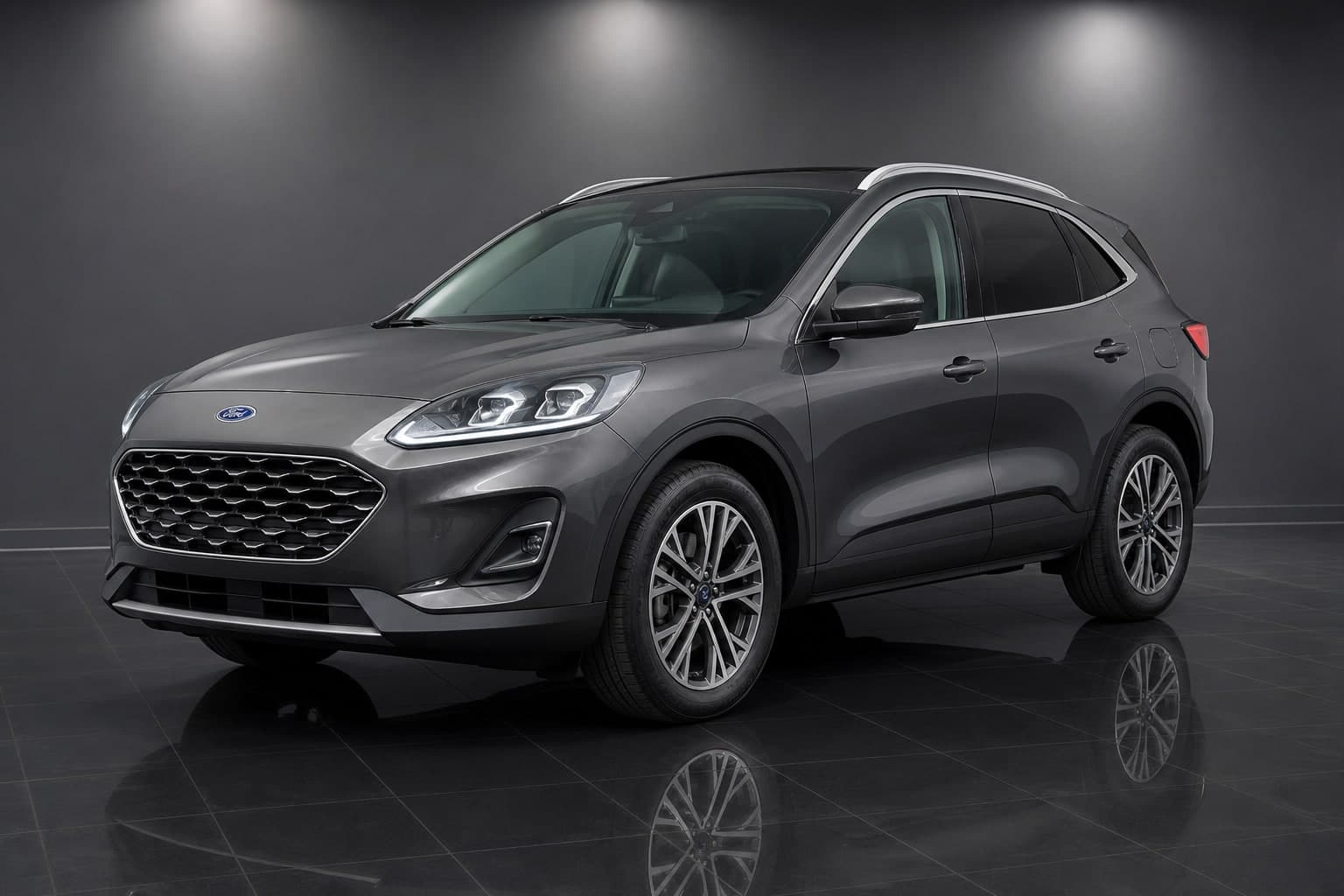
Read this first: three generations share the Kuga name
The Ford Kuga was introduced in Europe in 2008; the current model is the third generation. Ford describes Gen3 as its third-generation European mid-size SUV and the first Ford SUV based on the global C2 architecture. A 2011 2.0 TDCi AWD and a 2021 2.5 PHEV should not receive the same maintenance warnings. Explicitly separate confirmed recalls, MOT statistics, owner-survey complaints and individual owner reports.
1. Generations & platforms
Gen1 — 2008–2012
The original European Kuga. Petrol and diesel engines were offered, with four-wheel drive available on selected versions. Engines included 2.0 TDCi diesel and 2.5 petrol variants, with specifications changing through production. At this age, condition and full service/MOT history matter more than badge alone.
Gen2 — 2012/2013–2020
The second-generation Kuga introduced Ford Intelligent AWD to the European Kuga and went through a substantial facelift during its run. Treat by engine and gearbox rather than as one homogeneous vehicle — diesel DPF, electrical/infotainment patterns and automatic gearbox service history are the recurring What Car? themes.
Gen3 — 2019/2020–present (C2)
The major technical change: Gen3 moved to Ford’s global C2 architecture (also used by the contemporary Focus). Ford said the architecture could reduce weight by up to 90kg versus equivalent outgoing powertrains and increase torsional stiffness by approximately 10%. Powertrains include 1.5 EcoBoost petrol, 1.5 EcoBlue, 2.0 EcoBlue, 2.0 EcoBlue mild-hybrid, 2.5 FHEV full hybrid and 2.5 PHEV plug-in hybrid depending on year and market. The 2.5 FHEV uses an Atkinson-cycle petrol engine, electric motor, generator, lithium-ion battery and Ford power-split automatic; the original PHEV uses a 2.5 Atkinson-cycle engine with a 14.4kWh battery.
Gen3 facelift — 2024–present
Updated styling, technology and SYNC 4 on facelifted models. Current-generation Kugas have continued to receive software and equipment updates — still confirm VIN-specific recall and software campaign status.
Ford explicitly identifies Gen3 as the first Ford SUV based on the global C2 architecture. Cross-link the Focus (C2) hub for shared platform context; EcoBoost wet-belt themes may apply to some petrol engines — confirm your exact engine, don’t invent applicability.
2. Kuga: ownership strengths
- Very broad engine and drivetrain choice across Gen3 (petrol, diesel, MHEV, FHEV, PHEV)
- Gen3 introduced Ford’s C2 architecture and significantly increased electrification options
- The PHEV can provide electric-only driving when sufficiently charged; the FHEV can drive under electric power for short periods without external charging
- Gen3 offers a practical family-SUV interior and sliding rear-seat arrangement
- Ford’s official recall system allows vehicle-specific recall checking
- Intelligent Oil-Life Monitor can adjust oil-change requirements according to usage on applicable vehicles
- Current-generation cars continue to receive software and equipment updates, including SYNC 4 on facelifted models
3. Kuga: ownership considerations
- Gen3 has accumulated a significant number of safety recalls and software campaigns — check the current VIN record, not a single historic stamp
- PHEV models need particularly careful recall checking because several campaigns involve the high-voltage battery and charging system
- What Car?’s current reliability data gives the 2020–present Kuga a 90.3% reliability rating; reported problem areas include electrical components, infotainment, keyless entry, diesel DPF and suspension wear
- In What Car?’s hybrid/PHEV survey, 12V battery problems accounted for 14% of reported Kuga hybrid/PHEV faults
- Diesel Kugas need attention to DPF/emissions-system condition where the vehicle has mainly been used for short journeys
- MOT data for 2020 Kugas shows brakes as an area worth watching: 63.8 brake faults per 100 tests vs 50.8 for the corresponding model-year average (MOT statistic — not a recall)
4. Known issues — check these before assuming a fault
Not diagnostic advice. Separate evidence types: confirmed UK/GOV recalls (vehicle counts below), What Car? owner-survey patterns, MOT statistics, and individual reports. Themes are generation- and powertrain-specific — always verify for your exact year, engine and VIN.
Gen3 — PHEV high-voltage battery overheating recall (Sep 2020 · 5,046)
Confirmed UK safety recall dated 4 September 2020 affected 5,046 vehicles. Concern: high-voltage battery pack overheating and venting hot gas, potentially igniting vehicle components. Original remedy instructions included restrictions on external charging and use of the default Auto EV mode while the campaign was addressed. VIN-specific — not a statement that every Kuga PHEV is affected.
Gen3 — BCCM charging connector (Jul 2020 · 30,202)
Confirmed UK recall affected 30,202 vehicles because the High Voltage Battery Control Charger Module connector could be damaged. Remedy: inspection and, where necessary, replacement of the BCCM and charge cable.
Gen3 — 2025 high-voltage battery campaign (Nov 2025 · 6,632)
Confirmed UK recall dated 4 November 2025 affected 6,632 vehicles. It concerns high-voltage batteries where cells could potentially develop a short circuit. Stated risks include “Stop Safely Now” message, possible loss of motive power, and battery thermal venting. The GOV.UK record states that, at the time of the campaign, a remedy was unavailable and owners were instructed to limit charging to 80% until a remedy became available. Check individual vehicle status rather than relying on this general campaign information.
Gen3 — Fuel injector / fuel leak (Mar 2023 · 13,671)
Confirmed recall covered 13,671 vehicles where failure of a fuel injector could potentially cause a fuel leak. Repair included installation of a drain tube and a PCM software update designed to detect a fuel-pressure drop and reduce engine power.
Gen3 — Oil/fuel vapour fire-risk (Jul 2022 · 16,155)
Confirmed campaign affected 16,155 vehicles. Under certain conditions, an oil or fuel-vapour leak in the presence of an ignition source could result in engine-compartment fire, localised melting or smoke. Remedy: modification of the engine undertray and active grille assemblies.
Gen3 — Engine oil separator (Apr 2022 · 9,818)
Confirmed recall affected 9,818 vehicles because the engine oil separator could have been damaged before engine assembly. Dealers were instructed to inspect the component and replace it if damaged or leaking.
Gen3 — Panoramic roof (Nov 2022 · 2,359)
Confirmed recall affected 2,359 vehicles with panoramic roofs because poor adhesion of the fixed glass panel could potentially allow it to detach while driving.
Gen3 — Software campaigns
Several later Kuga campaigns concern software rather than conventional mechanical components — including PCM/HPCM software, previous recall remedies not correctly installed, forced-neutral conditions, fire-risk mitigation software and rear-view camera software. Therefore “recall completed” should not automatically be treated as proof that every later campaign is complete. Check the current vehicle record.
Gen2 — Diesel DPF (owner-survey pattern)
What Car?’s used-Kuga data identifies DPF problems among recurring owner complaints on diesel versions. For a diesel Kuga, check DPF warning history, regeneration history where available, engine management faults, typical journey length, previous DPF repairs and EGR/emissions-system faults. Reported pattern — not proof every Gen2 diesel will suffer the problem.
Gen2 — Electrical and infotainment (owner-survey pattern)
Owner reports collected by What Car? include issues involving radio signal, air conditioning, navigation and other non-engine electrical equipment. Treat as reported fault patterns, not proof that every Gen2 Kuga will suffer the problem.
Gen2 — Automatic gearbox service history
What Car? specifically recommends checking that automatic Kugas have been serviced according to Ford’s recommendations, warning that neglected servicing can lead to expensive gearbox problems.
Gen1 — Age and condition checklist (2008–2012)
At this age, condition and maintenance history are particularly important. Check corrosion and previous accident repairs; suspension bushes, joints and dampers; brakes and brake pipes; diesel DPF/emissions equipment where fitted; clutch and dual-mass flywheel; turbocharger/boost system; AWD system where fitted; air conditioning; electrical equipment; and full service and MOT history.
Evidence — What Car? reliability (2020–present)
What Car?’s current reliability data gives the 2020–present Kuga a 90.3% reliability rating. Reported problem areas include electrical components, infotainment, keyless entry, diesel DPF problems and suspension wear. This is owner-survey evidence, not a manufacturer recall.
Evidence — MOT brakes (2020 Kugas)
MOT data for 2020 Kugas shows brakes as an area worth watching: the cited dataset recorded 63.8 brake faults per 100 tests, compared with 50.8 for the corresponding model-year average. MOT statistic — separate from confirmed recalls.
5. UK service interval at a glance
| Maintenance | Interval | Notes |
|---|---|---|
| Scheduled service | Vehicle/engine specific | Confirm against Ford Service Portfolio — Ford UK states intervals vary by model and engine type. |
| Engine oil | Vehicle/engine specific | Follow specified oil grade and Intelligent Oil-Life Monitor (IOLM) where fitted. |
| Intelligent Oil-Life Monitor | Variable where fitted | Usage can shorten oil-change requirement — short journeys, low-speed city driving, high loads and towing. |
| MOT | Annual after 3 years | UK requirement. |
| Recall check | Before purchase + when notified | Registration/VIN check via Ford / DVSA — not a one-time stamp. |
| PHEV HV battery campaigns | VIN specific | Confirm campaign and remedy status — including any temporary charge limits. |
| Brakes | Regular inspection | Worth particular attention given 2020 MOT brake-fault rates vs average. |
| DPF / emissions (diesel) | Usage dependent | Important on diesel, especially short-journey use. |
| 12V battery | Periodic test | Important on hybrid/PHEV — load test under load. |
Ford UK states that Kuga service intervals vary by vehicle model and engine type and are specified in the vehicle’s Service Portfolio and Ford maintenance schedule. Short journeys, low-speed city driving, high engine loads and towing can reduce the time before an oil change is required. This is not a Toyota-style fixed 10k/12mo table — confirm for your VIN.
6. Official sources & independent evidence
Official links are for convenience. The Owners Club has no commercial relationship with Ford and cannot confirm pricing, availability or booking. Always verify recalls and intervals against your VIN.
- Ford UK — Kuga
- Ford UK — Owner / service
- GOV.UK — Vehicle recall checker
- What Car? — Ford Kuga reliability
- Ford UK — Checking a recall before buying (use VIN / registration via Ford or DVSA)
- Ford UK — Service intervals: follow Service Portfolio for your model and engine; IOLM where fitted
- Independent: What Car? Ford Kuga 2020–present reliability (90.3% survey rating cited above)
- Independent: What Car? Ford Kuga 2013–2020 used reliability (Gen2 patterns)
- Independent: MOTSearch / MOT statistics — brake fault rates for 2020 Kugas as cited above
- Cross-link: Ford Focus model hub (shared C2 architecture on Gen3 era)
7. What to actually keep on top of
- Recall status — check every Kuga by registration/VIN; “one recall done” ≠ all campaigns complete
- PHEV high-voltage battery campaigns — especially Gen3 PHEV (Sep 2020, BCCM Jul 2020, Nov 2025)
- 12V battery health — particularly hybrid/PHEV (What Car? survey: 14% of hybrid/PHEV faults)
- DPF/emissions system — diesel models, especially short-journey use
- Brake condition — especially higher-mileage cars (2020 MOT brake-fault rate vs average)
- Suspension and tyres — compare current condition with MOT history
- Infotainment, cameras and keyless entry
- Automatic transmission servicing where fitted
- Ford service history and correct engine oil (grade + IOLM)
- Record the exact vehicle specification — generation, year, engine, gearbox, drivetrain, fuel/hybrid type and VIN
8. Own a Ford Kuga? Protect its resale value
Add it to The Owners Club for free to track its maintenance timeline, import UK MOT history, and transfer verified provenance when you sell. Generation, powertrain, recall completion and IOLM-aligned oil records are exactly what the next buyer cannot reconstruct from the badge alone.
- Verified maintenance timeline with garage invoices
- UK MOT import (DVSA)
- VIN recall, PHEV HV, DPF, 12V and gearbox event tracking
- Verified Transfer Pack PDF for sale
Guides & checklists
More Ford models
Compare platforms, service themes and digital service history tools across the range.
FAQ
How often should I service a Ford Kuga?+
There is no single interval that applies to every Kuga. Ford UK says intervals vary according to model and engine and should be taken from the vehicle’s Service Portfolio/maintenance schedule. Follow the specified oil grade and Intelligent Oil-Life Monitor (IOLM) where fitted.
Which generation is the current Kuga?+
The current vehicle is Gen3, introduced in 2019 and sold from 2019/2020 depending on market/model year. Ford identifies it as the third European Kuga generation. Facelift models from 2024 add updated styling, technology and SYNC 4.
What platform does Gen3 use?+
Ford’s global C2 architecture — the first Ford SUV based on C2. The contemporary Focus also used C2.
Does the Kuga have a hybrid?+
Yes. Gen3 has been offered with mild-hybrid (EcoBlue MHEV), full hybrid (2.5 FHEV) and plug-in hybrid (2.5 PHEV), as well as conventional 1.5 EcoBoost petrol and 1.5/2.0 EcoBlue diesel engines depending on year and market.
Should I check the recall history before buying?+
Yes. Ford itself directs prospective used-car buyers to the DVSA recall service for outstanding safety recalls. Gen3 has multiple campaigns — “recall completed” on one job is not proof every later campaign is done. Check the current VIN record.
Are Kuga PHEVs affected by battery recalls?+
Some are. UK records include Sep 2020 HV overheating (5,046), Jul 2020 BCCM connector (30,202) and Nov 2025 HV battery (6,632; remedy unavailable / 80% charge limit at campaign time). Whether an individual car is affected depends on its VIN and whether the remedy has been completed.
Kuga owner discussions
Latest conversations from Ford Kuga owners in the club.
No discussions yet for the Kuga. Be the first owner to start a conversation!
Ask a Question / Post PhotoJoin the Ford Owners Club Community
Add it to The Owners Club for free to track its maintenance timeline, import UK MOT history, and transfer verified provenance when you sell.