Owners Club · Digital service history
Ford Transit Custom Owners Club — Maintenance & Provenance
Independent owners’ resource. This page is produced by The Owners Club and is not affiliated with, endorsed by, or sponsored by Ford Motor Company. Specifications and service intervals change — always confirm current figures against your vehicle’s handbook (VIN) or an authorised dealer. The Transit Custom sits between the compact Transit Connect and the full-size Transit in Ford’s commercial range, and has been the UK’s best-selling van for over a decade — regularly outselling its nearest rival by tens of thousands of units a year.
It’s the vehicle of choice for a huge share of UK sole traders and small businesses: electricians, plumbers, builders, couriers, and anyone who owns and maintains a single working vehicle rather than running a fleet. That’s exactly the ownership pattern this page is built for — not fleet management, but one van, one owner, one service history worth keeping straight.
Arrived from a club search? See the exact-match Ford Transit Custom Owners Club landing — then use this hub for platforms, issues and the full guide cluster.
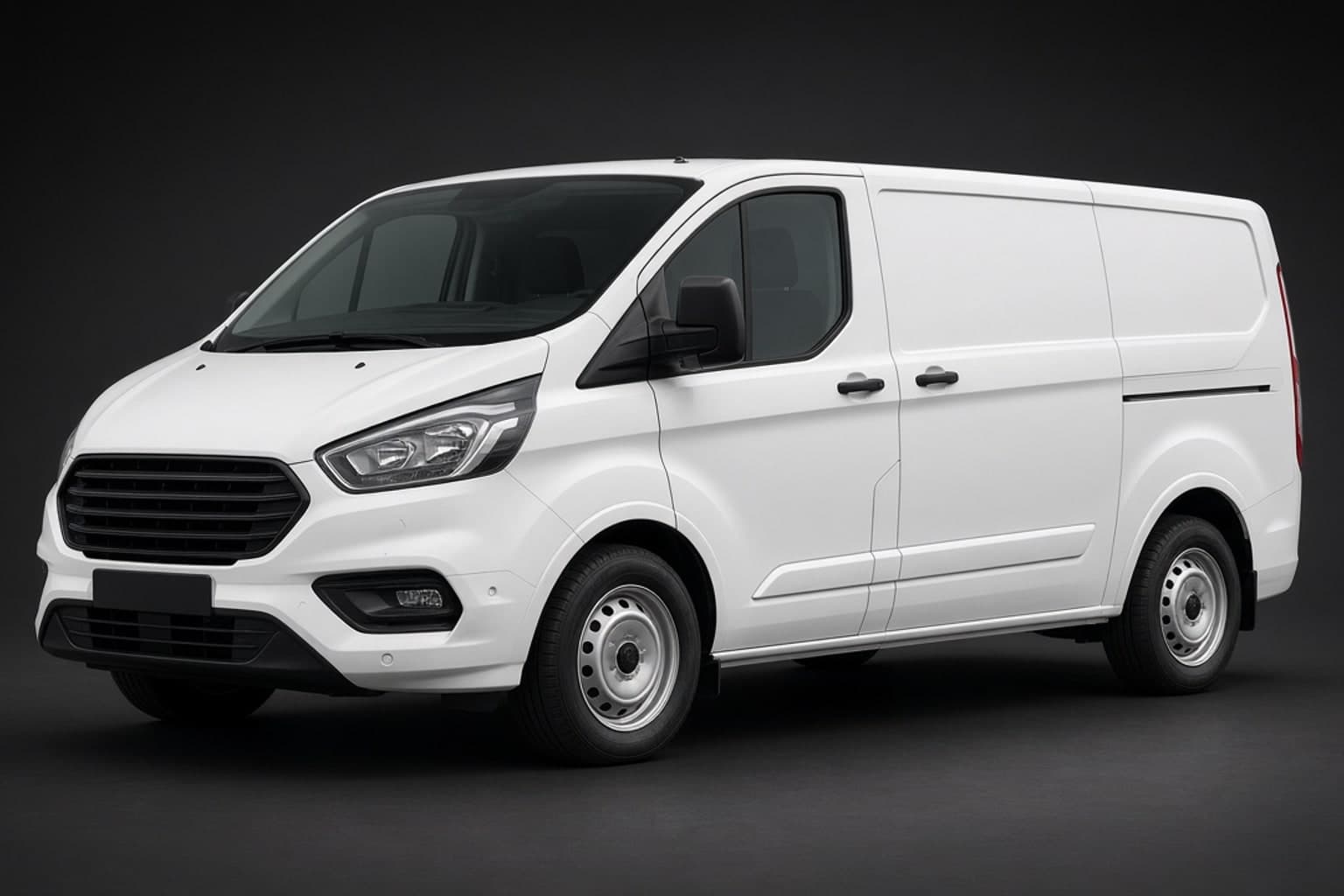
1. Generations & platforms
Transit Custom Mk1 (2012–2023)
Includes a significant mid-cycle facelift around 2016–2018. Pre-facelift vans (2012–2016) used the older 2.2 TDCi diesel; post-facelift vans (2016 onward) moved to the 2.0 EcoBlue diesel, which remained through the end of Mk1. Cheap early TDCi vans still circulate — budget for DPF/EGR work unless you self-service comfortably.
Transit Custom Mk2 (2023–present)
A full platform change, developed jointly with Volkswagen and sharing engineering with the VW Transporter. Available with 2.0 EcoBlue diesel, PHEV (plug-in hybrid, roughly 28 miles of electric-only range claimed), and a fully electric E-Transit Custom variant. Clean Air Zone and short urban routes favour PHEV/EV running — with a different service profile (no diesel timing belt or DPF).
Engine snapshot: 2.2 TDCi (2012–2016) carries a maintenance reputation around DPF/EGR. 2.0 EcoBlue (2016–present) is what most owners have — reliable in mature form, but uses a wet timing belt submerged in oil. PHEV / E-Transit Custom (Mk2) shift priority to 12V battery and charging-system checks.
2. Transit Custom: the Honest Pros
- UK’s best-selling van class for over a decade — parts, specialists and used-market liquidity are strong
- Sized for sole traders: between Transit Connect and full-size Transit without fleet-scale complexity
- Mk2 PHEV and E-Transit Custom suit Clean Air Zones and short urban routes
- Mature 2.0 EcoBlue can be a solid workhorse when oil and DPF history are clean
- Shared Mk2 engineering with VW Transporter means a wider specialist knowledge base over time
3. Transit Custom: the Honest Cons
- 2.0 EcoBlue wet timing belt is the #1 risk — oil dilution from incomplete DPF regen can cause early failure (documented under 100,000 miles)
- Short-trip urban use hammers DPF and EGR on diesels — forced regenerations and carbon buildup are common themes
- AdBlue/SCR faults across EcoBlue Transits can put the van into limp mode
- Mk2 12V battery can be awkward to access; PHEV/EV variants may drain if left unused
- Early Mk1 2.2 TDCi vans are cheap for a reason — plan DPF/EGR budget into the buy price
4. Known issues & things to check
Not diagnostic advice — themes owners often document in service history. Always verify for your exact engine and year. If you’ve had something fixed that isn’t listed, post it in the Transit Custom discussion board.
Wet timing belt failure (2.0 EcoBlue) — #1 priority
This is the single most important thing to track on a Custom with the 2.0 EcoBlue. The belt sits inside the engine and is lubricated by oil, so contamination from incomplete DPF regeneration (diesel fuel diluting the oil) can degrade it well before the official interval. There are documented cases of belt failure and shed debris damaging the oil pump on vans well under 100,000 miles. Ford’s official position is that belt life is maintenance-dependent, not a defect — which makes a clean oil-change and DPF-regeneration history the single most valuable thing in your service record. See the timing-belt vs wet-belt guide on this site.
DPF and EGR fouling from short trips
Like most modern diesel vans, the Custom is vulnerable to DPF blockage and EGR carbon buildup when it’s mostly used for short urban runs rather than sustained motorway driving. A regular longer run helps the DPF regenerate properly; documenting regeneration cycles and any DPF-related warning lights in your service history is worth doing.
12V battery access and drain (Mk2, 2023–present)
Some Mk2 owners report the 12V battery being awkward to access for replacement, and PHEV/electric variants can be prone to the same kind of parasitic drain seen across plug-in models if the van sits unused for an extended period. See the 12V battery drain guide on this site.
AdBlue / SCR system faults
Common across the wider Transit range on EcoBlue engines: a fault here can trigger reduced power or limp mode. Usually resolved by addressing the underlying trigger (often DPF- or sensor-related) rather than just topping up AdBlue.
5. Practical service checklist
| Item | Why it matters / typical cue | Notes |
|---|---|---|
| Timing belt (2.0 EcoBlue, wet belt) | Ford often quotes 60,000–100,000 miles — confirm VIN | Oil-contamination-driven early failure is well documented. Don’t stretch this on a short-trip van. |
| Oil and filter changes | Keep strictly to interval | Oil condition is directly tied to wet-belt life on the EcoBlue engine. |
| DPF regeneration record | Note every dashboard DPF warning | A pattern of forced regenerations is useful for a future buyer (or yourself) to see. |
| EGR valve condition | Especially on short urban mileage | Carbon buildup tracks stop-start use — log cleaning or replacement. |
| AdBlue / SCR system | As indicated / at service | Limp mode often needs the root cause fixed, not just a top-up. |
| 12V battery (Mk2 PHEV / electric) | Check if unused > ~2 weeks | Awkward access on some Mk2s — log age, brand and any drain diagnosis. |
Confirm intervals in your handbook for the exact engine and model year. Cross-check Ford’s commercial service schedule for your VIN before stretching any EcoBlue oil interval.
6. Official Ford resources
Official links are provided for convenience and accuracy. The Owners Club has no commercial relationship with Ford and cannot confirm pricing, availability or booking on their behalf — please verify directly with an authorised dealer.
- Owner’s handbook and service schedule for your VIN — follow the edition matched to your model year and market
7. Buying checklist (Transit Custom-specific)
- Identify engine exactly: 2.2 TDCi vs 2.0 EcoBlue vs Mk2 PHEV / E-Transit Custom — wet-belt rules only apply to EcoBlue diesels
- Demand oil-change invoices with dates/mileage on EcoBlue vans — ask about any wet-belt inspection or replacement
- Ask how the van was used (short urban vs motorway) and for DPF warning / forced-regen history
- Check for AdBlue/SCR limp-mode stories and whether the underlying sensor/DPF cause was fixed
- On Mk2: check 12V health and whether the van sat unused; confirm PHEV electric-range claims against real use
- Prefer a digital or paper trail that will transfer with the van — sole-trader buyers care about provenance
8. Own a Transit Custom? Protect its resale value
Add it to The Owners Club for free to track its maintenance timeline, import UK MOT history, and transfer verified provenance when you sell. Post your engine, mileage, and any timing-belt/DPF history — real working-van detail helps the next owner.
- Verified maintenance timeline with garage invoices
- UK MOT import (DVSA)
- Wet-belt, oil, DPF regen and AdBlue event tracking
- Verified Transfer Pack PDF for sale
Guides & checklists
- Timing belt vs wet belt (EA211 engine codes) →
- 12V battery drain — what to check before assuming a fault →
- EV ownership: what servicing means with no engine →
- Ford & Stellantis — Wet Belt, PowerShift & Provenance Guide →
- Essential DIY Garage Tools — Starter Kit →
- How to Prep Your Car for Its Annual MOT →
- How to Prove Full Service History When Selling →
More Ford models
Compare platforms, service themes and digital service history tools across the range.
FAQ
What is the most important maintenance item on a Transit Custom 2.0 EcoBlue?+
The wet timing belt. It runs inside the engine in oil, so incomplete DPF regeneration (fuel diluting the oil) can degrade it well before Ford’s official interval. Documented failures under 100,000 miles exist. Clean oil-change history and proper DPF regeneration are the single most valuable service-record items.
What is the difference between Transit Custom Mk1 and Mk2?+
Mk1 (2012–2023) includes a mid-cycle facelift around 2016–2018: early vans used 2.2 TDCi; from ~2016 the 2.0 EcoBlue took over. Mk2 (2023–) is a full platform change developed jointly with Volkswagen (shared engineering with the VW Transporter), with 2.0 EcoBlue diesel, PHEV (~28 miles electric-only claimed) and fully electric E-Transit Custom.
Does every Transit Custom have a wet timing belt?+
No. The wet-belt theme applies to 2.0 EcoBlue diesels (most post-2016 Customs). Pre-facelift Mk1 2.2 TDCi is a different engine story (DPF/EGR reputation). Mk2 PHEV and E-Transit Custom have no diesel timing belt — 12V and charging-system checks become the priority instead.
How often should I service a Transit Custom?+
Follow Ford’s handbook for your VIN — typically annual or mileage-capped commercial intervals. On EcoBlue vans used for short trips, do not stretch oil changes: oil condition is tied to wet-belt life. Also track DPF regenerations, EGR condition, AdBlue/SCR health, and on Mk2 PHEV/EV the 12V battery.
Is this page affiliated with Ford?+
No. The Owners Club is an independent owners’ resource. Official Ford links are for convenience only — we have no commercial relationship with Ford and cannot confirm pricing, availability or booking on their behalf.
Transit Custom owner discussions
Latest conversations from Ford Transit Custom owners in the club.
No discussions yet for the Transit Custom. Be the first owner to start a conversation!
Ask a Question / Post PhotoJoin the Ford Owners Club Community
Add it to The Owners Club for free to track its maintenance timeline, import UK MOT history, and transfer verified provenance when you sell.