Owners Club · Digital service history
Ford Fiesta Owners Club — Maintenance & Provenance
Independent owners’ resource. This page is produced by The Owners Club and is not affiliated with, endorsed by, or sponsored by Ford Motor Company. Specifications and intervals change — always confirm against your handbook (VIN) or an authorised Ford dealer before booking work. The Fiesta was Britain’s best-selling car for well over a decade, and remains one of the most common used cars on UK roads by a wide margin — which makes it one of the most useful models on this site for real-world, high-volume ownership data. Ford ended production on 7 July 2023 at its Cologne plant, citing the cost of electrification, tightening emissions rules, and the wider industry shift toward SUVs rather than any failure of the car itself. There’s no direct replacement; the Puma (and its electric Gen-E sibling) is generally considered its indirect successor in Ford’s UK range.
A note on generation naming: UK convention (used on this site) refers to the 2008–2017 car as Mk7 and the 2017–2023 car as Mk8. Some international sources number these differently (calling the 2017–2023 car the “seventh generation” or “Mk7”), so if you’re cross-referencing parts or forums, confirm which numbering system a source is using rather than assuming it matches UK convention.
Arrived from a club search? See the exact-match Ford Fiesta Owners Club landing — then use this hub for platforms, issues and the full guide cluster.
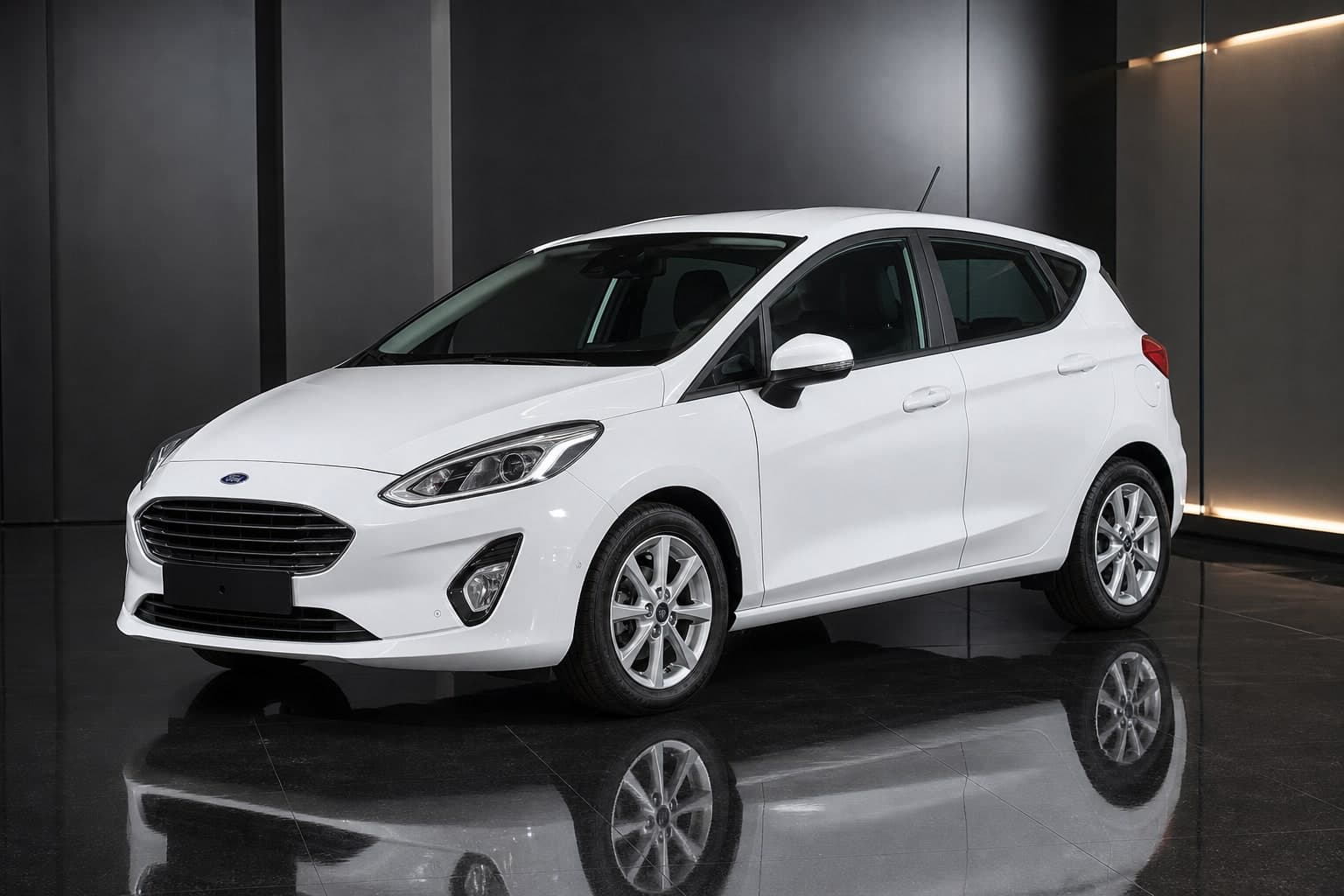
1. Generations & platforms
Fiesta Mk7 (2008–2017)
Ford B2E platform · Ford Duratorq (diesel) · Ford PowerShift · Ford EcoBoost (from the 2013 facelift onward). A significant 2013 facelift introduced the now-famous 1.0-litre EcoBoost three-cylinder engine, which went on to win International Engine of the Year six years running. This matters for provenance: a 2014–2017 Mk7 is just as likely to carry the 1.0 EcoBoost wet-belt engine as a Mk8, so don’t assume EcoBoost-specific checks only apply to the newer generation. Early (2012-era) 1.0 EcoBoost units also had documented coolant loss issues, alongside well-known PowerShift dual-clutch automatic gearbox complaints on this generation.
Fiesta Mk8 (2017–2023)
Ford B2E platform · Ford EcoBoost. Bigger, more upmarket, and safer than its predecessor, with the Fiesta ST hot hatch arriving in 2018 and a mid-cycle facelift in 2022 that brought LED headlights as standard, an optional 12.3-inch digital instrument cluster, and mild-hybrid (mHEV) technology extended across more of the engine range. This is the generation most used-Fiesta buyers today will be looking at, and the last one Ford built.
UK numbering on this site: 2008–2017 = Mk7, 2017–2023 = Mk8. Confirm which system a parts or forum source is using before ordering — some international lists call the later car “Mk7”.
2. Fiesta: the Honest Pros
- Consistently rated among the best-handling superminis of its era across both generations — genuinely fun to drive, not just cheap to run
- The 1.0 EcoBoost engine (post-2013) is a multi-award-winning unit, efficient and characterful when well maintained
- Huge parts and dealer support network given how many were sold — this generally keeps running costs and repair times down versus rarer rivals
- Strong resale value for a supermini, partly because production has ended and partly because it’s such a known quantity for buyers
- Well equipped for the money versus premium-badged rivals like the Audi A1 or VW Polo, particularly on higher trims
3. Fiesta: the Honest Cons
- The 1.0 EcoBoost engine’s wet-belt oil pump design is the single most important thing to check on any Fiesta from this era — see known issues below and the site’s dedicated wet-belt guide
- Plastic coolant and turbo charge pipes on 1.0 EcoBoost engines are prone to weeping or cracking with age — an ongoing pattern across the whole production run, not just a one-off early issue, and distinct from the wet-belt concern
- PowerShift dual-clutch automatic gearboxes, particularly on earlier cars, have a well-known reputation for shuddering and premature clutch wear
- Production has ended with no direct successor — while this supports resale value now, it also means the model won’t receive future updates or continued model-specific dealer focus over time
- As with most small turbocharged petrols, diesel EGR/DPF issues from short urban trips apply to TDCi-engined examples
4. Known issues — check these before assuming a fault
Not diagnostic advice — themes owners often document in service history. Always verify for your exact engine and year. If you’ve had something fixed that isn’t listed, post it in the Fiesta discussion board.
1.0 EcoBoost wet-belt oil pump (2012–2023, both generations)
This is the defining maintenance issue on any 1.0 EcoBoost Fiesta, and it’s significant enough that this site has a dedicated cross-brand guide covering it (linked in related guides). Unlike a conventional external timing belt, the oil pump on this engine is driven by a belt that runs inside the engine, submerged in oil. If the belt degrades — often accelerated by extended oil-change intervals, low-quality oil, or infrequent use — fragments can contaminate the oil system and, in worse cases, cause serious engine damage. A full, documented service history with the correct oil specification and interval is the single most valuable thing to check before buying a used EcoBoost Fiesta, and the single most valuable thing to maintain if you already own one.
Cooling and turbo pipes
Separate from the wet-belt issue, this is a longer-running pattern rather than a one-off from a specific early build window: the plastic coolant and turbo charge pipes fitted to EcoBoost engines are prone to weeping or cracking with age and heat cycling, regardless of exact model year. The earliest (circa 2012) 1.0 EcoBoost units had their own documented coolant loss issues before running changes were made, but plastic pipe degradation more broadly has continued to affect cars across the production run as they age. If you’re buying used, ask specifically whether any coolant or charge-pipe work was a full pipe replacement or just a top-up — a car that’s had the actual leaking part replaced is a meaningfully better buy than one that’s just been topped up repeatedly.
PowerShift automatic gearbox shudder and clutch wear
Most commonly reported on earlier (Mk7-era) PowerShift-equipped cars, though not exclusive to them. Symptoms include a shudder or hesitation from low speeds, particularly pulling away. Regular fluid changes (where the specific gearbox variant calls for them) and gentle low-speed driving style both help longevity; a car with evidence of repeated clutch pack replacement is worth more scrutiny than one with none.
Diesel EGR/DPF fouling from short trips
As with any small diesel used mainly for short urban journeys, TDCi-engined Fiestas can suffer DPF blockage and EGR carbon buildup. A regular longer run helps; document any related warning lights and how they were resolved.
5. UK service interval at a glance
| Service | Miles / months | Notes |
|---|---|---|
| Scheduled service (Ford Fiesta) | 10,000 / 12 | Whichever comes first for many UK handbooks. Confirm exact figure for your engine/year. |
| Oil and filter (1.0 EcoBoost) | Per handbook — don’t stretch / 12 | Directly tied to wet-belt longevity; the single most important interval on this engine. |
| PowerShift transmission fluid | Varies by variant / — | Confirm exact interval for your specific gearbox generation against the handbook. |
| EGR/DPF check (diesel) | — / At every service | Especially relevant on cars mostly used for short trips. |
| Cabin pollen filter | — / 12 | Standard interval for any vehicle. |
| Cambelt (non-EcoBoost engines, where fitted) | Per handbook / — | Confirm whether your specific engine uses a conventional external belt or the EcoBoost’s internal wet-belt design — the maintenance implications are very different. |
The Fiesta follows Ford’s standard combustion service scope. Intervals are whichever comes first (miles or months) unless noted. They vary by engine, model year, market and service regime. Confirm in the handbook, service booklet or dealer system for your VIN before you book work.
6. Official Ford resources
Official links are provided for convenience and accuracy. The Owners Club has no commercial relationship with Ford and cannot confirm pricing, availability or booking on their behalf — please verify directly with an authorised dealer. As a discontinued model, there’s no current Fiesta overview page on Ford UK — link owners to the general service/owner section instead.
- Owner’s handbook and service schedule for your VIN — follow the edition matched to your model year, engine and market
7. What to actually keep on top of
- Full, documented oil-change history on any 1.0 EcoBoost engine, with correct specification and interval — the single most important thing on this model, full stop
- PowerShift gearbox behaviour and service history, if your Fiesta has the dual-clutch automatic — log any shudder complaints and what was done about them
- Coolant and turbo charge pipe condition on any 1.0 EcoBoost — confirm whether prior coolant work was a genuine pipe replacement or just a top-up
- EGR/DPF condition and warning history on diesel-engined examples, particularly if mostly used for short trips
- Which generation and exact engine you have — Mk7 vs Mk8, pre- vs post-2013 facelift EcoBoost, and manual vs PowerShift all carry meaningfully different known-issue profiles
- Given production has ended, keeping thorough records now is arguably more valuable for long-term resale than on a model still in production, since buyers increasingly rely on documented history rather than assuming continuity with a current model
8. Own a Ford Fiesta? Protect its resale value
Add it to The Owners Club for free to track its maintenance timeline, import UK MOT history, and transfer verified provenance when you sell. Oil-spec invoices, wet-belt notes, PowerShift history and cooling-pipe replacements are exactly what the next buyer cannot reconstruct from a badge alone.
- Verified maintenance timeline with garage invoices
- UK MOT import (DVSA)
- EcoBoost oil, wet-belt, PowerShift and cooling-pipe event tracking
- Verified Transfer Pack PDF for sale
Guides & checklists
More Ford models
Compare platforms, service themes and digital service history tools across the range.
FAQ
How often should you service a Ford Fiesta?+
Most UK cars use an annual service or ~10,000 miles, whichever comes first. Confirm the exact figure for your specific engine in the handbook, and don’t stretch oil-change intervals on any 1.0 EcoBoost given the wet-belt design.
What platforms does the Ford Fiesta use?+
Both the Mk7 (2008–2017) and Mk8 (2017–2023) use Ford’s global B-segment platform (B2E), refined between generations rather than fundamentally changed. The engine range — particularly the introduction of the 1.0 EcoBoost from the 2013 facelift onward — is a bigger differentiator for ownership purposes than the platform itself.
Is the Fiesta still in production?+
No — Ford ended Fiesta production on 7 July 2023 at its Cologne plant, citing electrification costs, emissions regulation, and the industry-wide shift toward SUVs. There’s no direct successor, though the Puma (including the electric Puma Gen-E) is generally considered its closest equivalent in Ford’s current UK range.
How do I prove service history for a Ford Fiesta?+
Given how significant the 1.0 EcoBoost wet-belt issue is on this model, a documented oil-change history with correct specification and interval is the single most valuable thing you can show a buyer — more so than on almost any other model on this site. PowerShift fluid changes and any EGR/DPF work are similarly worth itemising precisely rather than noting vaguely.
Is this page affiliated with Ford?+
No. The Owners Club is an independent owners’ resource. Official Ford links are for convenience only — we have no commercial relationship with Ford and cannot confirm pricing, availability or booking on their behalf.
Fiesta owner discussions
Latest conversations from Ford Fiesta owners in the club.
No discussions yet for the Fiesta. Be the first owner to start a conversation!
Ask a Question / Post PhotoJoin the Ford Owners Club Community
Add it to The Owners Club for free to track its maintenance timeline, import UK MOT history, and transfer verified provenance when you sell.