Owners Club · Cyfrowa historia serwisowa
BMW 3 Series Owners Club — Maintenance & Provenance
Seria E90, F30 i G20 3 to objętościowa limuzyna BMW. Nieszczelności obudowy filtra oleju, pielęgnacja rozrządu N47/B47 i płyn ZF 8HP należą do historii.
Own a BMW 3 Series? Build a digital record of generation identity, body code, engine code, transmission, drivetrain, CBS service events, PHEV/EV battery items where fitted, recalls and ownership documents. The strongest product path here is knowledge → generation clarity → digital service history → provenance → Transfer Pack.
Przyszedłeś z poszukiwań klubu? Zobacz dokładne dopasowanie BMW 3 Series Owners Club lądowanie — następnie użyj tego centrum do obsługi platform, problemów i pełnego zestawu przewodników.
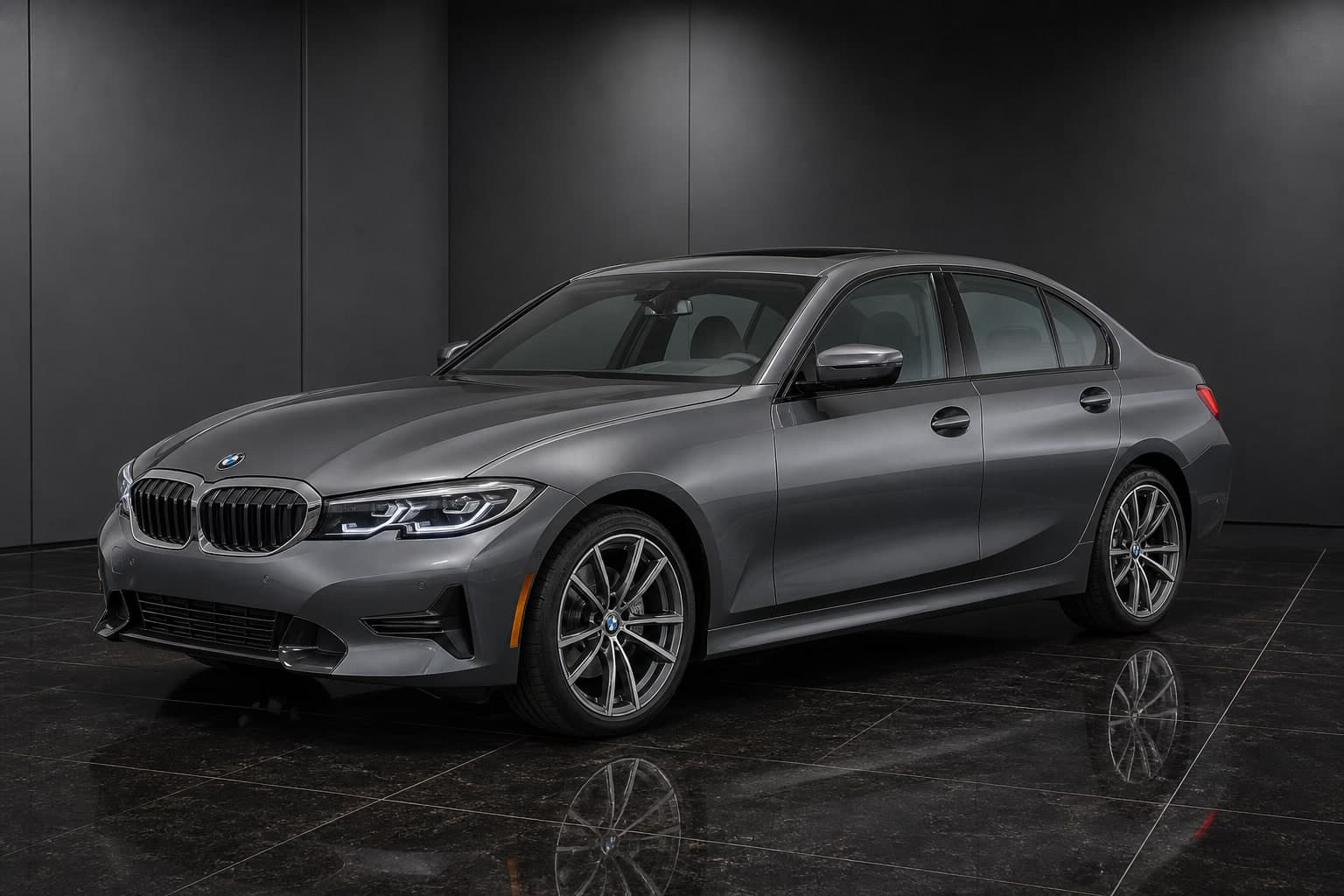
Latest 3 Series News
Updated 2026- Global development / new generationGlobal
Eighth-generation 3 Series launches — Neue Klasse G50/G51
BMW announced the eighth-generation 3 Series, bringing Neue Klasse design and technology into the core 3 Series family (G50/G51). Treat G50 as generation 8 — not a G20 facelift.
2026BMW Group / UK announcement
- Electric derivativeGlobal
BMW i3 joins the 3 Series family as first electric 3 Series
The fully electric BMW i3 launches as part of Gen 8, initially with i3 40 xDrive and i3 50 xDrive (M60 xDrive planned). Separate from the earlier I01 i3 hatch — use the i3 Saloon hub for EV ownership depth.
2026BMW Group / product
- Regional / current rangeUK market
Current G20/G21 remains a major ownership platform
BMW UK continues to list G20 Saloon and G21 Touring derivatives including 320i, 330e and M340i xDrive, so used and late seventh-generation ownership content remains relevant alongside Neue Klasse.
2024–2026BMW UK / product
Read first — eight generations, bodies and powertrains
For the 3 Series, the most important ownership data is generation identity (E21 · E30 · E36 · E46 · E90 · F30 · G20 · G50), body style/code, engine code, powertrain (petrol / diesel / 48V / PHEV / BEV), transmission, drivetrain (RWD / xDrive / EV AWD), CBS history, recalls and market-specific specifications. Do not treat facelifts as new generations. Do not treat 4 Series as a current 3 Series body. Do not merge I01 i3 hatch with Neue Klasse i3 Saloon. Do not treat one market’s power figures as global law.
1. Generations & platforms
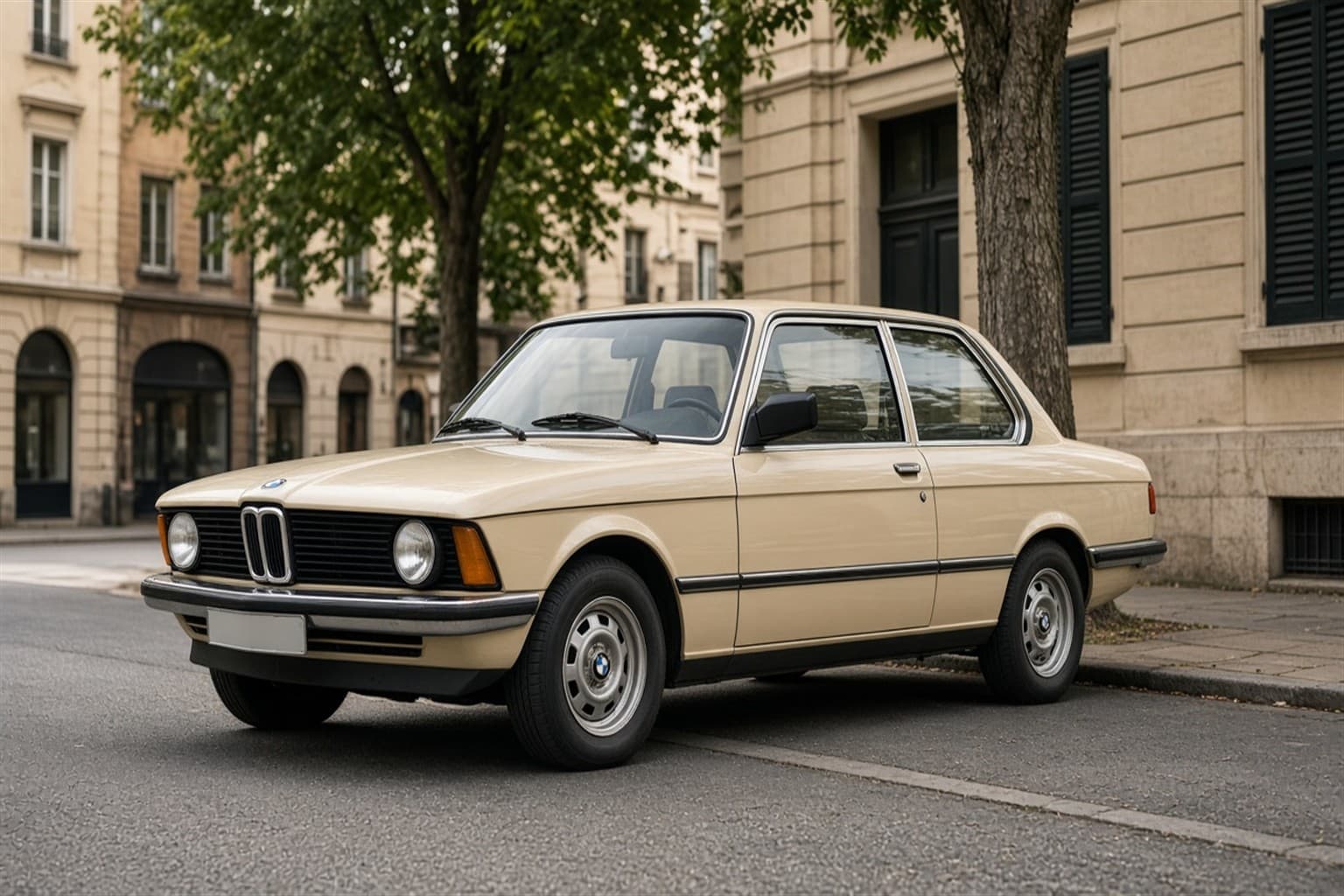
Ilustracja studyjna Generation 1 — E21 (1975–1983)
First production BMW to carry the 3 Series name. Two-door saloon/coupé-style body, front-engine RWD. Four-cylinder petrol at launch; six-cylinder petrol added later (316, 318, 320/320i, then 320/6 and 323i). Do not apply modern CBS or xDrive checklists backwards.
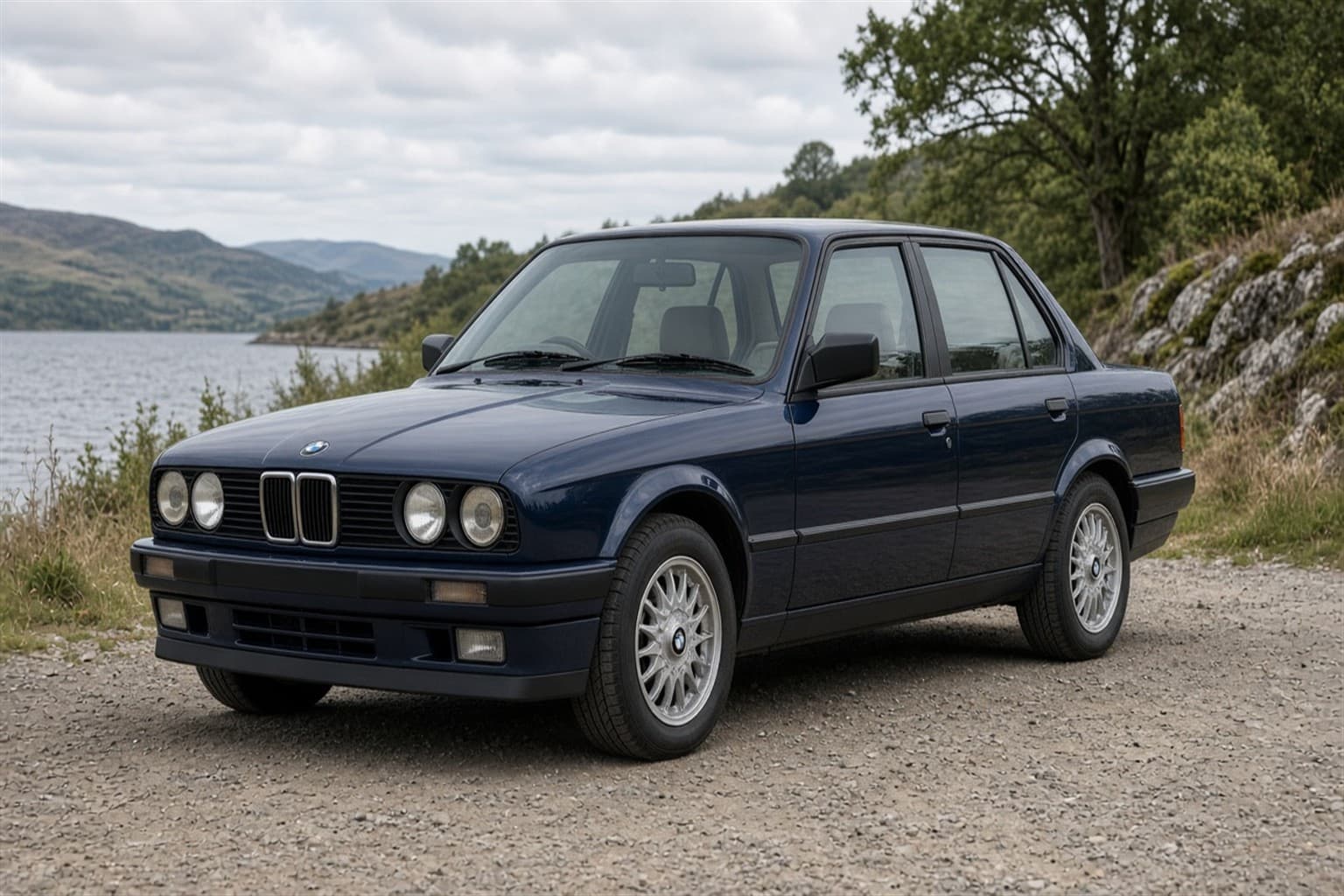
Ilustracja studyjna Generation 2 — E30 (1982/1983–1994)
Introduced four-door, factory Touring and full Convertible. Predominantly RWD; selected markets received 325iX AWD. Petrol four/six-cylinder, diesel and the first production M3 within the 3 Series family. Body-specific end years differ.
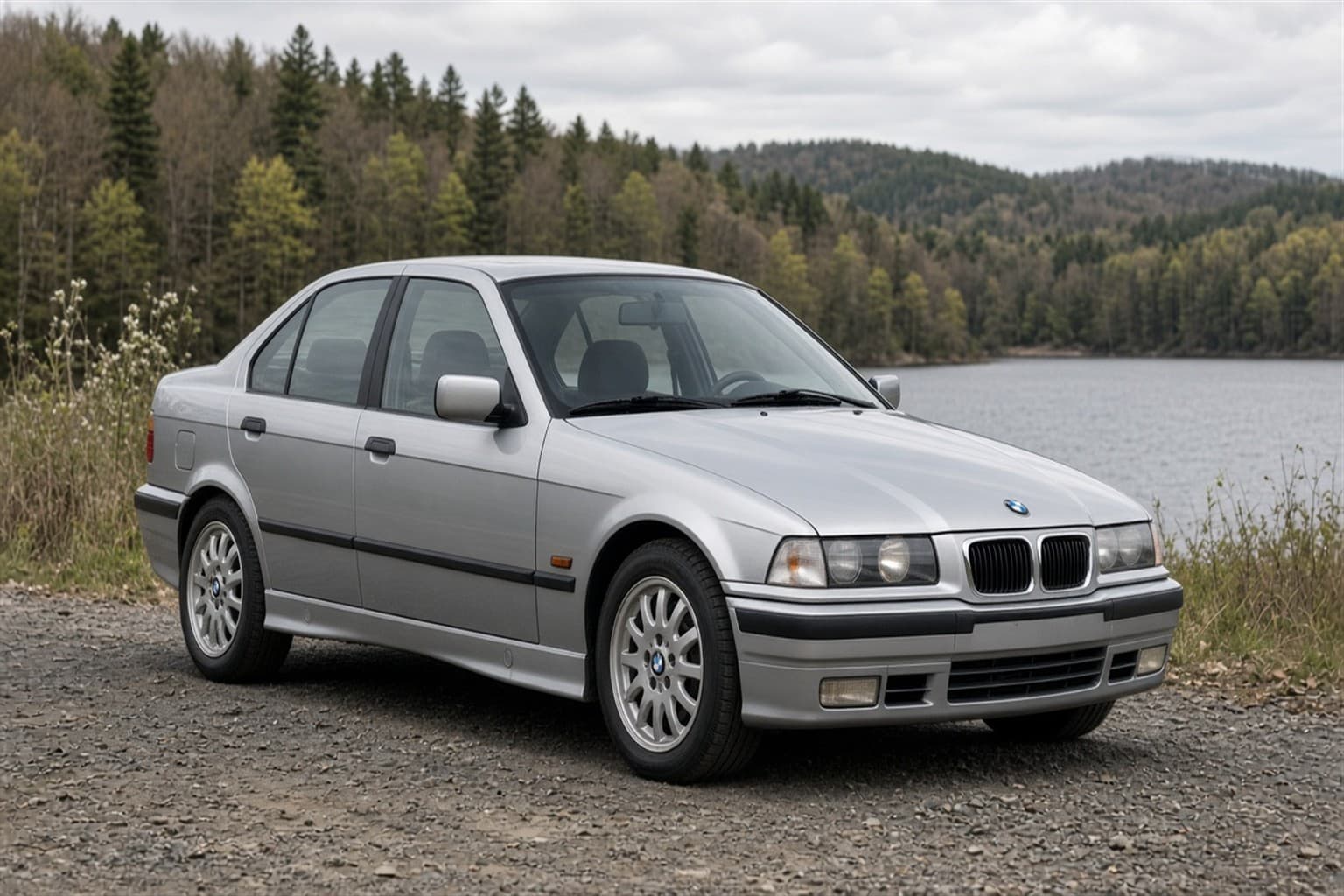
Ilustracja studyjna Generation 3 — E36 (1990–1999)
Larger cabin and mainstream Coupé body. Saloon, Coupé, Touring, Convertible and Compact. Predominantly RWD. Petrol four/six and diesel four/six depending on market. Compact must not be confused with later 1 Series.
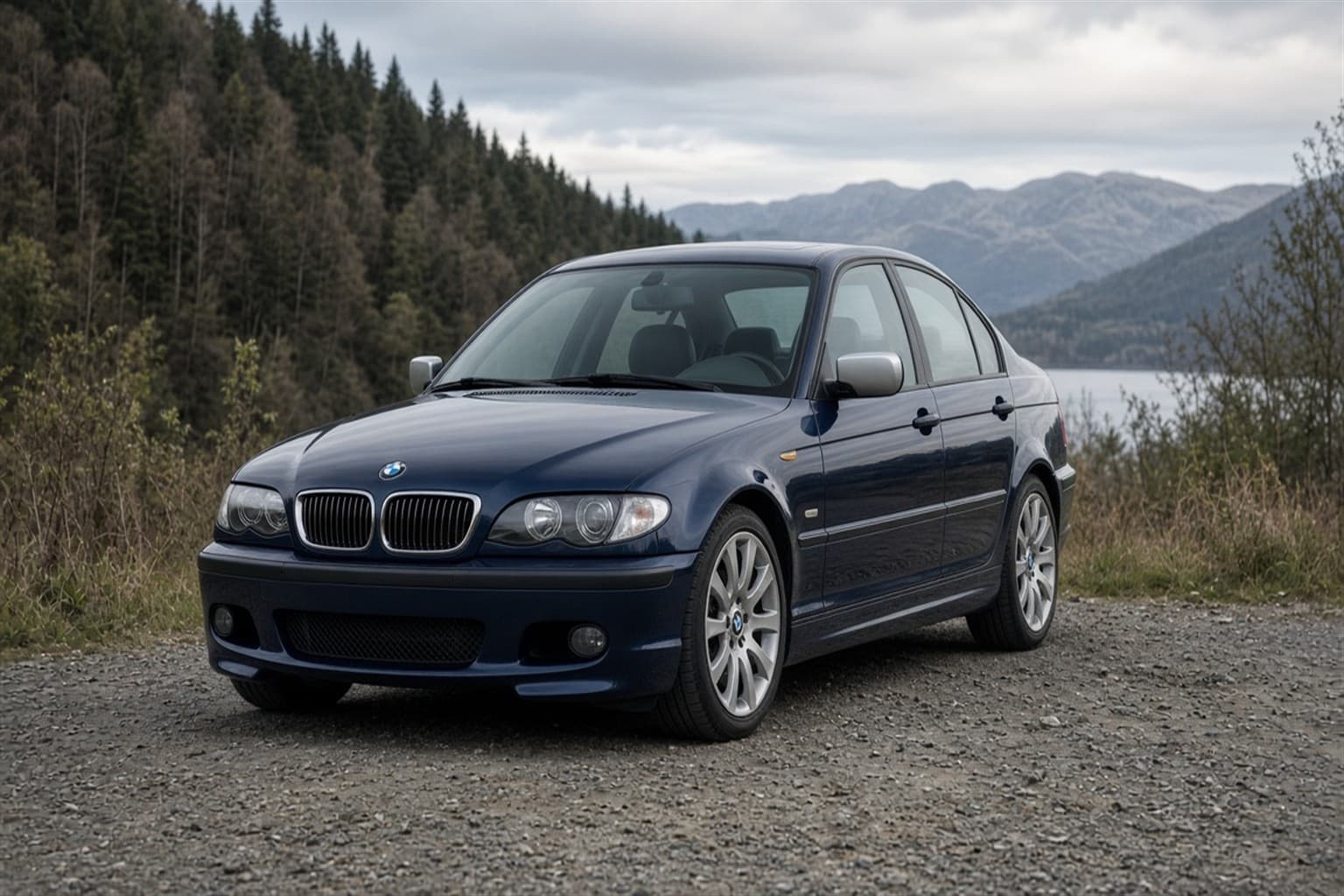
Ilustracja studyjna Generation 4 — E46 (1998–2006)
Saloon, Touring, Coupé, Convertible and Compact. RWD with selected xi/xDrive derivatives. Common-rail diesels expanded; M3 six-cylinder performance variants. One of the most widely recognised generations — still engine-code first for service themes.
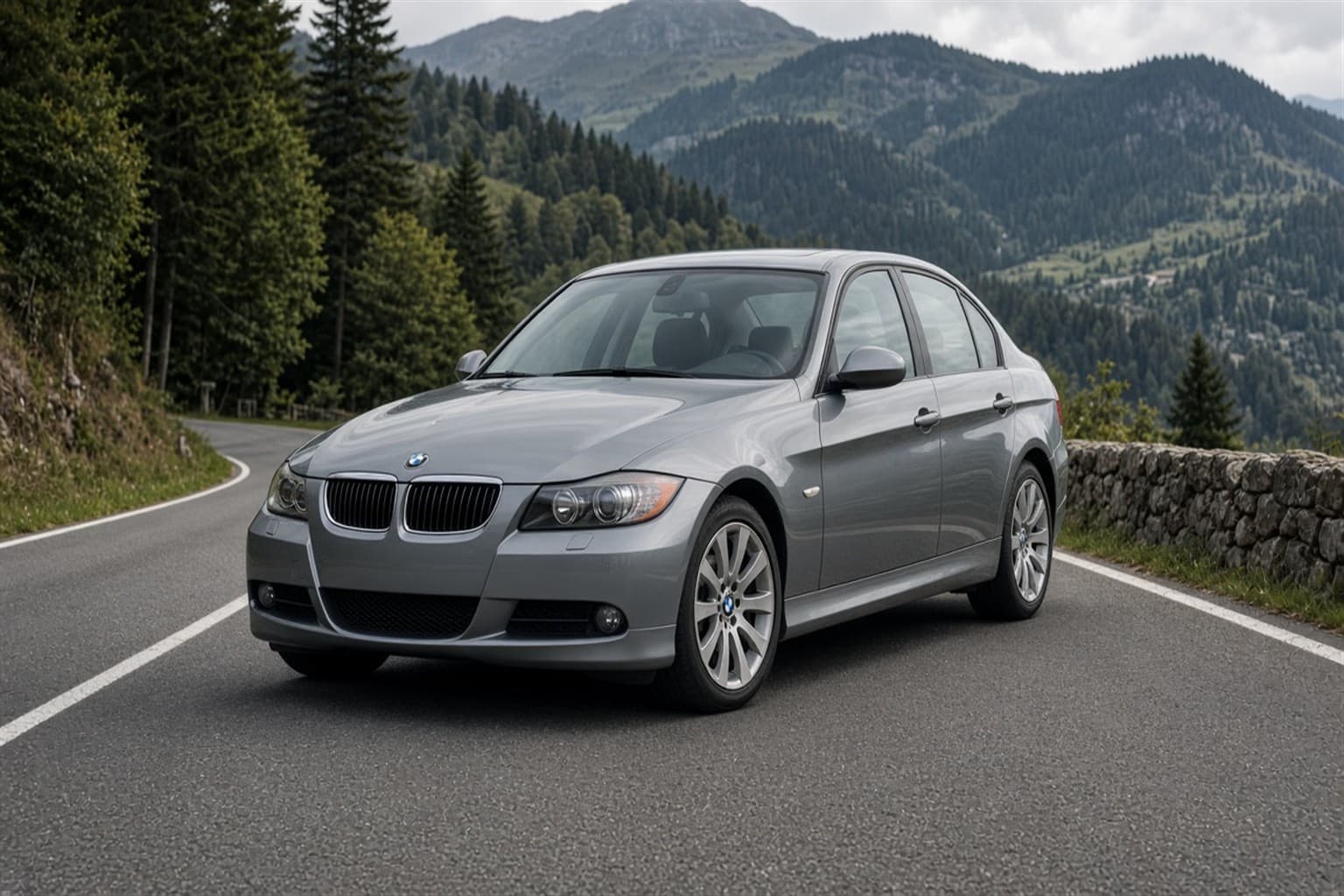
Ilustracja studyjna Generation 5 — E90 / E91 / E92 / E93 (2005–2013)
E90 Saloon, E91 Touring, E92 Coupé, E93 Convertible. RWD and xDrive on selected models. Petrol/diesel four/six; V8 in E9x M3. New electronics architecture and EfficientDynamics era. After this generation, Coupé/Convertible move to the 4 Series family — do not treat modern 4 Series as “E92 continuation under 3 Series”.
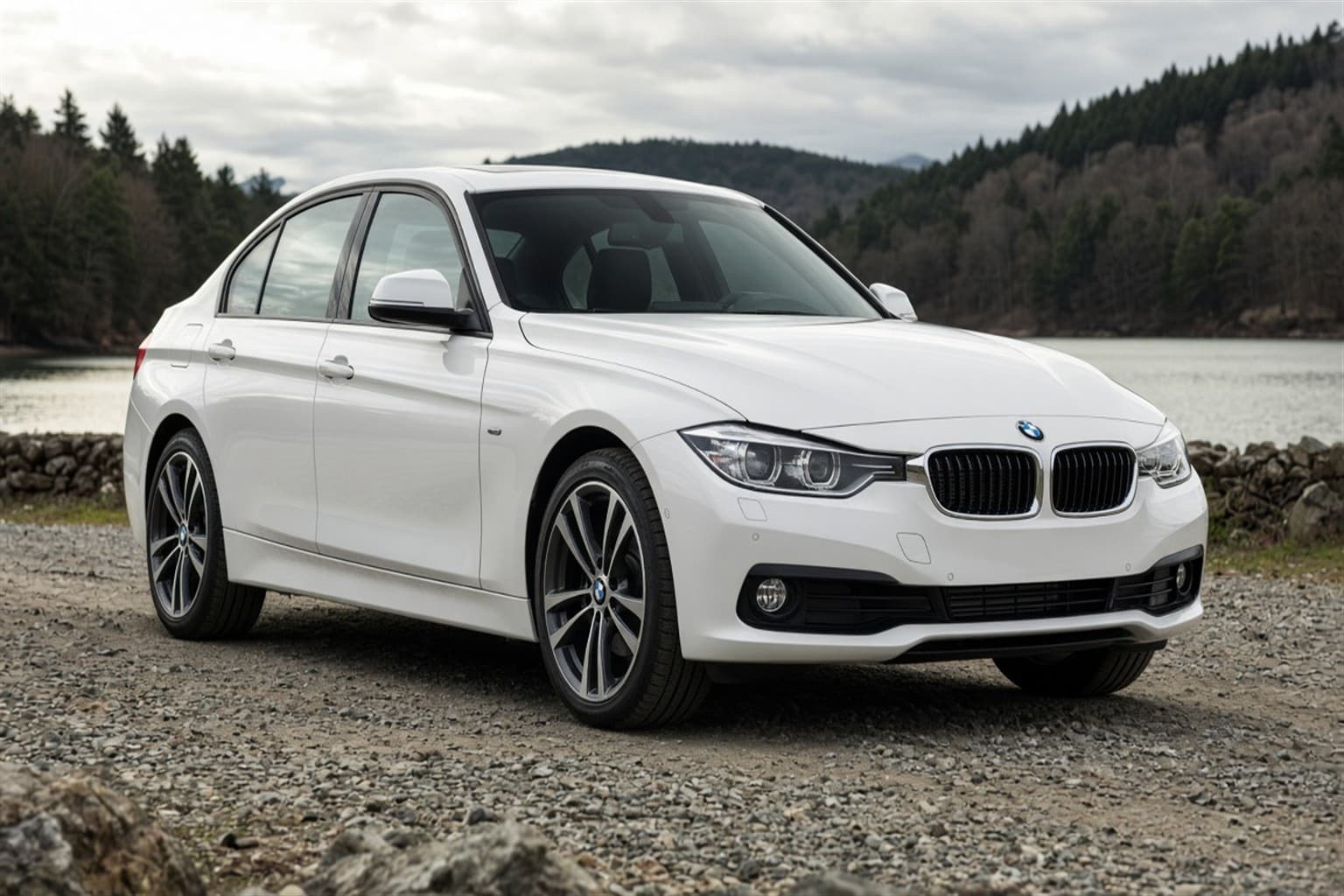
Ilustracja studyjna Generation 6 — F30 / F31 / F34 / F35 (2011/2012–2019/2020)
F30 Saloon, F31 Touring, F34 Gran Turismo, F35 LWB (China). RWD and xDrive. Petrol, diesel, ActiveHybrid 3 and 330e PHEV. Turbo four/six families. F34 GT is a distinct body derivative — store separately from Saloon/Touring. LCI updates are stages, not new generations.
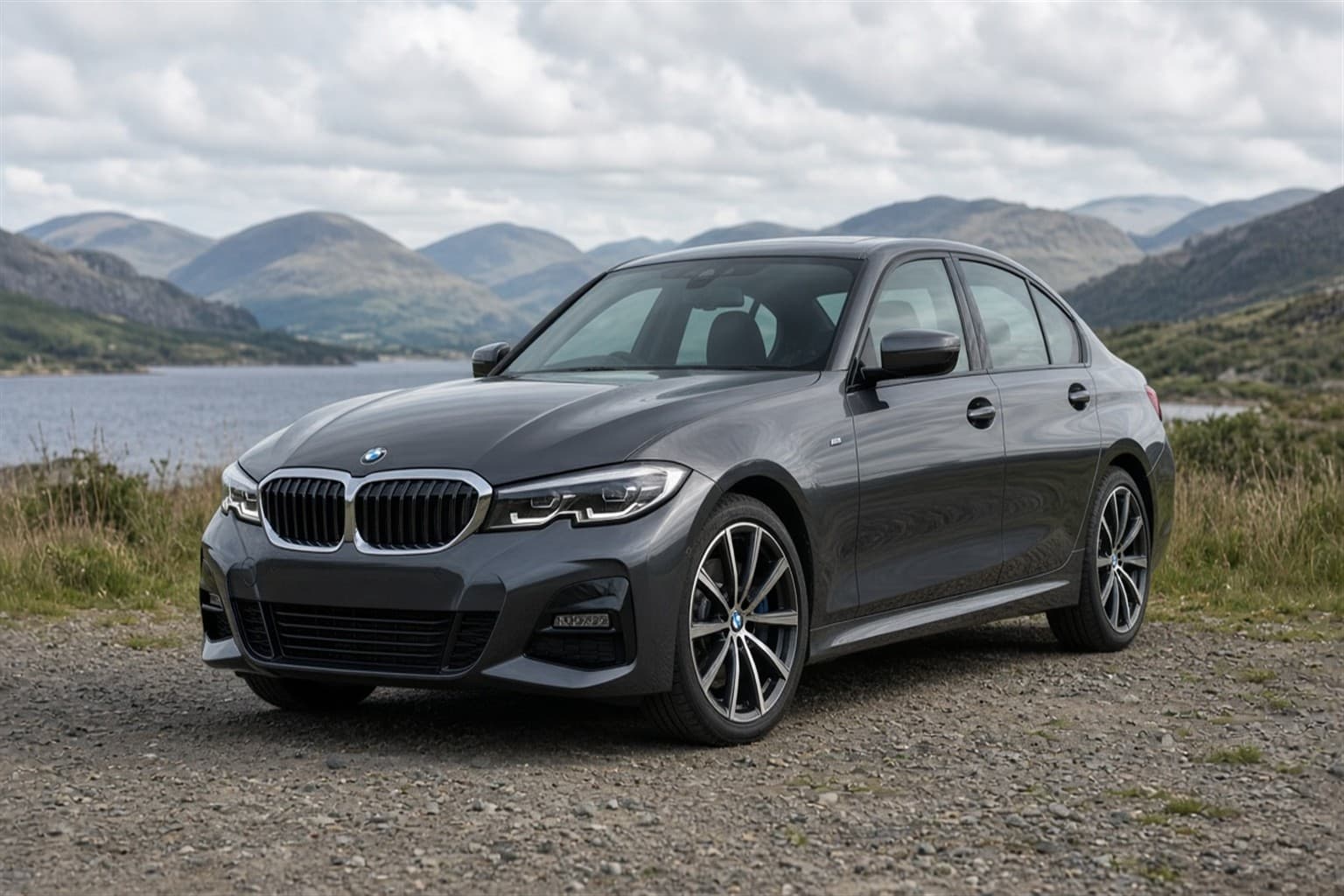
Ilustracja studyjna Generation 7 — G20 / G21 / G28 (2018/2019–2026)
G20 Saloon, G21 Touring, G28 LWB for selected markets on CLAR. RWD and xDrive. Petrol, diesel, 48V mild hybrid and PHEV (330e). Major lifecycle updates are production stages. UK-labelled examples (320i, 330e, M340i xDrive) are market-specific — see powertrains.
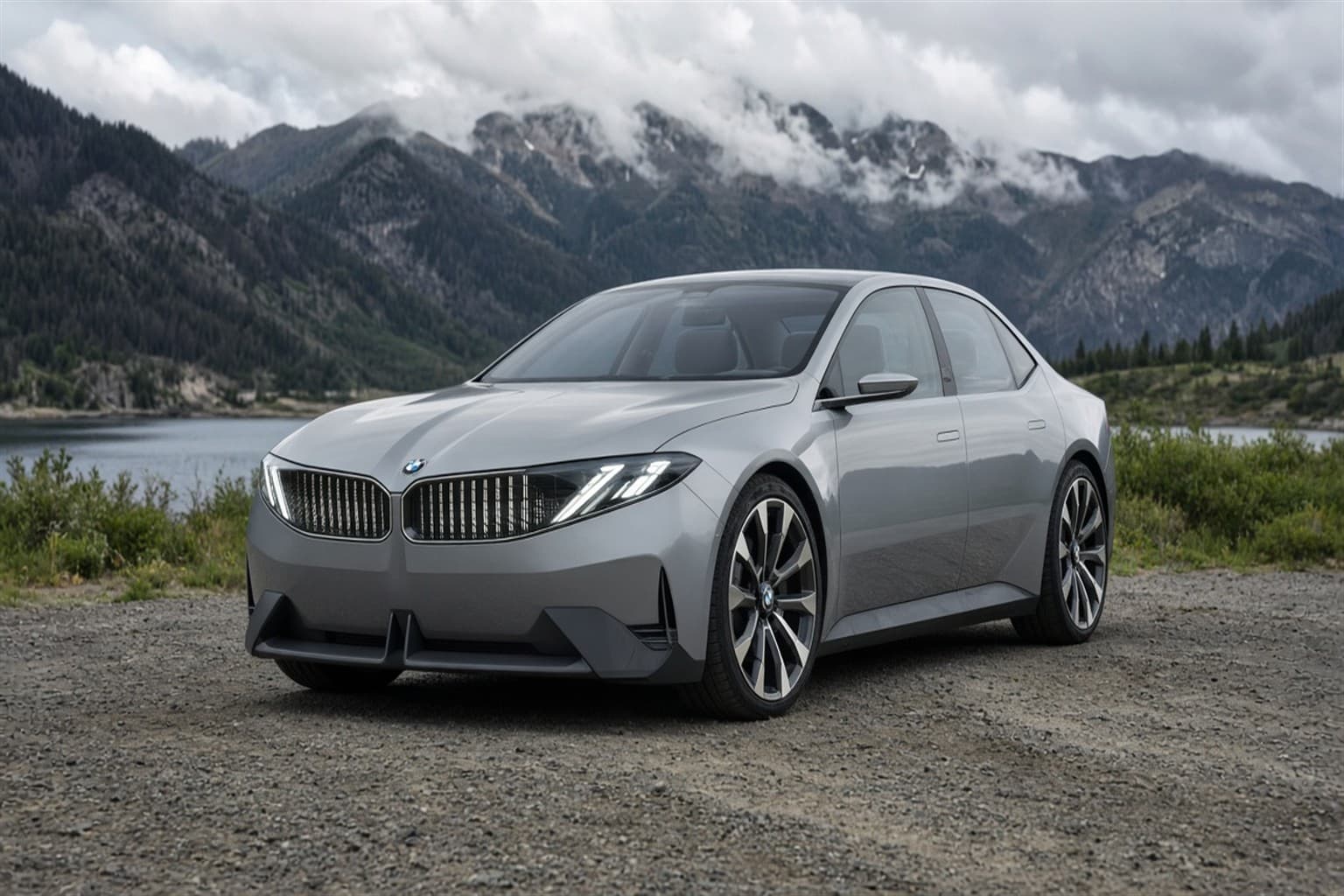
Ilustracja studyjna Generation 8 — G50 / G51 Neue Klasse (2026–present)
Official eighth generation. Neue Klasse architecture for Saloon/Touring family. Combustion launch derivatives (e.g. BMW 320, M350 xDrive in UK announcements) plus fully electric BMW i3 (40 xDrive / 50 xDrive; M60 xDrive planned) as the first electric 3 Series. Panoramic iDrive / OS X. Never merge with I01 city-car i3.
Always bind power, gearbox, drivetrain and dimensions to generation, body code and market — confirm VIN. VCE must score engine-code and powertrain themes narrowly (e.g. N47 ≠ every diesel; G20 330e ≠ all 3 Series; G50 i3 ≠ I01).
2. Body styles
Saloon
Defining 3 Series body across most generations. Luggage and packaging change by generation and powertrain (PHEV boot is smaller than combustion on G20).
Touring
Factory estate from E30 onward. G21 Touring remains a core 3 Series body. M3 Touring exists in the modern M generation — store as a distinct performance/body derivative.
Historic Coupé & Convertible
Part of E36–E93 (and earlier Convertible on E30). From the G generation onward the equivalent two-door/convertible BMWs are 4 Series — related models, not current 3 Series body styles.
Compact · Gran Turismo · LWB
E36/E46 Compact are historical derivatives (not later 1 Series). F34 Gran Turismo is a sixth-generation family derivative. F35/G28 long-wheelbase saloons are market-specific and must carry a market flag.
3. Performance derivatives
M340i / M340i xDrive
M Performance 3 Series below full M3. UK-labelled G20 example: 3.0-litre six-cylinder petrol, 48V mild hybrid, 392 hp combined, 540 Nm, 8-speed automatic, xDrive, 0–62 mph ~4.3 s. Market-labelled — confirm VIN.
M3 (historic → modern)
Full BMW M model. Historic: E30, E36, E46, E9x, F80, G80. M3 generation codes do not always match volume 3 Series body codes — keep separate taxonomy fields.
M3 Touring
Modern Touring body as a full M car. Distinct performance/body derivative — do not merge with volume G21 Touring service themes alone.
BMW i3 Saloon (G50 Neue Klasse)
First fully electric 3 Series within Gen 8. Launch framing includes i3 40 xDrive and i3 50 xDrive; M60 xDrive planned. Separate hub at i3 Saloon — never merge with I01 hatch ownership content.
4. Powertrains by generation
Engine families and outputs change across generations and markets. UK G20/G21 figures below are market-labelled examples — not a universal global sheet. Confirm VIN / handbook. Store engine code, not badge alone.
E21 — early petrol
Four-cylinder petrol at launch; six-cylinder petrol added later. Manual and early automatics. RWD only in this generation’s volume framing.
E30 — petrol, diesel, 325iX, M3
Petrol four/six, diesel, selected AWD 325iX, first production M3. Body and market packs differ widely — engine code first.
E36 — petrol & diesel families
Four/six petrol and diesel by market. Compact and Coupé packaging differ from Saloon — do not copy one boot/service assumption.
E46 — petrol, diesel, M3
Common-rail diesels expand; M3 six-cylinder. Cooling, VANOS and subframe themes are engine/body specific — never universalise forum lists.
E90 family — petrol, diesel, V8 M3
N-series petrol/diesel era; xDrive on selected models; E9x M3 V8. N47 timing themes are engine-code specific, not “all E90 diesels”.
F30 family — turbo petrol/diesel, hybrid, 330e
Turbo four/six, ActiveHybrid 3, early 330e PHEV. F34 GT and F35 LWB need separate body tags. LCI is a stage.
G20/G21 — UK-labelled current ICE/PHEV examples
UK market-labelled (not universal): 320i — ~184 hp / 300 Nm / 8-speed / RWD example / 0–62 ~7.4 s / ~480 L Saloon boot. 330e — ~292 hp combined / 19.5 kWh / 11 kW AC / ~60–63 mi WLTP e-range / ~375 L Saloon boot. M340i xDrive — 392 hp / 540 Nm / 48V / 8-speed / xDrive / 0–62 ~4.3 s. Confirm local sheets outside the UK.
G50/G51 — Neue Klasse ICE + i3 BEV
Eighth-generation architecture. Combustion and fully electric i3 derivatives share design language but need separate powertrain records (battery, AC/DC charging, OS X). Confirm launch-market sheets — do not invent universal kWh/range tables.
Exact outputs, kerb weight, luggage and charging equipment are generation-, derivative-, model-year and market-specific. Use the market selector for regional framing.
5. Transmissions
Manual gearboxes, conventional automatics, Steptronic / Steptronic Sport, dual-clutch on selected derivatives/markets, and M-specific applications. Do not infer transmission from trim name alone. Log gearbox family, fluid-service invoices and any DCT vs ZF distinction separately from engine oil stamps.
6. Drivetrain — RWD / xDrive / EV AWD
RWD is the traditional 3 Series layout. Combustion xDrive is market-, engine- and stage-dependent and needs matching tyre sizes. Dual-motor electric AWD on Neue Klasse i3 xDrive variants must be stored differently from combustion xDrive. Recording drivetrain on the VIN is mandatory before comparing “how a 3 Series drives” stories.
7. Chassis, suspension & brakes
Suspension layouts, bushings, adaptive dampers and brake packages differ across generations and M/M Performance derivatives. Log dampers, springs, bushes, alignment, brake pad/disc specs and tyre sizes with mileage — do not treat E30 and G20 as one chassis family.
8. Infotainment, software & ADAS
iDrive eras span early CCC/CIC/NBT through G20 OS updates to Neue Klasse Panoramic iDrive / Operating System X with OTA capability. Record head-unit generation, software version and campaign dates. ADAS calibration after windscreen, suspension or collision repair matters on modern cars — package is VIN-bound.
9. Safety & ADAS
ADAS packages are VIN-bound and generation-specific. Camera/radar calibration after glass or bumper work matters on later cars. Do not assume every 3 Series shares the same active-safety scope — confirm equipment on the build sheet.
10. Common owner-reported themes
Not diagnostic advice — discussion categories to document. Connect each theme to the correct generation, engine code and powertrain. Do not invent failure rates or treat forum themes as confirmed defects.
Older petrol — cooling, oil, ignition, VANOS
Cooling components, oil leaks, coils/plugs, VANOS/Valvetronic and timing-chain concerns on applicable engine families. Turbo/charge-air themes on turbo petrols — engine-code first.
Diesel — DPF, EGR, turbo, injectors
DPF loading, EGR/intake contamination, turbo wear, injectors, DMF/clutch and timing-chain issues on specific families (e.g. N47). Never invent one diesel rule for every 3 Series.
Automatic transmissions
Fluid/service history, mechatronic behaviour, DCT clutch packs where applicable, shift quality and adaptation. Log gearbox code.
Suspension & steering
Control-arm bushes, ball joints, dampers, wheel bearings, steering components, adaptive suspension on equipped cars.
Electronics & 12V
Battery/charging voltage, IBS/energy management, iDrive/head-unit faults, sensors, parking/ADAS, water ingress by generation/body.
PHEV (330e and related)
HV battery condition, charging behaviour, 12V health, cooling-system health, software/charging compatibility. Keep HV and 12V records separate. Boot packaging differs from combustion.
xDrive tyre matching & transfer case
Matching tyre circumference/brand on AWD cars; transfer-case / driveline service where specified. Distinct from EV dual-motor AWD.
Modern ADAS calibration
Calibration after windscreen replacement, suspension changes, collision repair or sensor replacement where required — generation/VIN specific.
11. Service & maintenance (CBS)
BMW 3 Series follows Condition Based Service (CBS) on modern cars — intervals vary by market, generation, engine, drivetrain, powertrain and use. Always verify the VIN-specific BMW maintenance schedule in iDrive. Tag generation (E21–G50) and powertrain on every stamp. Do not invent one universal oil interval for every 3 Series.
| Item | Typical interval | Notes |
|---|---|---|
| Engine oil & filter (CBS) — ICE/PHEV | CBS — often annual / ~10,000–12,000 mi (confirm iDrive) | Generation-aware CBS — oil grade is engine-code specific. BEV uses different HV/drive unit items. |
| Brake fluid | CBS (often ~24 months) | Calendar replacement — fluid absorbs moisture. |
| Spark plugs (petrol / PHEV petrol side) | Per handbook / CBS | Petrol/PHEV only — confirm code and generation. |
| Air filter / cabin (micro) filter | CBS / often ~12 months for cabin | Common annual habit — confirm VIN. |
| Brake pads / discs | Every service / as worn | Inspect wear and corrosion; log with mileage. M/M Performance packages differ. |
| Tyres & alignment (xDrive matching) | Regular / every service | xDrive needs matched tyres — note drivetrain. EV AWD separate. |
| Coolant / cooling system check | Per BMW schedule | ICE and PHEV thermal loops differ — generation/engine specific. |
| Gearbox / differential / xDrive transfer case | Per gearbox & handbook | ZF/Steptronic/DCT ≠ same fluid story. Log codes. Transfer case where applicable. |
| PHEV HV battery / charging check · BEV (i3 Saloon) HV items | Per BMW schedule / campaigns | 330e vs G50 i3 Saloon — never merge I01 hatch procedures. Keep 12V separate. |
| 48V mild-hybrid check (where fitted) | Per BMW schedule / campaigns | G20 M340i and other 48V cars — small aux pack, not PHEV HV. |
| Software / iDrive / OS version check | At service or when prompted | Record version + date (OS X on G50 / Panoramic iDrive). |
| Recall / campaign check | At every service | VIN + market + generation specific. |
Service intervals vary by market, generation, model year, engine and drivetrain. Always verify the VIN-specific BMW CBS schedule.
12. Inspection & roadworthiness
Terminology adapts by country — never title every market’s test “MOT”. UK MOT, Spain ITV, Poland/Hungary periodic inspection, Germany TÜV, Turkey TÜVTÜRK, US state systems, and other local rules form a global framework.
- Record the local certificate separately from manufacturer CBS stamps
- Use the market selector for the local system name and authority links
- Brakes, tyres, lights, suspension, emissions and ADAS warnings still matter
- Do not conflate a passed periodic inspection with a full BMW CBS service stamp
Confirm requirements for the vehicle’s registration market.
13. Recalls & campaigns
- Check VIN on official BMW / national safety portals for your market
- Log campaign ID, completion date and software version after work
- Do not assume a campaign from one market or generation applies to every 3 Series worldwide
Recall and campaign availability vary by market, production date, software version and VIN. Never display “this car has no recalls” unless the specific VIN has been checked against an authoritative source. Store market, generation, production range and vinRequired flags.
19. Dimensions — G20 UK labelled examples
G20 UK approximate technical framing (do not copy into earlier gens or every market). Exact figures vary by wheels/equipment/powertrain — confirm VIN.
- 320i Saloon example: length ~4,713 mm · wheelbase ~2,851 mm · luggage ~480 L
- 330e Saloon luggage ~375 L (HV pack packaging) — not the same as combustion
- M340i xDrive Saloon luggage ~480 L · reference kerb ~1,835 kg (UK sheet)
- G50 / i3 Saloon dimensions — confirm launch-market technical data; do not invent
Published dimensions are configuration- and market-specific.
17. Honest pros
- Extremely long model history and huge global owner community
- Broad engines and drivetrains across eight generations
- Strong driving dynamics in many generations; Touring practicality retained
- PHEV (330e), 48V M340i and Neue Klasse i3 Saloon electric path
- Excellent specialist knowledge and parts for older models; wide used choice
- CBS digital service culture suits Transfer Pack provenance
- Market selector keeps regional framing honest without walling owners off
18. Honest cons / things to consider
- Reliability and themes vary dramatically by generation and engine code
- Diesel aftertreatment and turbo petrol cooling/timing themes are expensive when ignored
- xDrive, PHEV and M derivatives add complexity and running costs
- UK G20 figures are market-labelled — risky to universalise
- 4 Series / I01 i3 confusion trips buyers and forum advice
- ADAS accident-repair quality and calibration matter on modern cars
14. Buying a used 3 Series
- Identity: VIN · generation (E21–G50) · body code · engine code · transmission · drivetrain · market · MY · import history
- History: full service/CBS, invoices, mileage consistency, MOT/inspection, recalls, accident/import history
- Mechanical: cold start, oil/cooling, turbo, gearbox, clutch/DMF, suspension, steering, brakes, tyres, emissions
- Electrical: 12V load-test, charging system, warnings, iDrive, cameras/ADAS
- PHEV/EV: charge port, AC charging, HV SoH where available, thermal management, software — I01 ≠ i3 Saloon
- xDrive: matching tyres, transfer-case history, AWD behaviour on test drive
- Body: accident repair, panel gaps, corrosion, water ingress, glass/lights
- Derivatives: M340i vs M3 vs 330e vs i3 Saloon — badge must match VIN
- 4 Series check: do not buy a 4 Series expecting “current 3 Series Coupé” parts/service identity
- Documents: CBS history, invoices, recalls, inspections, two keys, Transfer Pack if offered
20. Data quality rules
Never infer engine code or drivetrain from badge/trim alone. Never treat a facelift as a new generation unless BMW identifies it as such. Store production date separately from registration year; market separately from current ownership country. Keep M3, 4 Series, I01 i3, PHEV HV vs 12V, and combustion xDrive vs EV AWD separated. Prefer BMW technical documentation, government sources and authoritative inspection data.
21. V2 technical database roadmap
V2 expands into structured records: generation, body code, production window, market, model year, engine family/code, power/torque, transmission code, drivetrain, suspension/brakes, PHEV/EV battery and charging, software/ADAS package — rather than uncontrolled prose. Example fields follow ThreeSeriesTechnicalRecord in the Global Model Standard.
Przewodniki i listy kontrolne
Więcej modeli BMW
Porównaj platformy, motywy usług i narzędzia cyfrowej historii usług w całej gamie.
Często zadawane pytania
How many generations of BMW 3 Series are there?+
As of 2026 BMW identifies the Neue Klasse model as the eighth generation. The lineage is E21, E30, E36, E46, E90 family, F30 family and G20 before G50/G51. Do not collapse or invent intermediate “generations” from facelifts.
Is the BMW 4 Series part of the 3 Series?+
Historically the Coupé and Convertible were 3 Series body derivatives (through E9x). BMW subsequently separated these into the 4 Series family. The modern 4 Series should be linked as a related model, not treated as a current 3 Series body style. Touring stays 3 Series.
Is the BMW i3 the same as the old electric i3?+
No. The modern BMW i3 is the fully electric 3 Series saloon introduced with the eighth-generation Neue Klasse (G50). It is separate from the earlier I01 BMW i3 hatchback (2013–2022).
Is every 3 Series rear-wheel drive?+
No. RWD is the traditional layout, but xDrive AWD has been available on selected generations and engines. PHEV and electric versions also require powertrain-specific drivetrain records — launch i3 xDrive uses dual-motor EV AWD, not combustion xDrive.
Is every 330e the same?+
No. Battery, engine, electric motor, software, charging and market specifications can vary by production stage and market. Current BMW UK data lists a 19.5 kWh battery, 11 kW AC charging and approximately 60–63 miles WLTP electric range for the referenced G20/G21 330e configuration — market-labelled, not universal.
Is the M340i an M3?+
No. M340i / M340i xDrive is an M Performance 3 Series derivative. M3 (and M3 Touring) is the full BMW M model and should be separately identified in the taxonomy.
Dyskusje właścicieli 3 Series
Najnowsze rozmowy właścicieli BMW 3 Series w klubie.
Brak dyskusji o 3 Series. Bądź pierwszym właścicielem, który zacznie rozmowę!
Zadaj pytanie / Opublikuj zdjęcieDołącz do społeczności BMW Owners Club
Dodaj go bezpłatnie do The Owners Club, aby śledzić harmonogram konserwacji, importować historię przeglądu technicznego w Wielkiej Brytanii i przenosić zweryfikowane pochodzenie w przypadku sprzedaży.