Owners Club · Digital service history
Nissan Qashqai Owners Club — Maintenance & Provenance
Independent owners’ resource. This page is produced by The Owners Club and is not affiliated with, endorsed by, or sponsored by Nissan Motor Corporation. Specifications, recall status and software details change — always confirm against your handbook (VIN) or an authorised Nissan dealer before booking work. The Qashqai effectively created the compact crossover segment in Europe when the first generation launched in 2007, and remains one of the UK’s best-selling cars — built at Nissan’s Sunderland plant, the UK’s largest car factory. It is the natural place to start on this site’s Nissan coverage: the largest owner base and the best-documented model across both used and current cars. This page covers the two generations most relevant to today’s owners and buyers: the Mk2 (2014–2021), which makes up a huge share of the used market, and the current Mk3 (2021–present), which introduced Nissan’s e-POWER hybrid technology to the range alongside conventional mild-hybrid petrol options.
A note on generation naming: this site follows the widely used UK convention of Mk2 (2014–2021) and Mk3 (2021–present, internal code J12), though the original 2007–2013 car is sometimes counted as Mk1 elsewhere — if cross-referencing parts or forums, confirm which numbering a source is using. Treat the two generations separately everywhere on this page — known issues, service checks and buyer questions are genuinely different.
Arrived from a club search? See the exact-match Nissan Qashqai Owners Club landing — then use this hub for platforms, issues and the full guide cluster.
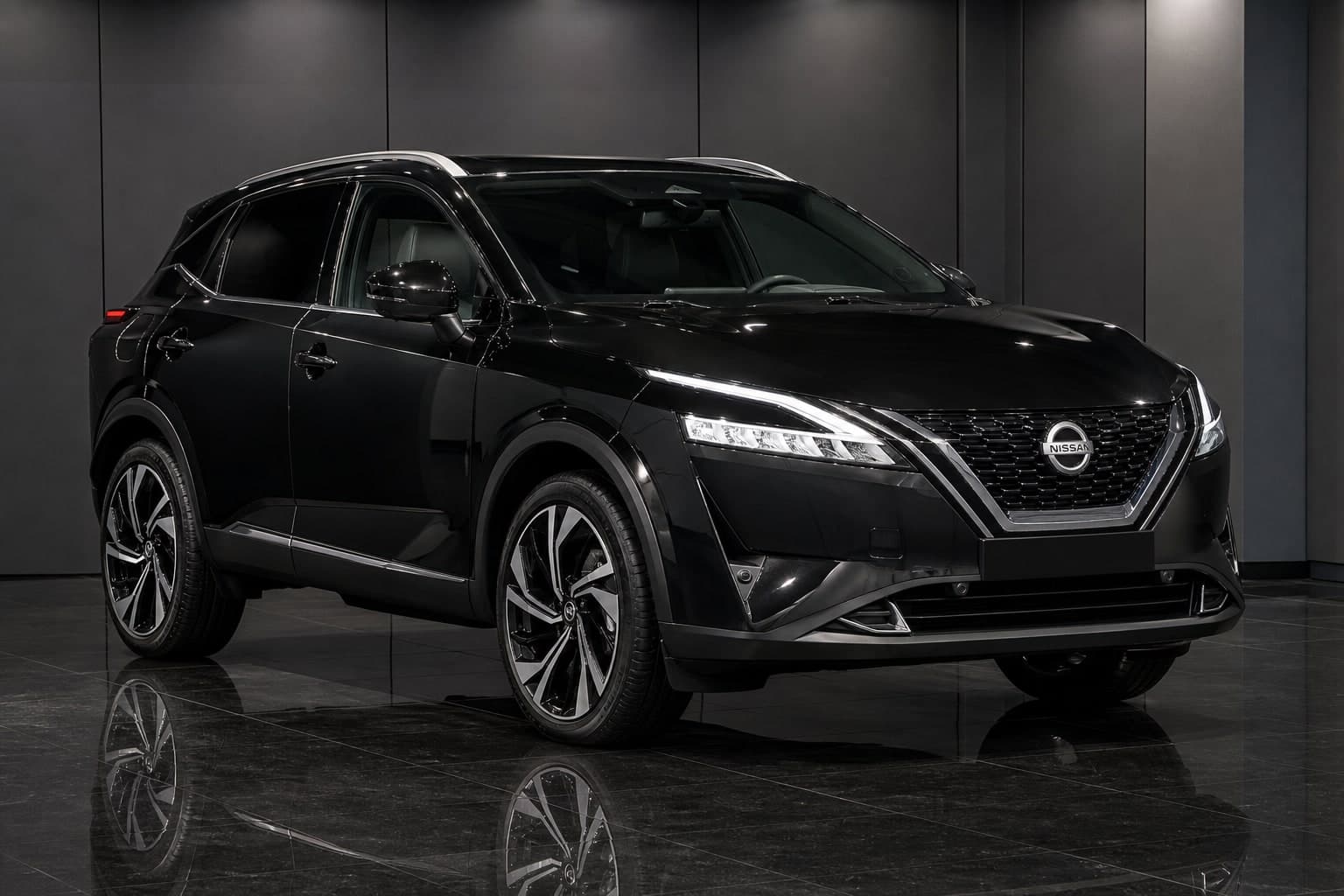
1. Generations & platforms
Qashqai Mk2 (2014–2021)
Nissan/Renault-Nissan Alliance CMF-C/D-related platform (predecessor generation to the current shared architecture) · Petrol and diesel engines, predominantly conventional (non-hybrid) drivetrains. This generation dominates the used market and carries a distinctly different reliability and maintenance profile from the current car — especially diesels.
Qashqai Mk3 (2021–present, J12)
CMF-C/D platform, shared with the current Nissan X-Trail and related Renault models · Available as conventional mild-hybrid petrol or Nissan’s e-POWER series-hybrid system (the petrol engine only ever generates electricity and never drives the wheels directly). An all-electric Qashqai has been publicly discussed by Nissan but was delayed due to uncertainty around EV demand — confirm current status if this is relevant to your research.
UK numbering on this site: 2014–2021 = Mk2, 2021–present (J12) = Mk3. The original 2007–2013 car is sometimes counted as Mk1 elsewhere — confirm which system a parts or forum source is using before ordering. Problems below are generation-specific; do not apply Mk2 diesel themes to an e-POWER Mk3, or vice versa.
2. Qashqai: the Honest Pros
- Genuinely class-competitive reliability on the current Mk3 — it placed 17th out of 76 cars in a recent What Car? family SUV reliability survey with a strong 95.9% score, a marked improvement on the Mk2
- Nissan’s e-POWER system is a genuinely distinctive piece of engineering — the petrol engine only ever generates electricity and never drives the wheels directly, giving EV-like driving characteristics without needing to plug in
- Huge parts availability and independent-garage familiarity given how popular this model has been for over a decade — the largest Nissan owner base on UK roads
- Spacious, practical family SUV packaging that’s aged well against newer rivals
- Built in the UK at Sunderland, which some owners specifically value, and which has historically supported strong parts/service availability domestically
3. Qashqai: the Honest Cons
- Nissan as a brand scored poorly at the manufacturer level in the same What Car? survey that praised the current Qashqai’s own reliability — 89.9%, 29th out of 30 manufacturers, ahead of only MG. Useful distinction: the model itself tests well, even though the brand overall doesn’t
- The Mk2 (2014–2021), especially diesel variants, has a genuinely poor reliability reputation — 83.2% overall and just 74.0% on diesels specifically in What Car?’s survey, putting older diesel Qashqais among the least reliable used family SUVs tested
- Early Mk3 e-POWER models (2022–2023 production) had documented power management software calibration issues — jerky acceleration and system stops on the motorway
- e-POWER’s 12V battery/DC-DC converter behaviour is a recurring theme in owner reports, distinct from more conventional car electrical faults
- Infotainment and non-engine electrics are the most commonly reported fault category even on the well-scoring current Mk3
4. Known issues — check these before assuming a fault
Not diagnostic advice — themes owners often document in service history. Always verify for your exact engine, generation and year. Mk2 and Mk3 problems are genuinely different — read the section that matches your car.
Mk2 (2014–2021) — turbo failures
Reported across the 1.6-litre and 1.5-litre diesel engines and the 1.2-litre petrol. Symptoms include rough running, an inability to rev above roughly 2,000rpm, and blue or black smoke under acceleration. Replacement typically costs around £450 plus labour.
Mk2 — weak factory battery affecting stop-start and electronic handbrake
A documented weak point on this generation: a failing 12V battery can disable stop-start and the electronic handbrake specifically, not just cause a slow start. Ask whether the battery has been replaced before buying, and check these systems work correctly on a test drive.
Mk2 — windscreen water ingress
Water can leak through the windscreen seal into the cabin, potentially causing mould under the carpets or, in worse cases, shorting electrical systems. Check under the carpets and around the interior windscreen edges for damp on any used Mk2.
Mk2 — 1.5 diesel cambelt interval
Unlike other engines in the range (which use a timing chain), the 1.5-litre diesel uses a conventional cambelt requiring replacement every 5 years or 75,000 miles, at a cost of roughly £500. Confirm this has been done on any car approaching that age/mileage, or price it into your offer.
Mk2 — recalls to check
Two notable campaigns: an indicator fault linked to the heated rear screen (cars built 12–28 June 2017), and incorrect gross combination weight figures on VIN plates (affecting both manual and CVT cars). Check status against your specific VIN with a dealer.
Mk3 — e-POWER early software calibration (2022–2023 production)
Owner reports describe jerky acceleration, unexpected power cuts during motorway merging, and complete system shutdowns requiring a restart on early-production e-POWER cars, traced to the software managing when the petrol engine runs to generate charge versus drawing on stored energy. Confirm current software version on any early e-POWER Qashqai.
Mk3 — e-POWER 12V battery and DC-DC converter behaviour
Unlike a conventional car where the alternator constantly tops up the 12V battery while driving, e-POWER relies on a DC-to-DC converter that doesn’t always maintain optimal charge on short journeys. Warning signs include slow starter cranking, dimming dashboard lights when stationary, intermittent window mechanism failures, and warning messages that appear and then clear themselves after driving. A documented Battery Management System software recall exists for some e-POWER cars specifically to correct incorrect battery readings — if you’re experiencing repeat 12V-related symptoms on an e-POWER Qashqai, ask the dealer directly whether this BMS update has been applied, not just whether the battery itself has been swapped.
Mk3 — steering rack and rear door child lock recalls
At the time of writing, five recalls have been listed against the current Qashqai, including a steering rack replacement campaign and a rear door child lock fault where the lock could disengage when the inside door handle is operated. Check current status against your VIN with a dealer — there’s no cost to the owner for recall work.
General — 1.2-litre petrol oil consumption (both generations where fitted)
Some owners report excessive oil use on the 1.2-litre petrol engine. Check the dipstick level on any car with this engine rather than assuming it’s fine between services.
5. UK service interval at a glance
| Service | Miles / months | Notes |
|---|---|---|
| Scheduled service (Nissan Qashqai) | 10,000 / 12 | Whichever comes first for many UK handbooks. Confirm exact figure for your engine/generation. |
| 1.5 diesel cambelt (Mk2 only) | 75,000 / 60 | The exception to this range’s usual timing-chain engines — don’t stretch this interval. |
| 12V battery test | — / At every service, or sooner if symptoms appear | Different underlying cause on e-POWER Mk3 vs conventional Mk2 — see known issues above. |
| Turbo/engine oil consumption check (Mk2 diesel, 1.2 petrol) | — / At every service | Watch dipstick level and listen for the documented turbo symptoms. |
| Recall/campaign check | — / At every service | Given the number of distinct campaigns across both generations. |
| Windscreen seal/carpet damp check (Mk2) | — / Annually | Cheap to check, expensive to ignore if it’s caused electrical corrosion. |
| Cabin pollen filter | — / 12 | Standard interval for any vehicle. |
The Qashqai follows Nissan’s standard service scope, varying by generation and drivetrain (conventional petrol/diesel, mild-hybrid, or e-POWER). Intervals are whichever comes first (miles or months) unless noted. They vary by engine, generation, model year and service regime. Confirm in the handbook, service booklet or dealer system for your VIN before you book work. Legal note: Service intervals and specifications shown are indicative and collected from public or community sources. Official schedules may vary by model year, engine code, market, or dealer updates.
6. Official Nissan resources
Official links are provided for convenience and accuracy. The Owners Club has no commercial relationship with Nissan and cannot confirm pricing, availability or booking on their behalf — please verify directly with an authorised dealer. Confirm the exact recall-checking URL on Nissan UK’s site before relying on it for a specific VIN.
- Owner’s handbook and service schedule for your VIN — follow the edition matched to your model year, engine, generation and market
- VIN recall/campaign status with an authorised dealer — Mk2 heated-screen and VIN-plate campaigns, Mk3 steering-rack and child-lock campaigns, and e-POWER BMS software where applicable
7. What to actually keep on top of
- 12V battery health, tested under load — relevant on both generations, but with a genuinely different underlying cause and symptom pattern on e-POWER Mk3s versus the more conventional weak-battery issue on Mk2s. Don’t assume the same fix applies to both
- Turbo condition on Mk2 diesel and 1.2 petrol engines — watch for the specific symptoms above rather than assuming any rough running is minor
- 1.5 diesel cambelt history on the Mk2 — this is the one Qashqai engine that doesn’t use a timing chain; don’t assume it’s belt-free like the rest of the range
- e-POWER software version and BMS update status on early Mk3 cars — check specifically rather than assuming a 12V symptom is a simple battery swap
- VIN-specific recall status on both generations — the Mk2’s heated-screen and VIN-plate campaigns, and the Mk3’s steering rack and child-lock campaigns, are all worth checking regardless of any other symptoms
- Windscreen seal condition and evidence of damp on the Mk2 — a cheap thing to check, and an expensive one to ignore if it’s led to electrical corrosion
8. Own a Nissan Qashqai? Protect its resale value
Add it to The Owners Club for free to track its maintenance timeline, import UK MOT history, and transfer verified provenance when you sell. Generation (Mk2 vs Mk3), drivetrain (diesel / mild-hybrid / e-POWER), cambelt invoices, e-POWER software/BMS notes and recall completion are exactly what the next buyer cannot reconstruct from a badge alone.
- Verified maintenance timeline with garage invoices
- UK MOT import (DVSA)
- Mk2 cambelt / turbo / damp notes or Mk3 e-POWER software & BMS event tracking
- Verified Transfer Pack PDF for sale
Guides & checklists
More Nissan models
Compare platforms, service themes and digital service history tools across the range.
FAQ
How often should you service a Nissan Qashqai?+
Most UK cars use an annual service or ~10,000 miles, whichever comes first. Confirm the exact figure for your specific engine and generation in the handbook — intervals vary between Mk2 petrol/diesel, Mk3 mild-hybrid and e-POWER.
What platforms does the Nissan Qashqai use?+
The Mk3 (2021–present) uses the CMF-C/D platform, shared with the current X-Trail and related Renault models. The Mk2 (2014–2021) used an earlier, related architecture. Both are distinct from the newer CMF-EV platform used by Nissan’s pure-electric models (Ariya, 3rd-generation Leaf).
Is the current Qashqai (Mk3) reliable?+
By What Car?’s survey data, yes — the Mk3 scored 95.9% and placed 17th out of 76 family SUVs, a genuine improvement on the Mk2. Treat Mk2 and Mk3 as separate reliability stories: older diesels in particular scored far worse in the same survey family.
Why does the Qashqai score well if Nissan’s brand reliability looks poor?+
This is the counterintuitive What Car? nuance: in the same survey that praised the current Qashqai’s reliability, Nissan as a manufacturer scored poorly at brand level — 89.9%, 29th out of 30 manufacturers, ahead of only MG. The specific model tests well even though the brand’s overall reputation does not. Do not assume brand-level league tables apply one-for-one to this car.
How do I prove service history for a Nissan Qashqai?+
Given how different the known issues are between generations and drivetrains, the most valuable thing you can document is precisely which one you have (Mk2 vs Mk3, conventional vs e-POWER) alongside dated invoices for the specific checks relevant to it — a Mk2 diesel’s cambelt history and a Mk3 e-POWER’s software/BMS status matter to very different buyers.
Is this page affiliated with Nissan?+
No. The Owners Club is an independent owners’ resource. Official Nissan links are for convenience only — we have no commercial relationship with Nissan and cannot confirm pricing, availability or booking on their behalf.
Qashqai owner discussions
Latest conversations from Nissan Qashqai owners in the club.
No discussions yet for the Qashqai. Be the first owner to start a conversation!
Ask a Question / Post PhotoJoin the Nissan Owners Club Community
Add it to The Owners Club for free to track its maintenance timeline, import UK MOT history, and transfer verified provenance when you sell.