Owners Club · Digital service history
Nissan Leaf Owners Club — Maintenance & Provenance
Two structurally different cars share the Leaf name. 1st generation (2010–2017, ZE0) and 2nd generation (2017–2025, ZE1) sit on Nissan's older Leaf-specific EV platform. The 3rd generation (2025–) is an all-new car built in Sunderland on CMF-EV, sharing architecture with the Ariya — genuinely different underneath, not an update of the same car. Older and newer Leaf owners are asking about fundamentally different engineering; don't assume continuity in known issues between generations. On ZE1 used cars, 12V battery, traction-battery health notes and charge-port faults still belong in the history.
Practically, the Leaf name covers two genuinely different cars. The 2010–2025 cars (ZE0 and ZE1) and the 2025-onward car share almost nothing mechanically: older cars use a Leaf-specific platform with passive air-cooled batteries; the new car is built on Nissan’s CMF-EV platform — the same architecture as the Ariya — with liquid-cooled batteries, CCS instead of CHAdeMO, and a crossover body rather than a hatchback. This page treats them as two different vehicles that happen to share a name.
Arrived from a club search? See the exact-match Nissan Leaf Owners Club landing — then use this hub for platforms, issues and the full guide cluster.
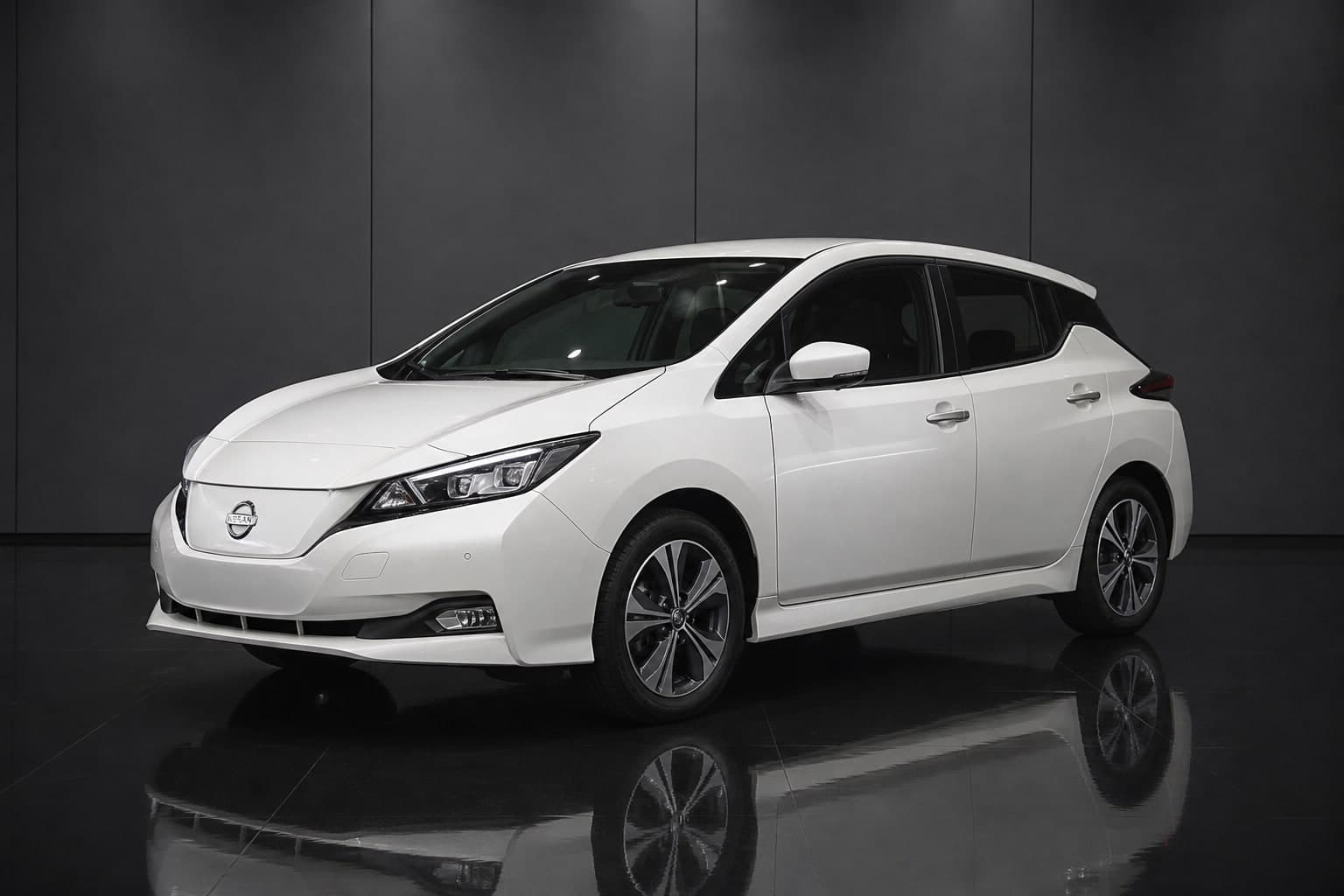
Read this first: the Leaf name covers two genuinely different cars
The 2010–2025 cars (ZE0 and ZE1) and the 2025-onward car share almost nothing mechanically. Older cars use a Leaf-specific platform with passive air-cooled batteries; the new car is built on Nissan’s CMF-EV platform — the same architecture as the Ariya — with liquid-cooled batteries, a completely different charging standard (CCS instead of CHAdeMO), and a crossover body shape rather than a hatchback. This page treats them as what they effectively are: two different vehicles that happen to share a name, with correspondingly different ownership priorities. Don’t assume older Leaf known issues auto-apply to the new car — or the reverse.
Part 1 — Older Leaf (2010–2025, ZE0 and ZE1)
Across both older generations, the single dominant ownership factor is battery health, not conventional mechanical wear. Both ZE0 (2010–2017) and ZE1 (2017–2025) use passive air cooling for the battery — no active liquid thermal management — which makes the Leaf more vulnerable to heat-related degradation than almost any other mainstream EV of its era. This isn’t a defect so much as an inherent design characteristic of both generations; understanding it is the single most important thing for buying or owning an older Leaf.
Older Leaf: the Honest Pros
- Simple, proven, largely wear-free electric drivetrain — the motor and reduction gear themselves are rarely the problem
- Very low routine maintenance costs given how few moving mechanical parts there are
- Huge, mature used market with well-established specialist knowledge (battery testing, cell replacement, aftermarket pack upgrades)
- ZE1’s 62kWh e+ variant holds up meaningfully better than earlier packs and offers genuinely useful real-world range
Older Leaf: the Honest Cons
- Passive-only battery cooling on both generations means degradation is heavily climate-dependent — a car that’s spent its life in a hot climate will show meaningfully worse State of Health than an identical car from a cooler one
- “Rapidgate” — a documented pattern where repeated DC fast charging in succession causes the battery management system to throttle charging speed as the pack heats up — affects both generations, more severely on ZE0
- The dashboard’s 12-bar battery gauge is imprecise enough to be actively misleading: a car showing 11 bars could genuinely have anywhere from roughly 86% to 89% State of Health, and sellers aren’t always aware of (or forthcoming about) this
- CHAdeMO, the DC fast-charging standard used by both older generations, has become increasingly rare at UK public chargers, which can make rapid charging genuinely inconvenient depending on where you live
- The 30kWh pack (2016–2017, a transitional ZE0 specification) counterintuitively degrades faster than both the smaller 24kWh pack that preceded it and the 40kWh pack that followed — worth knowing specifically if you’re looking at a car from this narrow window
Part 1 — Known issues (check these before assuming a fault)
Not diagnostic advice — themes from independent diagnostic specialists and owner reports. These are indicative only; actual SoH varies significantly by individual car. The only reliable way to know a specific car’s real figure is a proper diagnostic (LeafSpy/OBD or certified test), not the dashboard bar gauge alone.
Battery degradation, climate- and charging-history-dependent (both generations)
This is the defining Leaf ownership issue, not a separate “known fault” — expect meaningfully different State of Health outcomes depending on the car’s age, battery size, and where it’s spent its life. As a rough guide from independent diagnostic specialists: 2011–2012 (24kWh) cars typically show 65–75% SoH today; 2013–2015 (24kWh) around 70–80%; 2016–2017 (30kWh) around 75–85% despite the counterintuitive faster-degradation pattern; 2018–2019 ZE1 (40kWh) around 82–92%; and 2019–2022 ZE1 e+ (62kWh) around 85–95%. Treat these as indicative only.
“Rapidgate” — DC fast-charging throttle / BMS behaviour
Named by the Leaf owner community for the pattern where the battery management system progressively reduces charging speed during repeated DC fast-charging sessions on the same journey, as the passively-cooled pack heats up. More pronounced on older, higher-mileage ZE0 packs, especially those now over a decade old, but documented on ZE1 too. This makes an older Leaf genuinely less suited to long motorway journeys with multiple rapid-charging stops than a liquid-cooled rival — worth factoring into how you plan to use the car, not just how it drives around town.
Dashboard battery bars are unreliable — use LeafSpy or a certified test
The dashboard’s 12-bar gauge has a tolerance wide enough to be actively misleading: a car showing 11 bars could sit anywhere from roughly 86% to 89% real State of Health depending on exactly where in that bar’s range it sits. Sellers aren’t always aware of (or forthcoming about) this. Before buying any 2010–2025 Leaf, get an OBD read with LeafSpy (or equivalent) or a certified SoH test — do not rely on the bars alone.
30kWh pack (2016–2017) — faster degradation than neighbouring packs
The transitional 30kWh pack fitted to late ZE0 cars (2016–2017) counterintuitively degrades faster than both the smaller 24kWh pack that preceded it and the 40kWh pack that followed. Easy to miss if you’re shopping that narrow window and assuming “bigger pack = better longevity.” Know which exact battery size you’re looking at.
Inverter and electronics faults (early ZE0, 2010–2012 in particular)
The earliest cars show a higher rate of inverter and general electronics faults alongside their battery degradation, per specialist reports. Worth a proper pre-purchase inspection beyond just a battery health check if you’re looking at a very early example.
Pre-2013 ZE0 — no heat pump
Facelifted ZE0 cars from 2013 onward (sometimes referred to as AZE0) gained improved aerodynamics and a more efficient motor; pre-2013 cars lack a heat pump entirely, meaningfully increasing winter energy use and reducing effective winter range beyond what battery degradation alone would explain.
Part 2 — All-new Leaf (2025/2026–)
The third-generation Leaf is a genuinely complete reimagining, not an update — a crossover rather than a hatchback, built on Nissan’s CMF-EV platform (shared with the Ariya) with liquid-cooled batteries and a “3-in-1” powertrain combining the motor, inverter and reducer into a single unit. It’s built in Sunderland as part of Nissan’s EV36Zero project, though UK production and delivery timing slipped meaningfully from original plans — reported difficulties setting up the new local battery factory, and a decision to move local drivetrain production to Japan, meant European-market cars only really reached UK roads from around February 2026, notably later than Japanese and US-market cars.
UK trim and battery range (all-new Leaf)
| Trim | Battery | Notes |
|---|---|---|
| Engage | 52kWh or 75kWh | Entry trim; heat pump, 18-inch alloys, 11kW onboard charger and two 12.3-inch screens standard on the 75kWh version. |
| Engage+ | 75kWh | Adds Google services integration, heated front seats and steering wheel, larger screens. |
| Advance | 52kWh or 75kWh | Adds a dimming panoramic roof, head-up display, electric boot lid, privacy glass, wraparound front light bar. |
| Evolve | 75kWh | Range-topping trim; nine-speaker Bose audio, keyless entry/start, eight-way power front seats with driver massage, Vehicle-to-Load capability, 19-inch wheels. |
The 52kWh battery (52.9kWh usable) offers up to 271 miles WLTP with a 174bhp motor; the 75kWh battery (75.0kWh usable) offers up to 386 miles WLTP with a 213bhp (160kW) motor and 0–62mph in 7.6 seconds. Both packs use NMC cells from AESC Envision in Sunderland. DC charging tops out at 105kW (52kWh) or 150kW (75kWh). Critically, this generation uses the CCS charging standard, not CHAdeMO — don’t assume old-Leaf charging habits or equipment carry over. UK pricing at launch started from £32,249 for the 75kWh Engage (after the UK Electric Car Grant), with the 52kWh version expected to undercut £30,000. Confirm live figures on the Nissan UK configurator.
All-new Leaf: the Honest Pros
- Liquid-cooled battery on a proper dedicated EV platform (CMF-EV) directly addresses the older generations’ single biggest weakness — this should mean fundamentally better DC fast-charging behaviour and less climate-dependent degradation, though it’s too early for long-term UK data to confirm this in practice
- Genuinely strong official range on the 75kWh battery (386 miles WLTP), competitive with much of the current EV market
- Competitively priced given the range and equipment on offer, particularly after the UK Electric Car Grant
- Built in the UK, continuing the model’s original manufacturing story
All-new Leaf: the Honest Cons
- Too new for any meaningful UK reliability or long-term ownership data — treat known-issue claims about this generation with real caution until genuine ownership reports accumulate
- Production and UK delivery timing slipped meaningfully from original plans, which is itself a data point worth knowing about a car you might be buying very early into its production run
- Nissan’s brand-level owner satisfaction has been middling in recent UK surveys (15th of 31 manufacturers in a 2025 Driver Power survey), a relevant context point independent of this specific model’s own performance
- Warranty details have been reported inconsistently across sources at launch — some describe a 3-year/100,000-mile vehicle warranty with an 8-year/100,000-mile battery warranty, while Nissan’s general UK terms reference a shorter 3-year/60,000-mile standard warranty; confirm the exact current terms for this specific model before assuming either figure
Part 2 — Known issues (what we know so far)
There is no meaningful body of owner-reported faults yet for the all-new Leaf, given how recently UK deliveries began. This isn’t a red flag — it’s simply too early. This section will be updated as real ownership reports come in.
First-model-year car on a genuinely new platform (for Leaf)
Even though CMF-EV itself is proven via the Ariya, this is still a first-model-year Leaf. Apply the same general early-adopter caution you would to any brand-new model: check software currency, and don’t assume continuity with the older Leaf’s known issues, since almost nothing underneath is shared.
Production and UK delivery delays
UK production and delivery timing slipped meaningfully from original plans — reported battery-plant setup difficulties and a decision to move local drivetrain production to Japan. European-market cars only really reached UK roads from around February 2026. On a used early example, it may be worth asking about build date and whether it was from very early UK production versus later in the run.
Warranty source inconsistency — verify directly
Warranty details have been reported inconsistently across sources at launch — some describe a 3-year/100,000-mile vehicle warranty with an 8-year/100,000-mile battery warranty, while Nissan’s general UK terms reference a shorter 3-year/60,000-mile standard warranty. Do not assume either figure; confirm the exact current terms for this specific model with Nissan UK or an authorised dealer.
Generations & platforms (both eras)
Leaf 1st generation / ZE0 (2010–2017)
Nissan’s original, Leaf-specific EV platform · Passive air-cooled battery only · 24kWh (2011–2015) and 30kWh (2016–2017, transitional, faster-degrading) pack options · Post-2013 facelift (AZE0) improved aerodynamics and motor efficiency but retained passive cooling and, on pre-2013 cars specifically, lacked a heat pump.
Leaf 2nd generation / ZE1 (2017–2025)
Evolved Leaf-specific platform, still with passive air cooling · 40kWh (standard) and 62kWh (e+) pack options · Revised battery management system and improved thermal regulation reduce degradation versus ZE0, though Rapidgate can still occur under repeated fast-charging.
Leaf 3rd generation (2025/2026–)
Nissan CMF-EV platform, shared with the Ariya · Liquid-cooled battery, “3-in-1” combined motor/inverter/reducer unit · CCS charging standard (a change from the older generations’ CHAdeMO) · Crossover body style, a departure from the previous hatchback form.
If you’re cross-referencing known issues with the Ariya hub, remember only Gen 3 shares CMF-EV architecture. Older Leaf themes (air cooling, Rapidgate, CHAdeMO, dashboard bars) do not auto-apply to Ariya or the new Leaf — and Ariya’s 12V/NTB23-003A pattern is a different story again.
UK service interval (both eras)
| Service | Miles / months | Notes |
|---|---|---|
| Scheduled service (Nissan Leaf) | 10,000 / 12 | Whichever comes first for many UK handbooks. Confirm exact figure for your generation. |
| Battery State of Health check (older Leaf, ZE0/ZE1) | — / At every service, or before any purchase | The single most important check on any older Leaf — use a proper diagnostic tool, not the dashboard bars alone. |
| 12V battery test (all generations) | — / 12, or sooner if symptoms appear | Standard EV precaution; separate from the high-voltage pack in every generation. |
| Software/firmware check (3rd generation) | — / At every service | Particularly relevant on a first-model-year platform. |
| Brake fluid | — / 24 | Time-based regardless of mileage or generation. |
| Cabin pollen filter | — / 12 | Standard interval for any vehicle. |
The Leaf follows Nissan’s standard EV service scope. UK cars typically need annual or ~10,000-mile attention, whichever comes first — confirm the exact figure for your specific generation in the handbook. Intervals are whichever comes first (miles or months) unless noted. They vary significantly by generation given how different the underlying vehicles are. Confirm in the handbook, service booklet or dealer system for your VIN before you book work. Legal note: Service intervals and specifications shown are indicative and collected from public or community sources. Official schedules may vary by generation, model year, market, or dealer updates. Always verify the vehicle handbook (VIN) or consult an authorised dealer before work.
Official sources
Official links are for convenience and accuracy. The Owners Club has no commercial relationship with Nissan Motor Corporation and cannot confirm pricing, availability or booking on their behalf. Confirm the exact recall-checking URL on Nissan UK’s site before relying on it.
- Owner’s handbook and dealer system for your VIN — follow the edition matched to your generation and model year
What to actually keep on top of
- Get a proper State of Health diagnostic before buying any older Leaf — the dashboard bar gauge alone is not precise enough; a LeafSpy OBD read or equivalent certified test is the only way to know the real figure
- Ask specifically about DC fast-charging history and Rapidgate symptoms, particularly on ZE0 — a car that’s regularly done long multi-stop rapid-charging journeys has a different risk profile from one that’s mostly been charged slowly at home
- Know which exact battery size and generation you’re looking at — 24kWh, 30kWh, 40kWh and 62kWh packs all carry meaningfully different degradation expectations, and the 30kWh’s faster-than-expected degradation specifically is easy to miss
- Factor in climate history if known, and understand CHAdeMO availability in your area if you’ll rely on public rapid charging on an older Leaf
- On the all-new Leaf: confirm exact battery size and trim (52kWh vs 75kWh), software/firmware version, 12V health under load, and current warranty terms directly given the inconsistency across sources — don’t assume either commonly reported figure
- On very early (2010–2012) ZE0 cars, budget for a broader pre-purchase check beyond the battery, given the higher documented rate of inverter/electronics faults
Own a Nissan Leaf? Protect its resale value
Add it to The Owners Club for free to track its maintenance timeline, import UK MOT history, and transfer verified provenance when you sell. On an older Leaf, dated SoH diagnostics (LeafSpy or certified) beat dashboard bars every time; on the all-new Leaf, software and 12V records are the history that exists so far.
- Verified maintenance timeline with dealer and specialist invoices
- UK MOT import (DVSA)
- SoH diagnostics (older Leaf), Rapidgate/charging notes, software and 12V records (Gen 3)
- Verified Transfer Pack PDF for sale
Guides & checklists
More Nissan models
Compare platforms, service themes and digital service history tools across the range.
FAQ
How often should you service a Nissan Leaf?+
Most UK cars use an annual service or ~10,000 miles, whichever comes first, across all generations. Confirm the exact figure for your specific generation in the handbook.
What platforms does the Nissan Leaf use?+
Two, and they’re not related. The 2010–2025 cars (1st generation/ZE0 and 2nd generation/ZE1) use an older, Leaf-specific platform with passive air-cooled batteries. The all-new 3rd generation (2025/2026–) uses Nissan’s CMF-EV platform, shared with the Ariya, with liquid-cooled batteries and an entirely different charging standard (CCS instead of CHAdeMO).
How do I check a used Leaf’s real battery health?+
Don’t rely on the dashboard’s 12-bar gauge alone — its tolerance is wide enough to be misleading (a car showing 11 bars could have roughly 86–89% State of Health depending on where in that bar’s range it sits). Use an OBD diagnostic tool such as LeafSpy, or arrange a certified State of Health test, before buying any 2010–2025 Leaf.
Why does my older Leaf’s charging speed drop on a long journey?+
This is the well-documented “Rapidgate” pattern — repeated DC fast-charging sessions cause the battery management system to throttle charging speed as the passively-cooled pack heats up. It’s more pronounced on older, higher-mileage packs, particularly 1st-generation (ZE0) cars, and is a characteristic of the older Leaf’s cooling design rather than a fault specific to your car alone.
How do I prove service history for a Nissan Leaf?+
For a 2010–2025 car, a documented State of Health history — ideally from proper diagnostic tools rather than just the dashboard bars — is by far the most valuable thing you can show a buyer, more so than on almost any other model on this site. For the all-new 3rd generation, given how recent it is, a thorough software-update and 12V-battery record is currently the most useful thing to build up.
Leaf owner discussions
Latest conversations from Nissan Leaf owners in the club.
Join the Nissan Owners Club Community
Add it to The Owners Club for free to track its maintenance timeline, import UK MOT history, and transfer verified provenance when you sell.