Owners Club · Digital service history
Nissan Ariya Owners Club — Maintenance & Provenance
Independent owners’ resource. This page is produced by The Owners Club and is not affiliated with, endorsed by, or sponsored by Nissan Motor Corporation. Specifications, recall status and software details change — always confirm against your handbook (VIN) or an authorised Nissan dealer before booking work. The Ariya is Nissan’s electric crossover, built on the dedicated CMF-EV platform developed within the Renault-Nissan-Mitsubishi Alliance and shared with the Renault Scenic E-Tech and Megane E-Tech — worth knowing if you’re cross-referencing known issues, since underlying hardware is shared even though software and calibration differ by brand. UK sales began in 2022, and a significant 2026 model year update arrived with revised styling, Google-built-in infotainment, and new bi-directional charging capability, with deliveries starting no later than September 2026.
The Ariya has a genuinely well-documented pattern of ownership complaints — concentrated almost entirely in the 12V battery and supporting software, not the high-voltage battery or motors, which by most accounts have proven solid. This is a useful distinction to understand rather than a reason to write the car off: the core EV hardware appears sound, but the auxiliary electrical systems are worth taking seriously both as a buyer and an owner.
Arrived from a club search? See the exact-match Nissan Ariya Owners Club landing — then use this hub for platforms, issues and the full guide cluster.
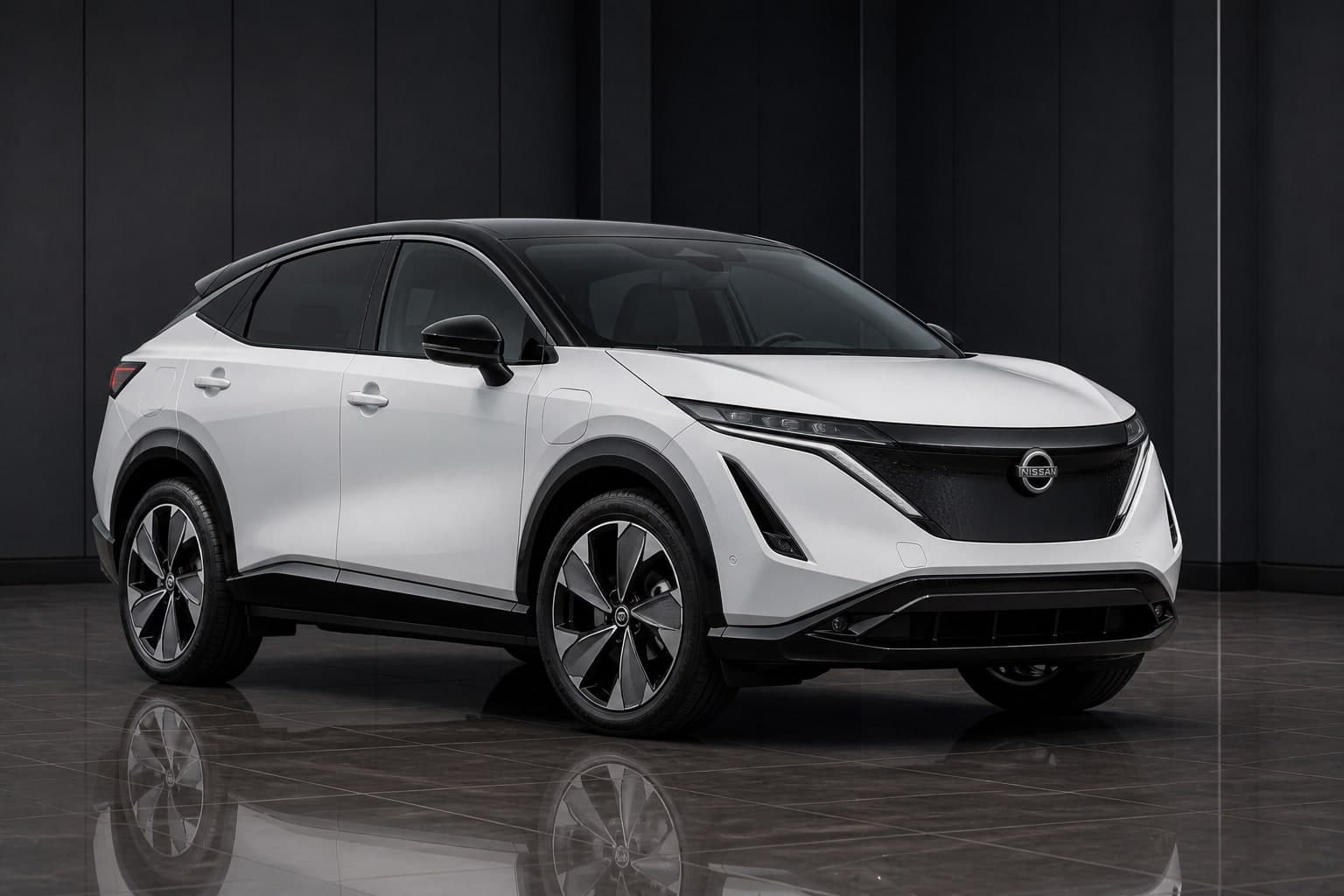
1. Generations & platforms
Ariya (2022–)
CMF-EV platform (Renault-Nissan-Mitsubishi Alliance) · Shared underlying architecture with the Renault Scenic E-Tech and Megane E-Tech. UK sales began in 2022.
2026 model year update
A significant update introduced revised styling, NissanConnect with Google built-in, an 11kW bi-directional onboard charger with Vehicle-to-Load (V2L) capability (up to 3kW while stationary), and a simplified two-trim UK lineup (Engage+, Advance). Deliveries start no later than September 2026.
Official WLTP range runs from roughly 250 miles (Engage+, smaller battery) to around 330 miles (Advance, larger battery); real-world figures from independent testers are typically somewhat lower, and drop further in cold weather or sustained motorway driving. Some sources report meaningfully higher figures (up to 397 miles) for the 2026 update — that hasn’t been consistently corroborated across independent UK reviewers at the time of writing, so treat any figure significantly above 330 miles with caution until confirmed against the current Nissan UK configurator for your exact specification. DC charging tops out at 130kW (about 10–80% in 30–35 minutes).
2. UK trim and battery range
| Trim | Battery | Notes |
|---|---|---|
| Engage+ | 63kWh (usable) | Entry trim, front-wheel drive only. |
| Advance | 87kWh (usable) | Larger battery, front-wheel drive; an all-wheel-drive e-4ORCE version using the same battery has been offered in some markets and at points in the UK lineup — confirm current availability. |
Confirm exact battery, trim and model-year specification against the live Nissan UK configurator — don’t assume older reviews or spec sheets apply after the 2026 update.
3. Ariya: the Honest Pros
- Genuinely distinctive, high-quality interior design and cabin materials that punch above the car’s price point against pricier rivals
- Spacious for passengers, with generously sized gloveboxes and door bins
- Competitively priced against premium-badged rivals like the Audi Q4 e-tron, Tesla Model Y and Polestar 2, without looking or feeling notably cheaper inside
- The high-voltage battery and motor themselves have a strong reliability track record — the car’s real-world problems concentrate elsewhere (see known issues)
- New Vehicle-to-Load capability (2026 update) is a genuinely useful practical feature, not just a spec-sheet novelty
4. Ariya: the Honest Cons
- A genuinely widespread, well-documented 12V battery problem — the single most important thing to understand before buying or owning an Ariya
- Boot space (466 litres) trails key rivals like the Audi Q4 e-tron, Skoda Elroq and Citroën ë-C5 Aircross noticeably, and drops further on the all-wheel-drive version
- 130kW DC charging speed is behind class-leading rivals
- Ride comfort doesn’t absorb bumps and rough surfaces as well as some competitors, despite otherwise easy, relaxed driving manners
- Software stability (infotainment freezes, stuck OTA updates, app connectivity) is a recurring theme in owner reports, separate from the 12V issue
- Nissan’s brand-level EV software/electronics reputation on this model has attracted enough owner complaints and safety-recall attention that thorough VIN-specific recall checking matters more here than on many rivals
5. Known issues — check these before assuming a fault
Not diagnostic advice — documented campaigns, TSB themes and owner reports (including Ariya Forums UK). Always verify for your exact model year and VIN. Across the sources documenting the issues below, the high-voltage battery pack and drive motors themselves are consistently described as reliable — take the 12V and software issues seriously without assuming they reflect a fundamentally unreliable car.
12V battery drain and premature failure — the defining Ariya issue
Extensively documented across UK owner forums (Ariya Forums UK) and Nissan’s own technical service bulletin (NTB23-003A), and by most accounts affects a meaningful share of the fleet, sometimes within weeks of delivery on new cars. The root cause appears to be the car’s 12V charging logic: the system checks and tops up the 12V battery on a schedule tied to the high-voltage battery’s state of charge and vehicle movement sensors, and this logic doesn’t always suit a standard flooded-lead-acid battery well, especially one that’s aged or spends time at partial charge. A car that’s completely dead and won’t turn on is far more likely to be a flat 12V battery than a high-voltage pack fault — check this first, every time, before assuming something more serious. Many owners have proactively upgraded the factory 12V battery to a higher-quality AGM (Absorbent Glass Mat) unit as a preventive measure; this isn’t officially mandated by Nissan but is a widely reported owner workaround worth discussing with an independent specialist if you’re experiencing repeat failures.
Inverter software fault causing sudden loss of drive power (safety recall, AWD 66kWh models)
A documented recall (referenced under NHTSA campaign 24V560000 in North America; confirm the equivalent UK/EU campaign reference with a dealer) covers inverter software that could misdiagnose a fault and shut down the EV system without warning while driving, sometimes preceded by an “EV System Off” warning or a sudden reduction to a low speed limit. This is a genuine safety concern, not a minor software glitch — if you experience this warning, treat it seriously and do not continue driving. If buying used, confirm this recall has been actioned against the specific VIN.
Steering wheel bolt recall (early production cars)
An early safety recall covered improperly installed steering wheel bolts with a risk of separation. If buying an early (2022-build) Ariya, confirm this has been checked against the VIN.
General software and infotainment instability
Recurring but generally non-safety-critical complaints include OTA software updates getting stuck partway through, head unit freezes or black screens, and the NissanConnect app failing to reliably wake or communicate with the car. A hard reset (holding the volume/power control for 20–30 seconds until the screen fully powers down, then allowing it to reboot) resolves many one-off cases; recurring instances are worth flagging to a dealer as a software currency issue rather than assuming hardware failure.
6. UK service interval at a glance (Ariya EV)
| Service | Miles / months | Notes |
|---|---|---|
| Scheduled service (Nissan Ariya) | 10,000 / 12 | Whichever comes first for many UK handbooks. Confirm exact figure in the booklet for your model year. |
| 12V battery test | — / At every service, or sooner if symptoms appear | Load test, not just voltage — the single most important check on this model given how common this issue is. |
| Recall/campaign check | — / At every service | Given this model’s recall history (inverter software, steering wheel bolts on early cars), worth checking VIN status even outside a scheduled service. |
| Software/firmware check | — / At every service | Several known complaints trace back to outdated software. |
| Brake fluid | — / 24 | Time-based regardless of mileage — standard across the Nissan EV range. |
| Cabin pollen filter | — / 12 | Standard interval for any vehicle. |
| Tyre tread/alignment check | ~10,000 / 6 | EV weight and torque accelerate front tyre wear versus a combustion equivalent. |
The Ariya follows Nissan’s standard EV service scope. UK cars typically need annual or ~10,000-mile attention, whichever comes first — confirm in the instrument cluster or handbook for your VIN. Intervals are whichever comes first (miles or months) unless noted. They vary by model year and service regime. Confirm in the handbook, service booklet or dealer system for your VIN before you book work. Legal note: Service intervals and specifications shown are indicative and collected from public or community sources. Official schedules may vary by model year, market, or dealer updates.
7. Official sources
Official links are for convenience and accuracy. The Owners Club has no commercial relationship with Nissan Motor Corporation and cannot confirm pricing, availability or booking on their behalf. Confirm the exact recall-checking URL on Nissan UK’s site before relying on it.
- Owner’s handbook and dealer system for your VIN — follow the edition matched to your model year
8. What to actually keep on top of
- 12V battery health, tested under load, at every service — given how well-documented and common this issue is on the Ariya specifically, this matters more here than on almost any other EV on this site. Ask your specialist about AGM replacement if you experience repeat failures
- VIN-specific recall status, particularly the inverter software recall on AWD 66kWh models and the steering wheel bolt recall on early cars — check via a Nissan dealer or the current UK recall checker
- Software/firmware version, given how many complaints trace back to infotainment and OTA update issues rather than hardware
- If buying used, ask directly about 12V battery replacement history — a car that’s already had this addressed (particularly with an AGM upgrade) is a more reassuring buy than one with no history either way
- Confirm exact battery, trim and model-year specification — given the 2026 update’s changes to range claims, charging hardware (V2L) and infotainment, don’t assume older reviews or spec sheets apply to a car you’re looking at now
9. Own a Nissan Ariya? Protect its resale value
Add it to The Owners Club for free to track its maintenance timeline, import UK MOT history, and transfer verified provenance when you sell. Dated 12V load tests, AGM upgrade notes, recall completion and software versions are exactly what the next researched buyer will ask for.
- Verified maintenance timeline with dealer and specialist invoices
- UK MOT import (DVSA)
- 12V test/replacement notes (including AGM upgrades), recall campaigns and software versions
- Verified Transfer Pack PDF for sale
Guides & checklists
More Nissan models
Compare platforms, service themes and digital service history tools across the range.
FAQ
How often should you service a Nissan Ariya?+
Most UK cars use an annual service or ~10,000 miles, whichever comes first. Confirm in the handbook for your VIN and log every visit.
What platform does the Nissan Ariya use?+
The CMF-EV platform, developed within the Renault-Nissan-Mitsubishi Alliance and shared with the Renault Scenic E-Tech and Megane E-Tech. Underlying hardware is shared across these models even though software, tuning and badge differ.
My Ariya is completely dead and won’t turn on — is the main battery faulty?+
Almost certainly not. A dead Ariya is far more likely to be caused by a flat 12V battery than a fault with the high-voltage pack — this is a well-documented, common pattern on this specific model. Check the 12V battery first before assuming anything more serious.
Are there recalls I should check for on a used Ariya?+
Yes. Notable campaigns include inverter software that could cause sudden loss of drive power on AWD 66kWh models, and improperly installed steering wheel bolts on early (2022-build) cars. Check current status with a Nissan dealer using the VIN.
How do I prove service history for a Nissan Ariya?+
Given how central the 12V battery issue is to this model’s ownership experience, a documented history of 12V testing and any replacement (particularly noting if it was upgraded to AGM) is unusually valuable at resale — more so than on most other EVs on this site. Recall completion status is similarly worth keeping on record.
Ariya owner discussions
Latest conversations from Nissan Ariya owners in the club.
No discussions yet for the Ariya. Be the first owner to start a conversation!
Ask a Question / Post PhotoJoin the Nissan Owners Club Community
Add it to The Owners Club for free to track its maintenance timeline, import UK MOT history, and transfer verified provenance when you sell.