Owners Club · Digital service history
Skoda Enyaq Owners Club — Maintenance & Provenance
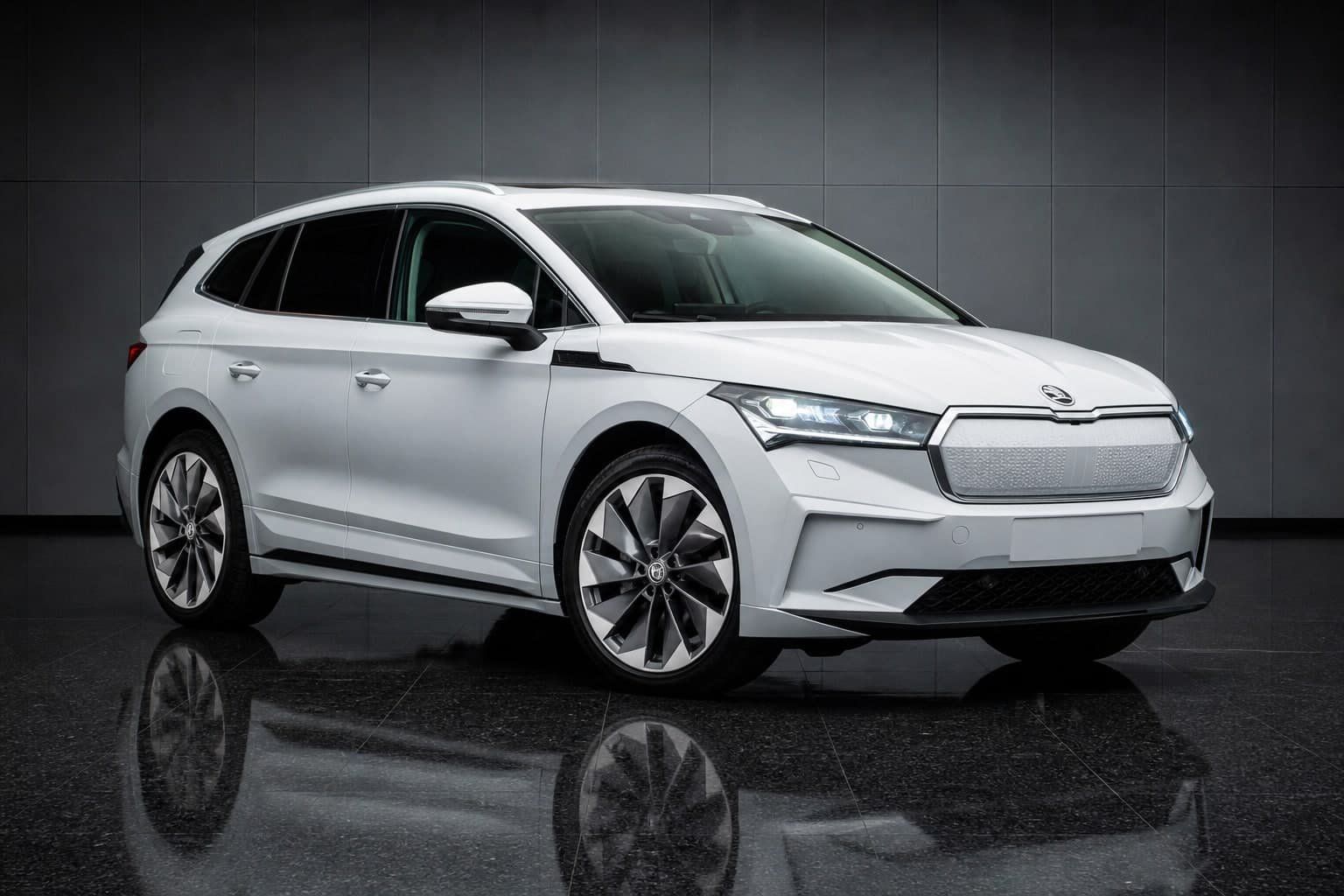
The Enyaq (MEB, 2020–) is Skoda's volume EV and the brand's first model built on the Volkswagen Group's dedicated electric MEB platform — sharing its underpinnings with the VW ID.4/ID.5, Audi Q4 e-tron, and Cupra Tavascan. Built at Skoda's main plant in Mladá Boleslav, it was the only MEB-based model produced outside Germany at launch.
Running an EV still means keeping a digital history — high-voltage coolant loops, a easily-overlooked 12V auxiliary battery, charging behaviour, and over-the-air software campaigns all belong in the record, not just tyres and brake pads.
Arrived from a club search? See the exact-match Skoda Enyaq Owners Club landing — then use this hub for platforms, issues and the full guide cluster.
Latest Enyaq News
Updated 13 April 20262026 model year update confirmed for Enyaq and Elroq
Skoda has announced a mid-2026 update for both electric SUVs, adding a 21-litre front frunk, Vehicle-to-Load capability for powering external devices, a redesigned Android-based infotainment system, and a digital key accessible through the MySkoda app. The entry-level Enyaq 60 also switches to a new LFP battery pack.
23 March 2026Skoda Storyboard →
UK arrival timing and Digital Key rollout
The refreshed Enyaq is expected to reach UK dealers around the end of June 2026, bringing the new infotainment interface, an integrated app store, and phone-based Digital Key access alongside the existing key card.
13 April 2026autoevolution →
Current UK pricing across the range
As of early 2026, UK pricing for the Enyaq spans roughly £39,000 for the entry-level 63kWh SE L up to around £49,000 for the AWD Sportline, with the 82kWh Edition sitting near £44,000 as the commonly recommended mid-spec pick.
19 January 2026Electrifying.com →
1. Generations & Platforms
Enyaq iV — Mk1 (2020–2023) · MEB · Single or dual electric motor · RWD or AWD
Launched with three battery/power tiers: iV 50 (55kWh gross/52kWh usable), iV 60 (62kWh gross/58kWh usable), iV 80 (82kWh gross/77kWh usable). All-wheel-drive dual-motor versions: iV 80x, and the performance-focused Enyaq RS iV (225kW/306hp). Coupé iV bodystyle (more raked roofline, marginally better range/efficiency) joined the SUV-shaped original from 2022. As the platform's first-generation MEB car, some early cars shared teething issues (software, charging behaviour) with the VW ID.3/ID.4 from the same era — most were addressed VW Group-wide via OTA and dealer software updates over 2021–2022.
Enyaq — 2024 model year update · Same MEB platform · revised drivetrains
“iV” dropped from the model name; 80/80x renamed 85/85x with a new, more efficient APP550 motor — up to 286PS and 175kW DC charging on AWD variants (up from 125–135kW). Entry-level 60 (58kWh usable) continues largely unchanged. vRS gains a power bump to 340PS, Skoda's quickest-accelerating car at the time (0–62mph in 5.5s). Charging times cut meaningfully on 85x/vRS: roughly 28–29 minutes for a 10–80% DC top-up, versus longer on the earlier 80x/RS.
Enyaq — 2025 facelift (“Modern Solid” design) · Same MEB platform · revised styling and battery/range figures
New front-end styling in line with Skoda's current design language, plus updated aerodynamics (drag coefficient improved from 0.256 to roughly 0.245 on some variants). Battery/range terminology shifts again: broadly a 59kWh usable pack on entry variants and a 77–79kWh usable pack on longer-range/AWD/vRS variants, with WLTP ranges up to and beyond 580km (360 miles) on the largest pack. Bidirectional charging (vehicle-to-home/V2H) introduced for the first time on an Enyaq. The related Skoda Elroq (2025–) is a smaller, separate MEB-based SUV — don't confuse the two when checking parts or service documentation.
If you're not sure which generation your car is, the fastest check is the badge: pre-2024 cars carry the “iV” suffix (50/60/80/80x/RS); 2024-on cars use plain numbers (60/85/85x/vRS).
2. Enyaq: the Honest Pros
- Genuinely spacious, practical interior with a large boot for the class — one of the more usable family EVs on sale
- Smooth, refined drive with light, confidence-inspiring steering; the dual-motor AWD/vRS variants are properly quick
- Strong real-world range on the larger-battery variants, and DC charging speeds that have improved meaningfully generation to generation
- 8-year/100,000-mile high-voltage battery warranty is a genuinely valuable protection for used buyers, and battery degradation reports are generally in line with — or better than — expectations for the mileage
- Many of the early software/infotainment complaints from 2020–2022 cars have been substantially improved through later OTA and dealer updates
3. Enyaq: the Honest Cons
- Reliability surveys flag the Enyaq's record as patchy overall, with electrical faults and inconsistent aftersales/dealer experience the most common owner complaints — some owners report lengthy waits for parts like inverters
- Infotainment can still freeze, reboot mid-drive, or lose Bluetooth/CarPlay connectivity on affected cars, particularly pre-facelift examples
- The electric charging flap mechanism is a widely reported niggle — failing to open reliably when a cable is connected, especially on early cars
- 12V auxiliary battery drain is a known EV-wide gremlin that also affects the Enyaq — a flat 12V can make the whole car appear “dead” even with a healthy high-voltage battery
- The heat pump (used on higher-spec variants) is efficient but can be costly to diagnose and service outside warranty, since it needs specialist EV-trained technicians and tooling
- Range and charging speed both drop meaningfully in cold weather, as with most EVs — worth factoring into range expectations for winter ownership
4. Common Owner-Reported Themes
Not diagnostic advice — themes owners often document in service history. Always verify for your exact model year and battery/trim.
High-voltage coolant and 12V battery
MEB cars still run a coolant loop through the battery pack, inverter, and motor(s), and still rely on a conventional 12V lead-acid battery for low-voltage systems (locks, infotainment boot-up, contactors). A weak or flat 12V is one of the most common reasons an EV appears completely dead, so log the 12V battery's age, brand, and any replacement dates separately from anything to do with the main traction battery.
12V drain on cars left standing
Owners of cars left parked for extended periods — or used mainly for short trips that don't give the 12V system time to recharge properly — report a higher risk of 12V drain and associated warning messages or no-start situations. Software updates have improved this over time on many cars; log any 12V-related software campaign your car receives.
Charging flap and charge-port faults
A mechanically or electrically sticking charging flap that won't open when the cable is connected is a widely reported niggle, more common on earlier cars. It's usually a straightforward mechanism or connector fix rather than anything battery-related, but worth documenting if it's happened, since it can look alarming to a buyer unfamiliar with the car.
Infotainment freezes, reboots and connectivity
The central touchscreen can freeze, reboot mid-drive, or drop Bluetooth/CarPlay connections, particularly on pre-2024 software. Skoda has issued multiple OTA and dealer-applied software updates addressing stability — log the date and version of any update applied, since “which software version” is often the first question a specialist will ask.
Battery health, range and charging speed in the cold
Like most EVs, real-world range and DC charging speed both drop in cold weather, and a healthy pack can still show reduced usable capacity below around 5°C until it warms. This is expected EV behaviour rather than necessarily a fault, but persistent charging interruptions or a charging speed far below what's expected for the battery/charger combination is worth having checked and logged rather than dismissed as “just the cold.”
Suspension and ride comfort wear
Given the Enyaq's kerb weight (heavier than an equivalent combustion Skoda due to the battery pack), some owners report earlier-than-expected wear of shock absorbers and suspension bushes, particularly on cars covering higher mileages on poor road surfaces. Worth including in any pre-purchase inspection alongside the usual tyre and brake checks.
Keyless entry (KESSY) and key recognition
Intermittent failures of the keyless entry/start system — the car failing to recognise the key fob — are reported by some owners, generally traced to software or a weak key battery rather than a major electrical fault. Cheap and quick to rule out before assuming anything more serious.
5. Service Schedule at a Glance
| Item | Typical interval | Notes |
|---|---|---|
| 12V auxiliary battery health check | Every service / annually | The single most common cause of an EV appearing “dead” — cheap to check, easy to overlook |
| High-voltage coolant system check | Per Skoda's variable Service Interval Indicator | Covers the battery, inverter and motor cooling loop — not a traditional “coolant flush” job |
| Brake fluid | Every 2 years | Regenerative braking means pads/discs last longer, but fluid still degrades on a time basis |
| Tyres | Check tread/pressure regularly; rotate per wear pattern | EVs are heavier and torquier, so front/rear and inner-edge wear can be faster than on an equivalent combustion car |
| Cabin/pollen filter | Annually | More often in heavy urban use |
| Software/firmware updates | As released (OTA or dealer-applied) | Log the version and date — many “fixes” for infotainment or 12V drain issues arrive this way rather than as a physical part |
| High-voltage battery state-of-health check | At major services or before resale | Not always automatic — ask your specialist whether a SoH read is included, and get the figure logged |
There's no engine oil or spark plugs to worry about, but that doesn't mean “nothing to service” — treat the items above as the EV-equivalent checklist, and always cross-check against the onboard Service Interval Indicator and your owner's manual for your specific model year.
6. Official Resources
Use the owner's manual and the Skoda Service Interval Indicator (dashboard-based; varies by driving style/conditions) for your VIN. High-voltage battery warranty terms are typically 8 years/100,000 miles on the traction battery — confirm for your market and first-registration date.
- Owner's manual — follow the edition matched to your model year and market
- Skoda Service Interval Indicator — trust the cluster prompt; intervals vary by driving style and conditions
- High-voltage battery warranty terms (8 years/100,000 miles on the traction battery — confirm transfer on used cars)
7. Buying-Used Checklist (Enyaq-Specific)
- Confirm which generation you're looking at — pre-2024 “iV” naming vs. 2024-on plain numbering vs. 2025 facelift — since battery/range/charging specs differ meaningfully between them
- Ask for the high-voltage battery's state-of-health reading, not just “it charges fine”
- Check the charging flap opens and closes cleanly on both a home charger and (if possible) a public DC unit
- Confirm the infotainment software version and whether any stability-related campaigns have been applied
- Check the 12V battery's age/replacement history separately from the high-voltage battery
- Verify remaining high-voltage battery warranty (8 years/100,000 miles from first registration) transfers with the car
8. Own a Skoda Enyaq? Protect Its Resale Value
Add it to The Owners Club for free to track its maintenance timeline, import UK MOT history, and transfer verified provenance when you sell.
- Verified maintenance timeline with dealer and specialist invoices
- UK MOT import (DVSA)
- 12V battery, HV coolant, SoH readings and OTA/software campaign tracking
- Verified Transfer Pack PDF for sale
Guides & checklists
More Skoda models
Compare platforms, service themes and digital service history tools across the range.
FAQ
How often should you service a Skoda Enyaq?+
There's no engine oil or timing components, so “servicing” looks different from a petrol or diesel Skoda — but it isn't nothing. Skoda's variable Service Interval Indicator still schedules checks on brakes, tyres, the high-voltage coolant system, and software, typically around every 12 months or 2 years depending on the item. The 12V auxiliary battery and any pending software updates are the two things most likely to be skipped if you only ask for “a service” without being specific.
What platforms does the Skoda Enyaq use?+
The Enyaq sits on the Volkswagen Group's dedicated electric MEB platform, shared with the VW ID.4/ID.5, Audi Q4 e-tron, Cupra Tavascan, and — on the newer, smaller end of the range — the Skoda Elroq. Because the underlying hardware and software are common across these siblings, faults and fixes documented on one often apply to the others too.
How do I prove service history for a Skoda Enyaq?+
Keep dated records of brake fluid changes, tyre replacements, any 12V battery replacement, and — importantly — software/firmware update history, since infotainment and charging-related fixes are frequently delivered as updates rather than physical parts and are easy for a service record to miss entirely. A logged high-voltage battery state-of-health reading is one of the most valuable things you can add for a future buyer, since range anxiety is the first thing used-EV buyers worry about.
Does the Enyaq's battery degrade like a phone battery?+
All lithium-ion batteries lose some capacity over time and charge cycles, but real-world reports on the Enyaq generally show degradation broadly in line with — or better than — expectations for the mileage, helped by active thermal management of the pack. The 8-year/100,000-mile battery warranty covers significant, abnormal degradation, so a state-of-health check against that warranty is worth doing on any used purchase nearing those limits.
Is the Enyaq reliable?+
Independent reliability surveys describe the Enyaq's record as mixed — most owners get on with the car well, but electrical faults (infotainment, charging flap, 12V drain) are common enough to be worth checking specifically, and some owners report inconsistent dealer experience when a fault does need attention. None of the commonly reported issues are typically drivetrain- or battery-threatening; they're mostly software and electrical niggles.
Enyaq owner discussions
Latest conversations from Skoda Enyaq owners in the club.
First SoH reading logged — 91% at 2.5 years / 34k miles, is that in line with what others are seeing?
Club Editorial · 1 reply
85x charging speed — getting nowhere near the claimed 175kW, is that just cold weather?
Club Editorial · No replies
12V battery replaced under warranty at 3 years — anyone else had an early one?
Club Editorial · 1 reply
Join the Skoda Owners Club Community
Add it to The Owners Club for free to track its maintenance timeline, import UK MOT history, and transfer verified provenance when you sell.