Owners Club · Digitaler Serviceverlauf
Volkswagen Caddy Owners Club — Maintenance & Provenance
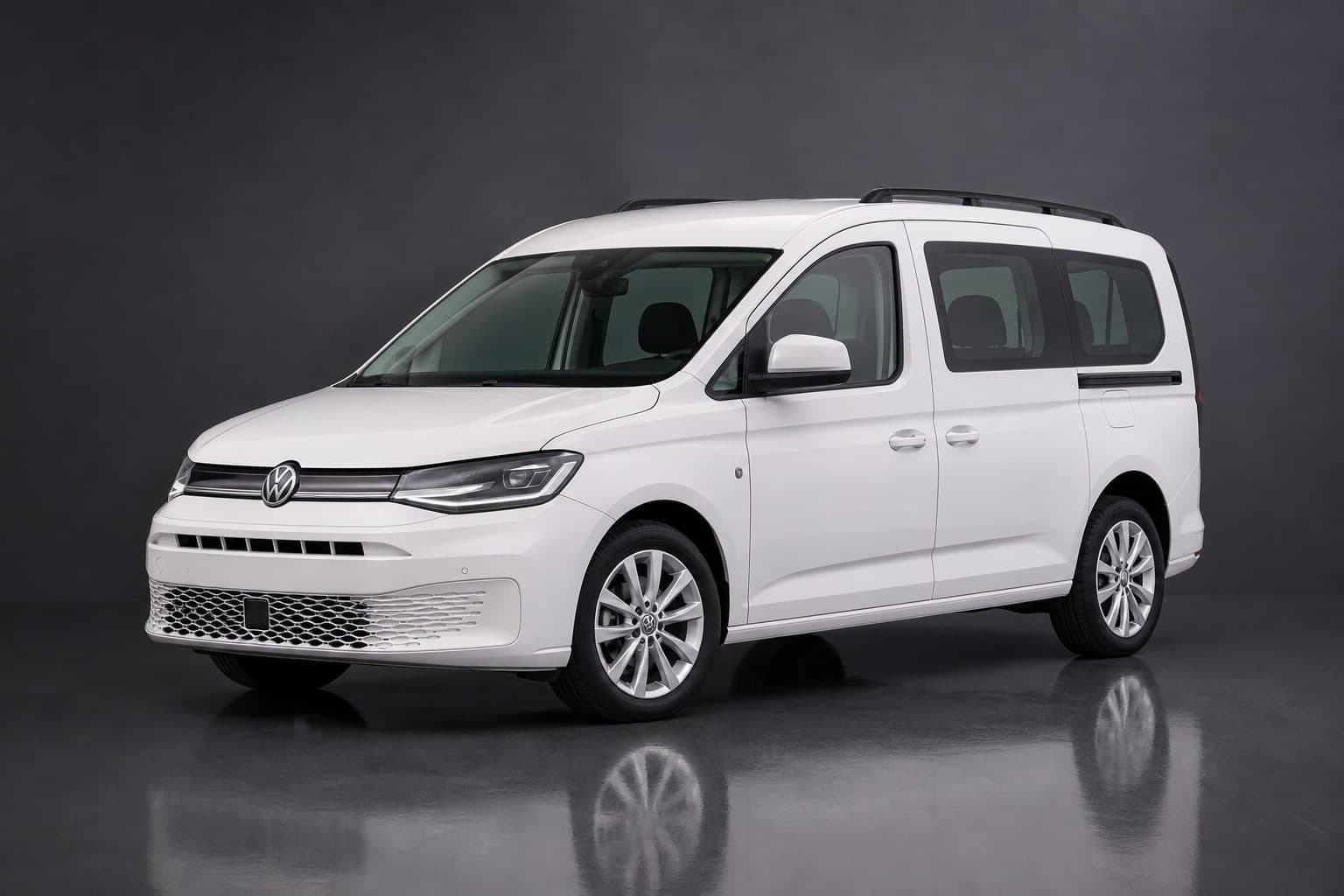
Der Caddy 5 (MQB, 2020–) ist ein Van/MPV auf Golf-Basis. DSG, EA288-Riemen und Schiebetürwartung entscheiden über den kommerziellen Wiederverkauf.
Own a Volkswagen Caddy? Add it to your Garage. Track servicing, payload, fleet use, modifications, racking, tyres, brakes, inspections, recalls and provenance. Know your car. Record its history. Connect with owners. Keep its story.
Von einer Clubsuche angekommen? Sehen Sie sich die genaue Übereinstimmung an Volkswagen Caddy Owners Club Landung – dann nutzen Sie diesen Hub für Plattformen, Themen und den gesamten Leitfaden-Cluster.
Latest Caddy News
Updated 2026- Global development / technicalGlobal
Caddy V — MQB-based architecture
Caddy V introduced a major technical change with MQB-based architecture from 2020.
2020–Product
- Product / rangeGlobal
Commercial, passenger and leisure
The range spans commercial, passenger and leisure uses — Cargo through California derivatives.
OngoingRange
- Regional / taxonomyGlobal
Caddy California is a derivative
Caddy California is a derivative/body-use configuration, not a separate generation.
OngoingTaxonomy
Read first — commercial / passenger / leisure ownership framing
For Caddy, the most important ownership data is generation, derivative (Cargo / Maxi / Kombi / California), engine and gearbox codes, drivetrain (FWD / 4MOTION), Commercial Use Profile (payload, fleet, conversions, towing), service history, sliding-door/load-area condition, emissions systems on diesels, recalls and market-specific specifications. Do not treat California as a generation. Do not merge Rabbit Pickup into European Caddy. Do not treat one market’s Fixed interval as global law.
1. Generations & platforms
Caddy I — 1980s–1990s (market-dependent)
European Caddy I launched in 1982 as a compact commercial vehicle based on Golf I; VW archive framing identifies Type 14D and pickup/commercial configurations. Preserve regional genealogy — do not auto-merge Rabbit Pickup.
Caddy II — 1995–2004
Golf/Polo-family technical relationships, with panel van and passenger derivatives. Official data includes 1.4, 1.6, 1.9 D/SDI/TDI and related configurations — confirm VIN.
Caddy III — 2004–2015
Major commercial-vehicle generation with panel van, Kombi, passenger, Maxi and market-specific derivatives.
Caddy IV — 2015–2020
Extensively revised Caddy III architecture. Keep as a distinct generation/product stage in the commercial lineage — not a facelift label only.
Caddy V — 2020–present (MQB-based)
Current generation on MQB-based architecture. Main variants: Cargo, Cargo Maxi, Kombi, Maxi, California and passenger/lifestyle derivatives. Powertrains: TSI, TDI, eHybrid on selected markets, historic CNG on earlier gens; manual / DSG; FWD / 4MOTION on selected versions.
Body variants are not generations. Market naming and exact years vary — always tie powertrain and intervals to generation, model year and VIN.
2. Body styles & derivatives
Caddy Cargo / Cargo Maxi
Commercial panel configurations — payload, load volume, wheelbase/length and racking history matter more than passenger-car checklists.
Caddy Kombi / Maxi
People-carrying and mixed-use derivatives — still record Commercial Use Profile when used for fleet or delivery work.
Caddy California
Leisure / camper derivative — not a separate generation. Record leisure battery, solar, heating, bed/kitchen and certification where required.
3. Commercial Use Profile
Critical for commercial Caddy provenance. Store how the van earned its miles — not just mileage stamps.
- payloadProfile — how the vehicle was loaded in real use
- fleetUse — fleet or multi-operator history
- conversionType — racking, refrigeration, accessibility, camper build
- towingUse — whether towing was part of duty cycle
- loadType — delivery, trades, mixed, leisure
- serviceHistoryComplete — whether stamps/invoices cover the duty cycle honestly
Also store payload, load volume, wheelbase, length, roof height, doors, towing ratings, racking, refrigeration, conversions and fleet telematics where used.
4. Market & model information
- Pricing varies by market — do not hardcode one country’s figures as global
- US/Canada: do not invent a European Caddy sales matrix; preserve Rabbit Pickup separation
- Commercial vs passenger class can change inspection, tax and usage rules
Caddy is global-first with market context. Regional naming, availability and commercial registration class vary. Use the market selector for engines, service and inspection panels — market is context, not a wall.
5. Powertrains / drivetrain
Global overview — exact outputs are generation, market and VIN specific. Use the market selector for regional framing.
TSI petrol
Petrol TSI configurations across recent generations — confirm engine code, timing system and oil spec for the VIN.
TDI diesel
Diesel TDI with market-specific emissions equipment (DPF / EGR / AdBlue). Commercial duty can stress emissions systems — record regeneration behaviour and repairs.
Historic CNG
CNG / natural-gas configurations on historical generations / markets — do not invent current global availability.
eHybrid (selected current markets)
Electrified hybrid on selected current markets/configurations — confirm battery, warranty and service items on the VIN.
FWD / 4MOTION
Front-wheel drive is common; 4MOTION on selected versions only. Driveline complexity adds provenance fields.
Manual / DSG
Manual and DSG dual-clutch where fitted — gearbox code and service history matter for resale.
Never assume one powertrain matrix for every market. Confirm handbook and VIN.
6. Honest pros
- Extremely practical compact commercial package
- Huge cargo flexibility including Maxi options
- Strong commercial ecosystem and parts availability
- Passenger and commercial configurations in one nameplate
- 4MOTION on selected versions
- Camper / leisure possibilities (California derivative)
- Excellent provenance potential when Commercial Use Profile is recorded
7. Honest cons / things to consider
- Commercial vehicles can show heavy wear
- Payload and towing history matter for used buyers
- Fleet servicing quality varies widely
- Modifications and conversions complicate provenance if undocumented
- DSG and 4MOTION add complexity and service cost
- Diesel emissions systems can become expensive on high-urban duty
8. Common owner-reported themes
Investigation themes only — not diagnostic advice. Never invent failure rates. Filter by generation, engine, gearbox, body and Commercial Use Profile. Do not treat owner reports as confirmed defects unless supported by manufacturer documentation, recalls or reliable technical evidence.
DSG / clutch
Shift quality, mechatronic history and dual-clutch service on stop/start commercial duty.
Manual clutch
Wear on delivery and urban vans — log replacements with mileage.
DPF / EGR / AdBlue
Short-trip and urban delivery patterns can stress diesel emissions systems.
Turbo & cooling
Boost leaks, coolant loss and overheating themes — generation and engine specific.
Sliding doors & tailgate
Runners, latches, seals and rear access hardware under fleet use.
Electrical / infotainment
Battery, wiring, sensors and infotainment glitches — log software versions.
Suspension, brakes & tyres
Payload, potholes and stop/start wear — load ratings matter.
Driveline / 4MOTION
Haldex/4MOTION service and driveline noise themes on selected versions.
Aftermarket conversions
Racking, refrigeration, camper builds and electrical mods — document thoroughly.
9. Service & maintenance
Store VIN, registration, market, generation, engine, transmission, drivetrain, mileage, Commercial Use Profile, service dates, oil/filter, timing system, DSG, 4MOTION, brakes, tyres, DPF/EGR/AdBlue, coolant, battery, software, recalls, conversions and invoices. Intervals are market/engine specific.
| Item | Typical interval | Notes |
|---|---|---|
| Oil & inspection (Fixed headline) | ~9,300 miles / 12 months (UK Fixed framing) | Safe UK headline for recent MQB Caddy — confirm VIN. Prefer Fixed for commercial duty. |
| Flexible / LongLife (where coded) | Up to ~18,600 miles / 24 months | Only if cluster and handbook say so. Not a default for delivery vans. |
| Brake fluid | Typically ~24 months | Calendar replacement — Group typical. |
| DSG service (where fitted) | Per handbook / gearbox code | Commercial stop/start — keep invoices. |
| Timing belt / chain | Engine-code specific | Do not guess from Golf alone — use Caddy handbook. |
| DPF / EGR / AdBlue (diesel) | As needed / per schedule | Urban delivery duty — log regenerations and repairs. |
| 4MOTION service (where fitted) | Per handbook | Driveline fluid and related items — VIN specific. |
| Sliding doors & load area | Every service / as needed | Runners, latches, floor, bulkhead, water ingress, racking. |
| Tyres, brakes, suspension | Every service | Payload and stop/start wear — load ratings. |
| Software / recalls / campaigns | At service or when prompted | VIN/market aware — log completion. |
Always verify the VIN-specific Volkswagen maintenance schedule. Commercial Use Profile fields should sit beside stamps.
10. Inspection & roadworthiness
Commercial/passenger classification may differ by market. Never title every market’s test “MOT”.
- UK MOT and applicable commercial requirements
- Germany TÜV/HU; Spain ITV; Poland/Hungary periodic; Turkey TÜVTÜRK; US state; others local
- Record the local certificate separately from manufacturer service stamps
Confirm requirements for the vehicle’s registration market and class.
11. Recalls & campaigns
- Check VIN on official Volkswagen / national safety portals for your market
- Log campaign ID, completion date and software version after work
- Do not assume a campaign from one market applies worldwide
Recalls are VIN- and market-aware: campaign, component, production range, risk, remedy, completion and source. Never display “this van has no recalls” unless the specific VIN has been checked against an authoritative source.
12. Official resources
Official links are for convenience. The Owners Club has no commercial relationship with Volkswagen AG. Prefer VIN-specific Owner’s Manual lookup over invented deep links.
- Volkswagen Owner’s Manual — VIN-specific lookup for your market
- Volkswagen Commercial Vehicles technical information for payload, body and equipment
- Regional government recall databases (NHTSA, GOV.UK/DVSA, EU/national systems)
13. Buying a used Caddy
- Commercial: payload history · fleet use · delivery/stop-start · towing · racking · bulkhead · load floor · sliding doors
- Mechanical: cold start · emissions · turbo · gearbox · clutch · brakes · suspension · tyres · cooling
- Body: accident · corrosion · roof · load area · water ingress
- Converted/Camper: leisure battery · solar · heating · bed/kitchen · certification where required
- Documents: service · fleet invoices · recalls · inspection · conversion documentation · Commercial Use Profile
14. Related models
Related Vehicles for ownership context — not automatic parts identity.
- Transporter / Multivan — larger VW commercial family
- ID. Buzz Cargo — commercial EV sibling mission (separate hub)
- Touran — passenger MPV relation; different mission from Caddy Cargo
- Golf and relevant SEAT/Škoda commercial relatives — platform/tech era context only
Shared Group technology does not prove parts compatibility.
15. Own a Volkswagen Caddy? Protect its resale value
Record service history, mileage, payload/use, fleet ownership, conversions, racking, towing, repairs, tyres/brakes, recalls, photos and invoices. Transfer Pack includes complete commercial provenance and conversion documentation. Know your car. Record its history. Connect with owners. Keep its story.
- Add Caddy to Garage — free digital ownership record
- Capture Commercial Use Profile (fleet, payload, conversions, towing)
- Track servicing, inspections, sliding doors, load area, DSG/4MOTION, recalls with invoices
- Build a Transfer Pack for the next owner or operator
Leitfäden und Checklisten
Weitere Volkswagen-Modelle
Vergleichen Sie Plattformen, Servicethemen und Tools zur digitalen Servicehistorie im gesamten Sortiment.
FAQ
Is Caddy a car or a van?+
Both commercial and passenger/leisure uses exist — Cargo and panel configurations sit alongside Kombi, Maxi, Life-style and California derivatives. Registration class can change inspection and tax rules.
Is Caddy California a generation?+
No. California is a derivative / body-use configuration within the Caddy family — not a separate generation.
Is every Caddy 4MOTION?+
No. 4MOTION is available on selected versions only. Confirm drivetrain on the VIN.
Is Caddy V the same as Touran?+
No. They may share broader Group technology eras, but mission and ownership use cases differ — hubs stay separate.
Should commercial duty cycle be recorded?+
Yes. Payload profile, fleet use, towing, load type, conversions and whether service history is complete form the Commercial Use Profile that matters for used-van provenance.
What generations does Caddy cover?+
Founder Global Model Standard: Caddy I (1980s–1990s by market; European launch 1982, Type 14D framing), Caddy II (1995–2004), Caddy III (2004–2015), Caddy IV (2015–2020), Caddy V (2020–present, MQB-based). Do not invent additional generations.
Caddy-Besitzer-Diskussionen
Neueste Gespräche von Volkswagen Caddy-Besitzern im Club.
Noch keine Diskussionen für den Caddy. Sei der erste Besitzer, der startet!
Frage stellen / Foto postenTritt der Volkswagen Owners Club Community bei
Fügen Sie es kostenlos zu The Owners Club hinzu, um den Wartungszeitplan zu verfolgen, die britische TÜV-Historie zu importieren und beim Verkauf die überprüfte Herkunft zu übertragen.