Owners Club · Digital service history
Toyota Prius Owners Club — Maintenance & Provenance
Independent owners’ resource. This page is produced by The Owners Club and is not affiliated with, endorsed by, or sponsored by Toyota Motor Corporation. Specifications, recall status and warranty terms change — always confirm against your handbook (VIN) or an authorised Toyota dealer before booking work. The Prius, launched in Japan in 1997 and internationally from 2000, was the world’s first mass-produced hybrid car — the technology it pioneered now underpins most of Toyota’s current range, including the Corolla, C-HR and RAV4 covered elsewhere on this site. It’s now in its fifth generation globally, and this page focuses primarily on the two most relevant generations for current owners and buyers: Gen4 (2015–2022), Toyota’s first model built on the TNGA-C platform, and the current Gen5 (2022–present), a genuinely radical redesign with a coupe-like body and a plug-in hybrid system offering meaningfully more electric-only range.
A note on generation span: if this site’s hub previously listed the Prius simply as “2015–”, be aware that compresses two mechanically related but genuinely different cars — Gen4’s conventional hybrid-first approach and Gen5’s plug-in-focused redesign — under one date range. Gen3 (2009–2015) also remains heavily represented on the used and taxi/private-hire market, with a distinctly more serious known-issue profile. The known issues below are organised by generation for this reason.
Arrived from a club search? See the exact-match Toyota Prius Owners Club landing — then use this hub for platforms, issues and the full guide cluster.
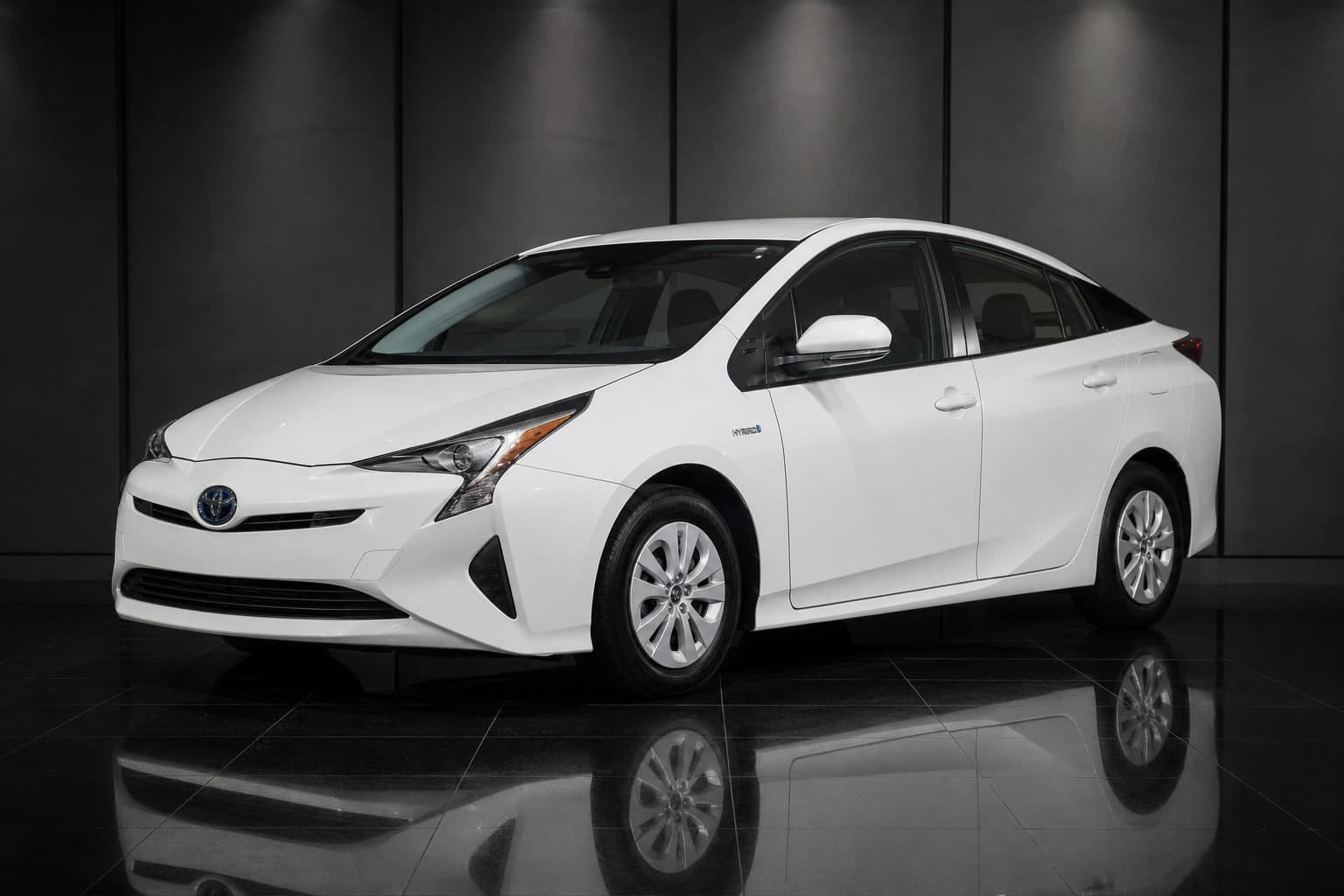
1. Generations & platforms
Prius Gen3 (XW30, 2009–2015)
Pre-TNGA Toyota hybrid platform · Widely used in taxi and private-hire fleets worldwide, giving it an unusually large body of high-mileage real-world data · Carries the most significant documented issues of the generations covered on this page (hybrid battery degradation, oil consumption, head gaskets, and the major thermal/transistor recall).
Prius Gen4 (XW50, 2015–2022)
TNGA-C platform — Toyota’s first model on this now-widespread architecture, also underpinning the current Corolla and C-HR · Conventional hybrid, with a plug-in Prius Prime variant also offered · Later 2017–2020 examples are generally described as having very few reported problems once early windshield and parking-brake themes were addressed.
Prius Gen5 (XW60, 2022–present)
TNGA-C platform (revised) · A genuinely radical redesign with coupe-like styling · Plug-in Prius Prime variant offers up to roughly 60 miles of electric-only range · Newer lithium-ion traction battery chemistry on 2023+ cars, replacing the NiMH packs used on most earlier Toyota hybrids.
Earlier Prius generations (Gen1/Gen2) are outside the focus of this hub. Gen3 remains relevant because so many are still on the used market and in taxi fleets; Gen4 and Gen5 must not be collapsed into a single “2015–” profile.
2. Prius: the Honest Pros
- Genuinely pioneering, now deeply matured hybrid technology — the Prius has more real-world hybrid-system experience behind it than any other nameplate on the market
- Excellent resale value for a hybrid — commonly cited as depreciating only around 17% over five years, well ahead of most rivals
- Gen5’s plug-in Prius Prime offers a genuinely usable electric-only range (up to around 60 miles), turning many short daily journeys into effectively zero-petrol trips while retaining full hybrid backup for longer ones
- Strong safety ratings and comprehensive driver assistance tech (Toyota Safety Sense) standard across recent generations
- Widely available specialist knowledge and parts, given how long this model has been in volume production worldwide, including in the taxi and private-hire trade where high-mileage reliability has been tested extensively
3. Prius: the Honest Cons
- Older generations (particularly Gen3, 2009–2015) carry genuinely significant, well-documented issues — hybrid battery degradation, excessive oil consumption, and head gasket failures — that a buyer needs to understand before considering an older used example
- Gen4 (2015–2022) had a widespread windshield-cracking issue significant enough to prompt a 2020 US class-action lawsuit
- Gen5’s more complex plug-in hardware means slightly more potential failure points than a conventional (non-plug-in) hybrid, and owner-survey reliability ratings for the Prius Prime specifically run a little below the standard, non-plug-in Prius
- 12V battery weakness — a recurring theme across most hybrid/EV models on this site — is specifically flagged as a frequent complaint on 2023+ Gen5 cars, particularly after the car sits unused for several days or remains plugged in for extended charging sessions
- Gen5’s coupe-like styling, while widely praised, comes with reduced rear headroom and visibility versus the more upright, practical shape of earlier generations — worth test-sitting in the back before assuming continuity with an older Prius you may be familiar with
4. Known issues — check these before assuming a fault
None of the themes below mean every Prius will fail this way — they are the documented patterns owners and buyers should check first, organised by generation because Gen3, Gen4 and Gen5 carry genuinely different profiles.
Gen5: 12V battery drain, particularly on 2023+ Prime (plug-in) models
The most frequently reported issue on the current generation: the small 12V auxiliary battery going dead after the car sits for several days, or after extended plug-in charging sessions. Distinct from the main hybrid/plug-in traction battery, which uses newer lithium-ion chemistry (replacing the older NiMH packs used on most pre-2023 Toyota hybrids) and has shown no comparable widespread issue so far. Toyota has addressed some cases with software updates or 12V battery replacement under warranty.
Gen5: rear door switch wiring harness recall (2023–2024 production, Prius and Prius Prime)
A documented recall covering a fault where water could enter the rear door switch and cause a short circuit, potentially allowing an unlocked rear door to open unexpectedly while driving. Check this specifically against your VIN.
Blocked cabin air vent inlet (all generations with this air-cooled design)
A long-standing characteristic of Toyota hybrids generally, not unique to Gen5: the traction battery’s cabin-air cooling intake can be blocked by cargo or items placed against the rear seat/parcel shelf area, leading to overheating warnings or reduced hybrid performance. Simple to avoid once you know to keep this area clear.
Gen5: too new for extensive long-term data
Early independent reliability data on Gen5 (including recent-model-year owner surveys) is positive relative to peers, but given the car’s genuinely new platform revisions and plug-in-focused hardware, treat this generation with the same general early-model caution applied to other recently launched models on this site.
Gen4: windshield cracking
A well-documented issue on early Gen4 cars: small stone chips spreading into large cracks unusually readily, widespread enough to result in a 2020 US class-action lawsuit. If buying a used Gen4, a windshield with visible repair or replacement history isn’t necessarily a red flag — it may simply reflect this known pattern.
Gen4: faulty parking brake cable (2016 model year specifically)
A documented issue where a faulty cable could cause the parking brake to fail to engage correctly if the driver exited with the ignition on and the transmission not in Park, risking the vehicle rolling. Check this specifically on any 2016 example.
Gen4: generally strong reliability from 2017 onward
Independent buyer’s guides consistently describe 2017–2020 Gen4 Priuses as having very few reported problems, making later Gen4 examples a reasonable used choice once the earliest teething issues (windshield, parking brake) were addressed.
Gen3: hybrid battery capacity loss
A well-documented pattern after roughly 150,000 miles, with replacement costs historically ranging from around £1,200 to £3,500 depending on market and specification. Get any high-mileage Gen3 properly tested rather than relying on dashboard indicators alone.
Gen3: excessive oil consumption (2010–2015 engines specifically)
Linked to a piston ring design issue on this generation’s engine, requiring frequent top-ups and, in more serious cases, engine rebuilds. Check oil level history and consumption pattern before buying.
Gen3: head gasket failures (2010–2013 specifically)
Documented on this narrower window of production, causing coolant loss and overheating, with repair costs historically exceeding £1,800.
Gen3: thermal stress on hybrid system transistors (2010–2014, major recall)
A significant, well-documented issue: faulty software settings on the motor/generator and hybrid control ECUs caused excessive thermal stress on internal transistors, triggering warning lights, fail-safe mode, and a sudden loss of power while driving. This affected over 700,000 Prius units globally and is one of the largest Prius recalls on record. Confirm this has been actioned against the VIN on any Gen3 you’re considering — this is not optional due diligence on a car from this window.
5. UK service interval at a glance (Toyota Prius)
| Service | Miles / months | Notes |
|---|---|---|
| Scheduled service (Toyota Prius) | 10,000 / 12 | Whichever comes first for many UK handbooks. Confirm exact figure for your generation. |
| Annual Hybrid Health Check (HHC) | — / 12 | Required to maintain extended hybrid battery warranty eligibility in most markets. |
| 12V battery test | — / At every service, or sooner if symptoms appear | Particularly relevant on Gen5, especially Prime variants. |
| Hybrid battery health test | — / Annually on higher-mileage Gen3, at every service otherwise | The single most important check on any Gen3 approaching or past 150,000 miles. |
| Recall/campaign check | — / At every service | Particularly the Gen3 thermal/transistor recall and the Gen5 rear door wiring recall. |
| Cabin air vent clearance check | — / Ongoing | Keep the rear parcel shelf/seat area clear of items blocking the battery cooling intake. |
| Cabin pollen filter | — / 12 | Standard interval for any vehicle. |
The Prius follows Toyota’s standard hybrid service scope. UK cars typically need annual or ~10,000-mile attention, whichever comes first — confirm the exact figure for your specific generation in the handbook. Intervals are whichever comes first (miles or months) unless noted. They vary by generation, model year and service regime. Confirm in the handbook, service booklet or dealer system for your VIN before you book work. Legal note: Service intervals and specifications shown are indicative and collected from public or community sources. Official schedules may vary by generation, model year, engine code, market, or dealer updates. Always verify the vehicle handbook (VIN) or consult an authorised dealer before work.
6. Official sources & featured guides
Official links are for convenience and accuracy. The Owners Club has no commercial relationship with Toyota Motor Corporation and cannot confirm pricing, availability or booking on their behalf. Confirm the exact recall-checking URL on Toyota UK’s site before relying on it. The Hybrid Health Check guide is the primary cross-model reference for warranty traps on this car.
7. What to actually keep on top of
- Which generation you actually have — Gen3, Gen4 and Gen5 carry genuinely different known-issue profiles; don’t apply one generation’s checklist to another
- 12V battery health on Gen5, particularly Prime (plug-in) variants, especially if the car sits unused for periods or does frequent long charging sessions
- Hybrid battery health on any Gen3, given the well-documented ~150,000-mile degradation pattern — get a proper test, not just a dashboard check
- The 2010–2014 thermal/transistor recall status on any Gen3 — this is a major, well-documented safety campaign; confirm completion before anything else on a car from this window
- Windshield condition and history on Gen4 — not necessarily a red flag given how documented this issue is, but worth asking about directly
- Cabin air vent clearance on any generation with the air-cooled hybrid battery design — keep the rear parcel shelf/seat area clear of cargo blocking the intake
- Annual Hybrid Health Check history if extended warranty matters to you — see the site’s dedicated Toyota & Lexus hybrid guide for the details behind this
8. Own a Toyota Prius? Protect its resale value
Add it to The Owners Club for free to track its maintenance timeline, import UK MOT history, and transfer verified provenance when you sell. Generation identity, recall completion, Gen3 battery tests, Gen5 12V records and Hybrid Health Check certificates are exactly what the next researched hybrid buyer will ask for.
- Verified maintenance timeline with dealer and specialist invoices
- UK MOT import (DVSA)
- Generation notes, recall status, hybrid/12V battery tests and Hybrid Health Check certificates
- Verified Transfer Pack PDF for sale
Official resources
Guides & checklists
More Toyota models
Compare platforms, service themes and digital service history tools across the range.
FAQ
How often should you service a Toyota Prius?+
Most cars use an annual service or ~10,000 miles, whichever comes first, across all generations. Confirm the exact figure for your specific generation in the handbook, and don’t skip the annual Hybrid Health Check if extended battery warranty matters to you.
What platforms does the Toyota Prius use?+
Gen3 (2009–2015) used an earlier, pre-TNGA Toyota hybrid platform. Gen4 (2015–2022) was Toyota’s first model on the now-widespread TNGA-C platform, also used by the current Corolla and C-HR. Gen5 (2022–present) uses a revised version of TNGA-C with a genuinely different, coupe-like body and newer battery chemistry on 2023+ cars.
Is the Toyota Prius reliable?+
Generally yes, and it has an exceptionally large body of real-world high-mileage data thanks to worldwide taxi and private-hire use — but “reliable” varies meaningfully by generation. Gen3 (2009–2015) in particular has several well-documented, significant issues (hybrid battery degradation, oil consumption, a major thermal/transistor recall) that a buyer needs to actively check for, rather than relying on the nameplate’s overall reputation alone.
How do I prove service history for a Toyota Prius?+
Given how much known-issue profiles vary by generation, the most valuable thing to document is precisely which generation and model year you have, alongside recall completion status and — especially on Gen3 — a proper hybrid battery health test result, not just a service stamp. Annual Hybrid Health Check records matter for extended warranty eligibility on any generation still within that window.
My Gen5 Prius won’t start after sitting — is the hybrid battery dead?+
On 2023+ Gen5 cars, especially Prime (plug-in) variants, a flat 12V auxiliary battery after several days unused or after extended charging sessions is the most frequently reported issue — distinct from the main traction battery. Test the 12V first.
Prius owner discussions
Latest conversations from Toyota Prius owners in the club.
No discussions yet for the Prius. Be the first owner to start a conversation!
Ask a Question / Post PhotoJoin the Toyota Owners Club Community
Add it to The Owners Club for free to track its maintenance timeline, import UK MOT history, and transfer verified provenance when you sell.