Owners Club · Digital service history
Toyota Corolla Owners Club — Maintenance & Provenance
Independent owners’ resource. This page is produced by The Owners Club and is not affiliated with, endorsed by, or sponsored by Toyota Motor Corporation. Specifications, recall status and warranty terms change — always confirm against your handbook (VIN) or an authorised Toyota dealer before booking work. The Corolla has been in continuous production since 1966, and is — by a wide margin — the best-selling car nameplate in automotive history, with over 50 million sold across twelve generations, having overtaken the Volkswagen Beetle’s record in 1997. This page focuses on the current, internationally sold E210 generation (launched 2018 in most markets, 2019 in the UK), built on Toyota’s TNGA-C platform — the same architecture underpinning the C-HR and Prius. If you’re researching an older Corolla or the closely related Auris (the nameplate Toyota used for the Corolla hatchback in Europe until this generation), see those models’ own pages, since platform and known issues differ meaningfully by era.
The E210 marked what many reviewers describe as the Corolla’s genuine return to form after a period of being seen as a purely sensible-but-dull choice — this generation is built almost exclusively around Toyota’s proven hybrid powertrains, and is widely regarded as one of the most reliable cars currently on sale, though “reliable” here doesn’t mean entirely free of documented recalls and known niggles, covered in detail below. Extendable hybrid battery and drivetrain warranty (commonly up to 10 years with annual dealer servicing in most markets) is conditional — see the site’s Toyota & Lexus Hybrid Health Check / Provenance Guide for Toyota Relax warranty traps, annual HHC certificates, inverter coolant and E-CVT fluid.
Arrived from a club search? See the exact-match Toyota Corolla Owners Club landing — then use this hub for platforms, issues and the full guide cluster.
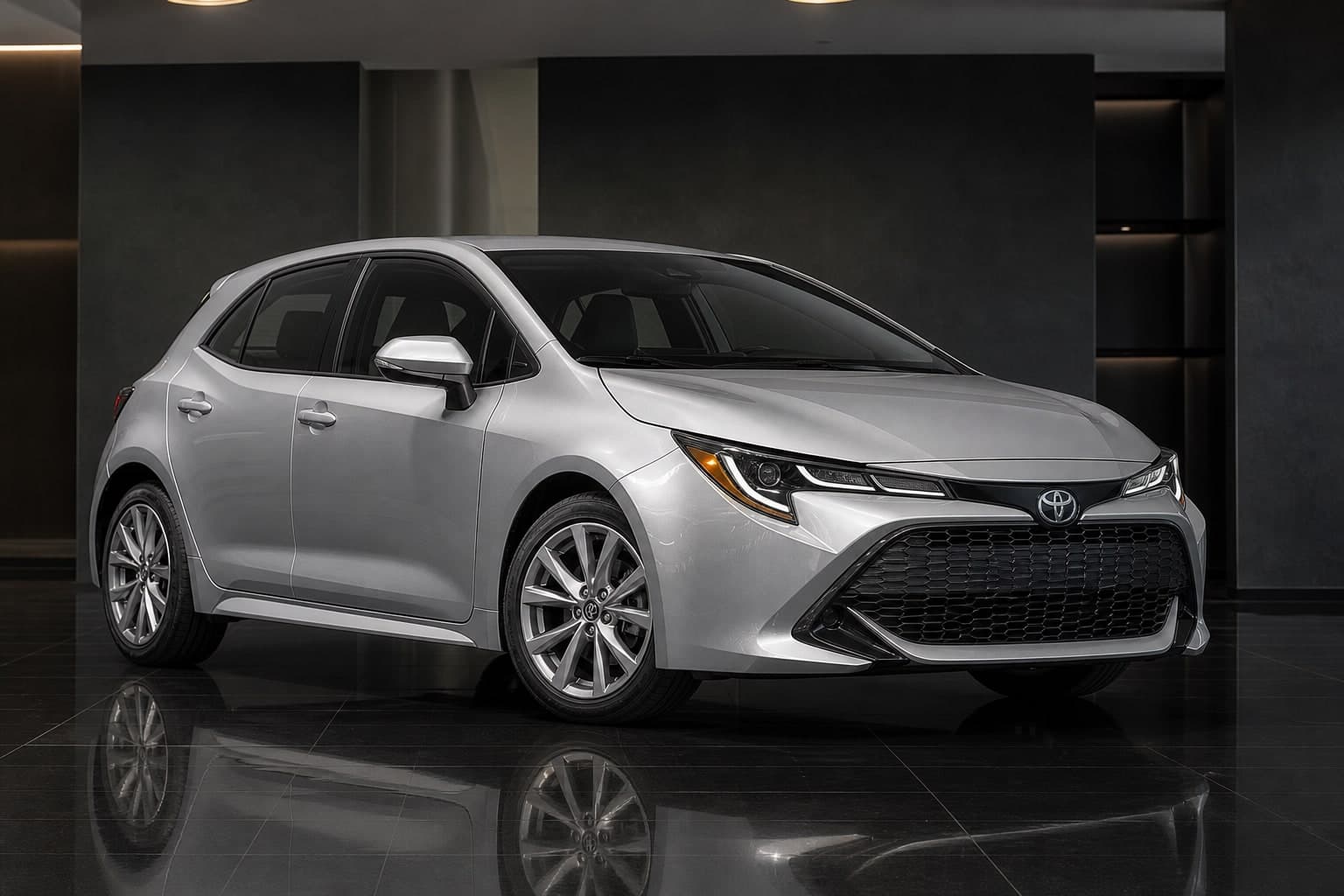
1. Generations & platforms
Corolla E210 (2018/2019–present)
TNGA-C platform, shared with the current C-HR and Prius · Hybrid-focused range (1.8 and 2.0-litre self-charging hybrid), with a less common 1.2-litre turbo petrol offered in some markets · Available as Hatchback, Touring Sports (estate) and Saloon.
Older Corolla generations (pre-2018/2019) and the closely related Auris (the European hatchback nameplate this generation effectively replaced) used earlier, non-TNGA platforms with different known-issue profiles — see those models’ own pages rather than assuming continuity with the information above.
A note on the Corolla’s global significance
The Corolla nameplate has been in continuous production since 1966, becoming the best-selling nameplate in automotive history in 1997 and passing 50 million units sold by 2021. It remains one of the best-selling passenger cars in the world today, sold under closely related specifications across most global markets — which is part of why parts availability and specialist knowledge for this model are exceptionally strong almost everywhere, a genuine practical advantage of buying into such a long-running, high-volume nameplate.
2. Corolla: the Honest Pros
- Toyota’s hybrid system on this generation is genuinely mature technology, directly descended from over two decades of Prius development — electric motors, battery packs and the e-CVT transmission have all proven exceptionally durable in real-world use
- Among the cheapest cars in its class to insure and tax in the UK, and consistently cited as one of the most reliable options in independent buyer’s guides
- Excellent real-world fuel economy on the hybrid variants (low-to-mid 50s mpg is realistic, not just a claimed figure)
- Available across Hatchback, Touring Sports (estate) and Saloon body styles, giving genuine practicality choice within one reliable platform
- Extendable hybrid battery and drivetrain warranty (up to 10 years with annual dealer servicing in most markets) gives long-term peace of mind if you stay on top of the service schedule — see the Hybrid Health Check / Toyota Relax warranty note
3. Corolla: the Honest Cons
- Four documented recalls across this generation’s production run so far — none catastrophic, but worth checking against your specific VIN rather than assuming a “reliable Toyota” has none
- The 1.2-litre turbo petrol (where offered) is a less typical Toyota engine and carries its own documented weak points, distinct from the well-proven hybrid units — most buying guides specifically steer buyers toward the hybrid instead
- Hybrid battery capacity does gradually degrade with age and mileage, most noticeably from around 150,000–200,000km, with early signs sometimes appearing from 100,000km on cars used mainly for short journeys or exposed to extreme temperatures
- Rear brakes on hybrid variants can develop rust or seize from infrequent use — a direct consequence of how much braking is handled by regenerative braking rather than the friction brakes, which is worth understanding as a characteristic of hybrid ownership rather than a fault
- The pre-2023 “Toyota Touch 2” infotainment system is widely criticised as laggy; Toyota Smart Connect on post-2023 cars is a genuine improvement, worth knowing if infotainment matters to you when comparing used examples
4. Known issues — check these before assuming a fault
None of the themes below mean every Corolla will fail this way — they are the documented patterns owners and buyers should check first, including four VIN-specific recalls on the current generation.
12V auxiliary battery weakness — the most common real-world complaint
On any hybrid Corolla, a flat or weak 12V battery (separate from the main hybrid battery pack) is by far the most frequently reported issue — not a failure of the hybrid system itself. A car that won’t start or shows odd electrical behaviour is far more likely to have a weak 12V battery than a failing hybrid battery. Test this first.
Hybrid brake booster software fault (2020 recall)
A documented safety recall covering a software fault that could prevent the hybrid system from correctly entering fail-safe mode under certain conditions — covering 2014–2019 production Corolla and Prius Hybrid. Confirm this has been actioned against the VIN on any car from this production window.
Denso fuel pump recall (2019–2020 production)
A known fuel pump defect affecting a range of Toyota (and other manufacturers’) models using Denso-supplied pumps from this period — can cause the engine to stall or fail to start. Check recall status against your VIN.
CVT torque converter recall (2019 Hatchback only)
A more limited campaign specific to early Hatchback production. Confirm against your VIN if you’re looking at an early E210 hatch.
Steering intermediate shaft cracking (2023–2024 production)
A more recent recall covering a potential cracking fault in the steering intermediate shaft. Worth checking specifically on any newer used example from this window.
1.2-litre turbo petrol — carbon deposit and ignition issues (where fitted)
Distinct from the well-regarded hybrid engines, the less common 1.2 turbo has documented issues including carbon deposit buildup on intake valves (a characteristic of direct-injection engines generally, not unique to this one) and ignition coil failures linked to software interaction. If fuel economy and long-term reliability matter more to you than outright preference for a “normal” petrol engine, most independent guides recommend the hybrid instead.
Rear brake corrosion on hybrid variants (infrequent-use pattern)
Because regenerative braking handles a large share of everyday deceleration, the physical rear brakes on hybrid Corollas can see genuinely light use — which paradoxically leads to surface rust and, in worse cases, seizure, particularly on cars that do a lot of short trips or sit unused for periods. A light grinding noise on the first few brake applications after damp weather is often just surface rust clearing, similar to what’s documented on other hybrid/EV models on this site — but a persistent issue is worth a proper check.
Inverter coolant system & Toyota Relax warranty traps
As with other Toyota/Lexus hybrids, the power electronics (inverter) run on a separate cooling loop from the engine — this is covered in detail in the site’s featured Toyota & Lexus Hybrid Health Check / Provenance Guide, and applies directly to this model. Extended hybrid battery cover (commonly up to 10 years in many markets) is typically conditional on annual dealer servicing; a gap in that record can affect what warranty actually transfers to a new owner — exactly the kind of “warranty trap” that guide covers.
5. UK service interval at a glance (Toyota Corolla)
| Service | Miles / months | Notes |
|---|---|---|
| Scheduled service (Toyota Corolla) | 10,000 / 12 | Whichever comes first for many UK handbooks. Confirm exact figure for your engine. |
| Annual Hybrid Health Check (HHC) | — / 12 | Required to maintain extended hybrid battery warranty eligibility in most markets — don’t skip this even in years without a full service due, if warranty extension matters to you. |
| 12V battery test | — / At every service, or sooner if symptoms appear | The most common real-world issue on this model — load test, not just voltage. |
| Recall/campaign check | — / At every service | Given four documented campaigns on this generation. |
| Rear brake condition check | — / At every service | Watch for corrosion/seizure from infrequent use on hybrid variants. |
| Inverter coolant check | — / Per handbook — see Hybrid Health Check guide | Separate cooling loop from the engine on hybrid variants. |
| Cabin pollen filter | — / 12 | Standard interval for any vehicle. |
The Corolla follows Toyota’s standard service scope, with specific hybrid-system checks alongside conventional items. UK cars typically need annual or ~10,000-mile attention, whichever comes first — confirm the exact figure for your specific engine in the handbook. Intervals are whichever comes first (miles or months) unless noted. They vary by engine, model year and service regime. Confirm in the handbook, service booklet or dealer system for your VIN before you book work. Legal note: Service intervals and specifications shown are indicative and collected from public or community sources. Official schedules may vary by model year, engine code, market, or dealer updates. Always verify the vehicle handbook (VIN) or consult an authorised dealer before work.
6. Official sources & featured guides
Official links are for convenience and accuracy. The Owners Club has no commercial relationship with Toyota Motor Corporation and cannot confirm pricing, availability or booking on their behalf. Confirm the exact recall-checking URL on Toyota UK’s site before relying on it. The Hybrid Health Check guide is the primary cross-model reference for warranty traps on this car.
7. What to actually keep on top of
- 12V battery health, tested under load — the single most common real-world issue on any hybrid Corolla, and easily mistaken for something more serious
- All four documented recalls, checked against the specific VIN — brake booster software (2020), Denso fuel pump (2019–2020), CVT torque converter (2019 Hatchback), and steering intermediate shaft (2023–2024)
- Hybrid battery health on higher-mileage examples (150,000km+), particularly cars that have done a lot of short journeys or spent time in extreme climates
- Rear brake condition on hybrid variants, given the documented infrequent-use corrosion pattern — don’t assume a quiet rear end means healthy brakes
- Annual dealer servicing history, if the extended hybrid warranty matters to you — Toyota’s extended cover (commonly up to 10 years in many markets) is typically conditional on annual dealer servicing; a gap in that record can affect what warranty actually transfers to a new owner. Confirm current terms for your market — see the Hybrid Health Check guide for Toyota Relax warranty traps
- Which engine you have — the hybrid units (1.8 and 2.0) have a genuinely different, stronger reliability track record than the less common 1.2 turbo petrol
8. Own a Toyota Corolla? Protect its resale value
Add it to The Owners Club for free to track its maintenance timeline, import UK MOT history, and transfer verified provenance when you sell. Annual HHC certificates, 12V load tests, recall completion and unbroken dealer service history are exactly what the next researched hybrid buyer will ask for.
- Verified maintenance timeline with dealer and specialist invoices
- UK MOT import (DVSA)
- Hybrid Health Check certificates, 12V tests, recall status and inverter coolant records
- Verified Transfer Pack PDF for sale
Guides & checklists
More Toyota models
Compare platforms, service themes and digital service history tools across the range.
FAQ
How often should you service a Toyota Corolla?+
Most UK cars use an annual service or ~10,000 miles, whichever comes first. Confirm the exact figure for your specific engine in the handbook, and don’t skip the annual Hybrid Health Check if you want to preserve extended battery warranty eligibility.
What platform does the current Toyota Corolla use?+
TNGA-C, shared with the current C-HR and Prius. This is a different, more modern platform from older Corolla generations and the related Auris, which used earlier architectures with different known-issue profiles.
Is the Toyota Corolla really the best-selling car of all time?+
Yes, by nameplate — over 50 million sold since 1966 across twelve generations, a record it took from the Volkswagen Beetle in 1997. It remains one of the best-selling passenger cars in the world today.
My Corolla won’t start — is the hybrid battery dead?+
Almost certainly not. A flat or weak 12V auxiliary battery — separate from the main hybrid battery pack — is by far the most commonly reported cause of starting and electrical issues on this model. Check this first.
How do I prove service history for a Toyota Corolla?+
Given how central the annual Hybrid Health Check is to preserving extended warranty eligibility, a documented, unbroken record of annual dealer servicing is unusually valuable on this model — more so than on a conventional petrol car, where a missed year is less consequential. Recall completion status (four campaigns on this generation) is similarly worth keeping on record precisely.
Corolla owner discussions
Latest conversations from Toyota Corolla owners in the club.
No discussions yet for the Corolla. Be the first owner to start a conversation!
Ask a Question / Post PhotoJoin the Toyota Owners Club Community
Add it to The Owners Club for free to track its maintenance timeline, import UK MOT history, and transfer verified provenance when you sell.