
VW Tiguan · EA888 Gen 3 owner review
2.0 TSI (EA888 Gen 3) Reliability: An Owner’s Perspective on the VW Tiguan (2018+)
The EA888 Gen 3 / Gen 3B under many MK2 Tiguan bonnets is popular across VAG — and that popularity comes with myths. Here is a straight owner view of what improved, what still fails, and how to keep a 2018–2024 car healthy — with a clear note on what is different for 2024+ Tiguan III.

Open the bonnet on a second-generation VW Tiguan (roughly 2018–2024 MK2 / AD1) and you are often looking at a 2.0-litre TSI EA888 Gen 3 or Gen 3B — shared across Audi, Volkswagen and Skoda. Start with platforms and themes on the Volkswagen Tiguan hub, or the VW Tiguan Owners Club landing.
Popularity is not perfection. Written from ownership of a 2018 VW Tiguan 4Motion SEL: if you are buying used MK2 or already own one, this is the honest Gen 3 picture. Tiguan III (2024+) is a different platform generation — see the scope note below.
Scope: MK2 Gen 3 / Gen 3B vs Tiguan III (MQB evo)
This pillar focuses on used MK2 Tiguan petrol ownership (about 2018–2024 in most markets): water pump / thermostat housing, PCV, intake-valve carbon, oil intervals and Haldex Gen 5 on 4Motion cars.
EA888 Gen 3 and Gen 3B (including Budack / b-cycle variants in some codes) are related third-generation EA888 families. Exact engine codes, emissions packs and dual-injection fitment vary by year and market — always verify the code on your car rather than assuming every MK2 Tiguan is identical.
Tiguan III (market launch from early 2024 on MQB evo) is a new generation. Volkswagen's press material cites roughly +3 cm length, luggage volume up to 652 litres, Cd improved to 0.28, and plug-in hybrids with around 100 km electric range in WLTP-oriented messaging — useful context for new-car shoppers, not a substitute for the official brochure for your VIN. Reliability patterns below still apply mainly to the MK2 Gen 3 fleet that dominates the used market today.
The good: why Gen 3 is a massive improvement
Earlier EA888 generations (especially Gen 1 and Gen 2 before ~2014) were infamous for timing-chain tensioner failures and catastrophic oil consumption that could end in a rebuild.
Volkswagen largely fixed those critical flaws for Gen 3.
- Timing chain: revised chain and tensioner. Premature failure is far rarer than on early engines.
- Oil consumption: turbo engines can use a little oil between changes, but the “quart every 1,000 miles” era is largely gone. On a 2018 Tiguan with strict ~5,000-mile (8,000 km) intervals, top-ups between changes are rare.
The bad: common problems you will face
The block is generally robust. Many failures sit in accessories bolted to it. Plan for these:
1. Water pump and thermostat housing leak
The most common Gen 3 EA888 headache. The plastic water pump / thermostat housing sits under the intake manifold. Heat cycles warp or crack the plastic and coolant weeps out.
Symptom: “Low coolant” on the dash, or a sweet syrupy smell near the grille after a drive.
Fix: Replace with the latest revised genuine VW part — or a quality all-aluminium aftermarket housing — and document the job.
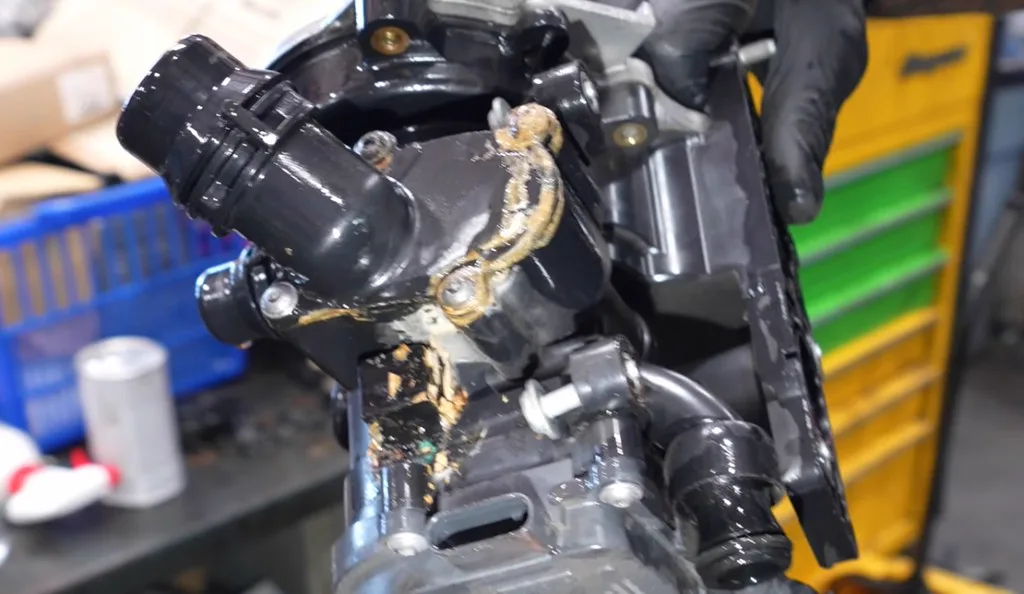
Practical demonstration of EA888 Gen 3 water-pump housing leaks and removal — source of the article photo capture. Watch the water-pump housing demo on YouTube
Need the inspection-first walkthrough? Open the EA888 water pump / thermostat housing diagnostic & access guide.
2. Carbon build-up on intake valves (direct / dual injection)
On direct-injection EA888s, fuel sprays into the cylinder and does not wash the intake valves. Oil vapour from the PCV system can bake onto the valve backs and restrict airflow over time.
Some Gen 3 / Gen 3B variants (more often in Europe, and not on every market or trim) add port injectors alongside direct injection. Dual injection reduces — but does not eliminate — intake-valve carbon. Short-trip driving and neglected PCV still leave deposits; walnut blasting remains a known remedy on high-mileage cars.
Symptom: Rough cold idle, misfires, or slight hesitation under acceleration.
Fix: Walnut blasting every ~60,000–80,000 miles (or ~80,000–100,000 km for many EU cars) restores flow and response on many high-mileage engines when symptoms appear.
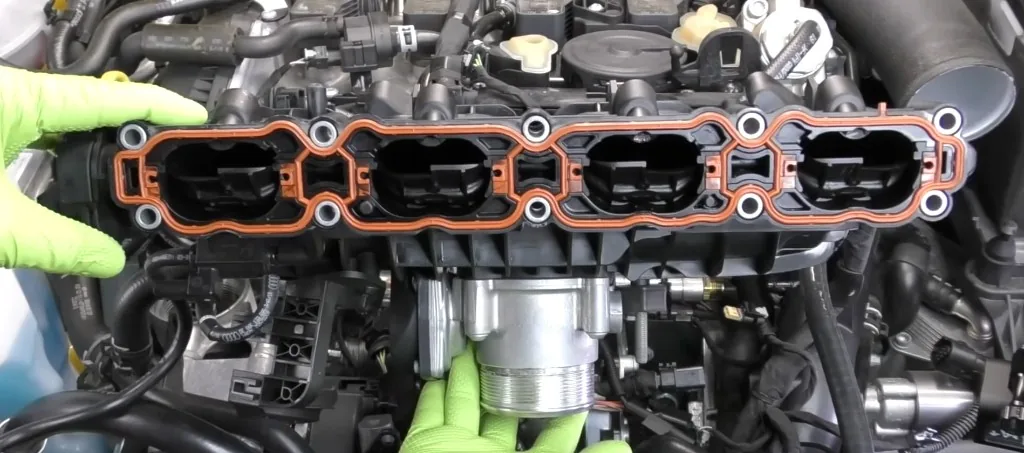
EA888 Gen 3 Intake Manifold Removal (2.0 TSI / 1.8 TSI)
Step #1 required to access intake valves for walnut blasting (carbon clean) or fuel injector replacement. Step-by-step DIY tutorial on EA888 Gen 3.
Watch manifold removal guide on YouTube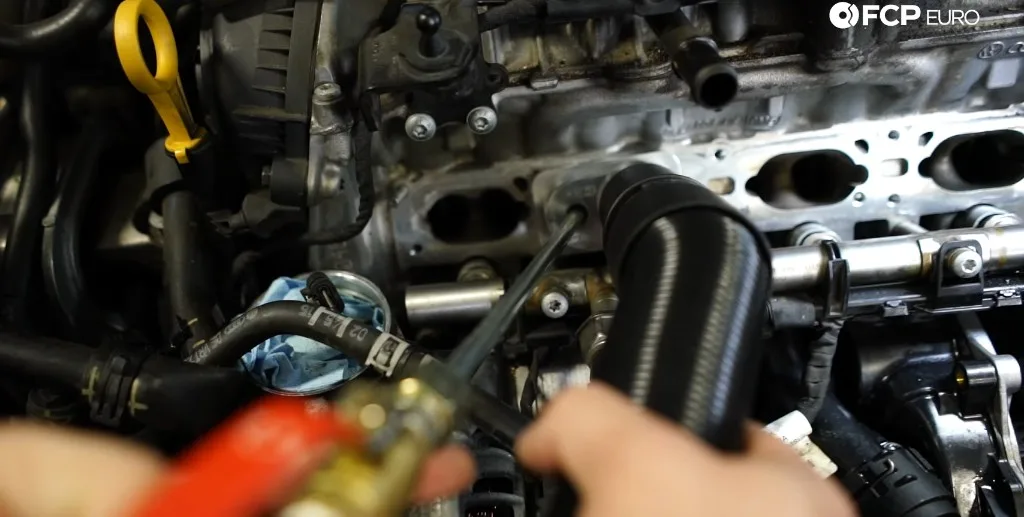
3. PCV valve failure (oil separator)
The PCV controls crankcase pressure. The internal diaphragm can tear with age.
Symptom: High-pitched whistle from the bay, rough idle, rising oil use — ignored long enough, it can contribute to rear main seal issues.
Fix: PCV replacement is usually a short, affordable DIY (often under 15 minutes) when you have the right part.
Ignoring PCV valve failure allows excess crankcase pressure to build up, which frequently blows out the Rear Main Seal. Replacing the PCV valve preventively avoids costly labour to drop the gearbox.
Read FCP Euro EA888 Gen 3 Definitive GuideFCP Euro technical overview of EA888 Gen 3 oil leaks, PCV design changes, and rear main seal labour — practical context for the alert above. Watch the FCP Euro EA888 Gen 3 overview on YouTube
Real-world costs and service intervals
Indicative independent-garage ranges for a MK2 Tiguan 2.0 TSI (EA888 Gen 3). Dealer pricing and your market will vary — use this as a budgeting floor, not a quote.
| Job | Interval | UK (£) | RO (RON) | EU (€) |
|---|---|---|---|---|
| Water pump + thermostat | Inspect ~60,000 km — replace at first leaks | £350–£650 | 2.000–3.500 RON | €400–€750 |
| PCV (oil separator) | Preventive 60,000–80,000 km | £40–£120 | 250–600 RON | €50–€140 |
| Walnut blasting (intake valves) | 80,000–100,000 km | £200–£350 | 1.200–2.000 RON | €250–€400 |
| Haldex Gen 5 service | 30,000–40,000 km (fluid + strainer) | £90–£180 | 500–900 RON | €100–€200 |
| Oil + filter | Prefer ~5,000 mi / 8,000 km (max ~10,000 km / 12 months) | £80–£150 | 400–750 RON | €90–€160 |
Your locale column is highlighted. Figures are mid-2020s workshop ballparks for parts + labour; aluminium pump housings and walnut blasting sit toward the top of each band.
Engine codes: which EA888 is under the bonnet?
MK2 Tiguan petrol 2.0 TSI engines in the Gen 3 / Gen 3B family share failure patterns — but power, emissions hardware and injection behaviour differ by code. Read the sticker / ECU label before you buy parts or trust a seller’s “2.0 TSI” shorthand.
| Power | Codes | Years (approx.) | Notes |
|---|---|---|---|
| 180 HP / 132 kW | CZPA, DGVA | 2017–2020 | Budack / B-cycle — high geometric compression, efficient motorway manners when driven gently. |
| 190 HP / 140 kW | DKZA, DNNA | 2019–2024 | Gen 3B with GPF/OPF on many EU cars — dual injection more common; still needs short oil intervals. |
| 220 HP / 162 kW | CHHB, CXDA | 2016–2019 | More GTI-like tune — stronger mid-range, typically thirstier in urban stop-start. |
| 245–320 HP | DNUC, DNFG | 2020–2024 | Performance / Tiguan R territory — 320 HP is the R, not every R-Line badge. Verify the exact code before assuming output. |
Year ranges are approximate and market-dependent. Always match oil spec, spark plugs and service campaigns to the code on your car.
Transmissions: DSG DQ381 (EU/UK) vs Aisin 8-speed (North America)
The gearbox on an MK2 Tiguan varies significantly by the market it was sold in:
If your EA888 is paired with an automatic, also check the DSG Maintenance Guide (DQ250 / DQ381).
- 7-Speed DSG (DQ381 — wet clutches): Standard on most EU and UK cars. Dedicated DSG fluid + filter service is due around every 60,000 km — full intervals and filter notes in our DSG Maintenance Guide (DQ250 / DQ381). Extremely quick shifts, but sensitive to dirty fluid.
- 8-Speed Automatic (Aisin AW-1 / AQ300): Standard on North American markets (USA/Canada). Classic torque-converter automatic — smoother in parking manoeuvres and dense city traffic, less snappy on dynamic driving. ATF change roughly every 80,000–100,000 km.
Quick specs: VW Tiguan MK2 2.0 TSI (2018–2024)
At-a-glance figures for the common petrol tunes. Exact kerb weight and 0–100 times vary by trim, drivetrain and market.
| Parameter | 2.0 TSI 180/190 HP (CZPA / DKZA) | 2.0 TSI 220 HP (CHHB / CXDA) |
|---|---|---|
| Max torque | 320 Nm @ 1,400–3,940 rpm | 350 Nm @ 1,500–4,400 rpm |
| Gearbox | DQ381 + 4Motion | DQ381 + 4Motion |
| Kerb weight | ~1,645–1,705 kg | ~1,660–1,715 kg |
| Boot volume | 615–1,655 L | 615–1,655 L |
| 0–100 km/h | ~7.7 s | ~6.5 s |
EU/UK petrol MK2 figures shown with DQ381 + 4Motion. North American cars often use the Aisin 8-speed instead — see transmissions above.
Real-world fuel consumption (owner ranges)
Brochure WLTP figures are optimistic. These owner-style bands assume warm engines, quality fuel and realistic speeds — not hypermiling contests.
| Spec | Urban | Motorway steady | Mixed |
|---|---|---|---|
| CZPA 180 Budack | 10.5–12.0 | 7.0–7.8 | 8.5–9.2 |
| DKZA / CHHB 190–220 | 11.5–13.5 | 8.2–9.0 | 9.5–10.5 |
Figures in l/100km. Short trips, cold starts, roof boxes and aggressive Sport mode push urban numbers higher.
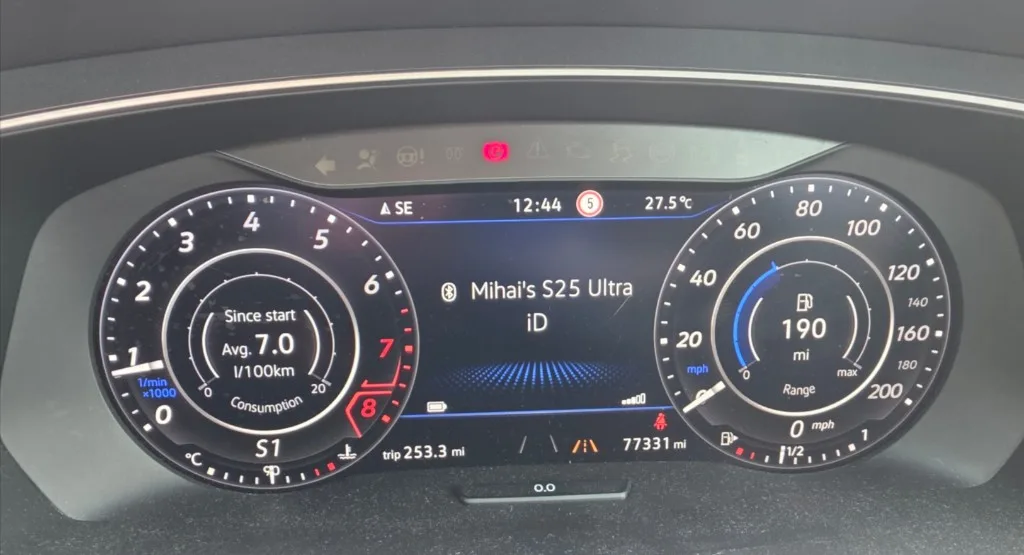
Why the engine code belongs in your digital garage
Oil spec, injection behaviour (DI vs dual), GPF service notes and campaign eligibility all hang off the engine code — not the trim badge. Log CZPA / DKZA / CHHB (or whatever is on your sticker) once, then stamp oil at ~8,000 km, Haldex strainer cleans every ~30,000 km, and water-pump jobs as they happen. When you sell, a Transfer Pack carries that provenance with the car — more than a stamped book.
Create a free garage and start the Digital Service History before the next oil change.
Pre-purchase checklist: used Tiguan 2018–2024
Buying used? Walk this list before you hand over the deposit — most Gen 3 headaches announce themselves on a cold start and a short test drive.
- Water pump / thermostat housing — look for pink or green crust and coolant residue under the intake manifold; ask about prior housing replacements.
- Cold start noise (0–3s): High-pressure injection ticking (HPFP) is normal. A heavy timing-chain rattle or slap upon initial turnover hints at tensioner wear or low oil pressure.
- PCV whistle — listen for a high-pitched squeal at idle and check for unusual suction at the oil filler cap.
- Cold idle misfire & PCV squeal: A high-pitched squeal at idle paired with engine stuttering during the first minute indicates a torn PCV membrane and heavy valve carbon build-up.
- Haldex Gen 5 (4Motion) — from a gentle incline, accelerate firmly and confirm rear drive engages without ESC drama or a silent front-wheel-drive feel.
- Idle / carbon — cold idle should settle cleanly; persistent shake, misfire feel or hesitation under load hints at intake-valve carbon.
- Panoramic sunroof drains — check headliner edges and footwell carpets for water marks; see our drain prevention guide.
- Oil intervals — flag stamp books or invoices showing changes longer than ~10,000 miles / 15,000 km. Prefer ~5,000 miles / 8,000 km (or another short owner interval) with VW 502 00 / 504 00 (or current market spec).
Real-world advice from a Tiguan owner
Gen 3 is not a “bad” engine — it is intolerant of neglect. Treat the schedule casually and it will punish the wallet.
- Halve the oil interval: Dealers often allow longer flexible intervals (commonly around 10,000 miles / up to ~15,000 km depending on market and LongLife programming). Owner guidance from this MK2: prefer roughly half that — about 5,000 miles / 8,000 km, or at least well under 10,000 miles / 15,000 km, with quality synthetic to VW 502 00 / 504 00 (or current market spec). Clean oil protects the chain and turbo; long stamps are a red flag when buying used.
- Service Haldex (4Motion): AWD needs love too — follow our VW Tiguan Gen 5 Haldex service guide (fluid + pump strainer).
- Keep meticulous records: Documenting water pump, PCV, walnut blast and Haldex work proves care to the next buyer and supports the asking price.
Log it in The Owners Club
Knowing the failure points is half the battle. The other half is proving you fixed them — store the engine code, then log oil changes, PCV, water pump and Haldex jobs so they become resale ammunition in one digital garage.
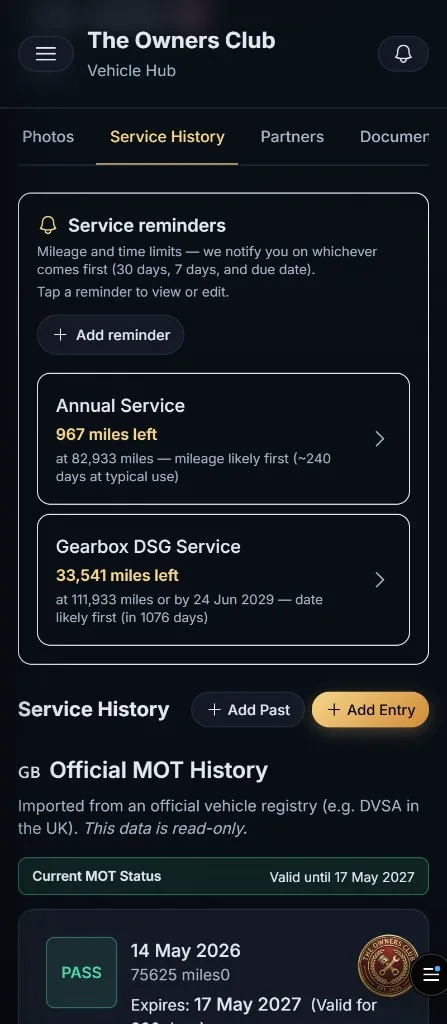
Digital Service History — log oil, PCV, pump and Haldex
- Own a Tiguan? Add it to your garage, save the engine code (CZPA, DKZA, CHHB…) and log water-pump replacements, PCV swaps and Haldex services as they happen.
- Selling later? Build a Transfer Pack–ready provenance trail so the next owner sees more than a stamped book.
- Browse workshop guides matched to VAG platforms — from Haldex strainer cleans to O2 / lambda sensor jobs and sunroof drains.
- Start a free Digital Service History and keep every invoice photo next to the mileage.
- 4Motion owners: follow the full Haldex Gen 5 service guide (fluid + pump strainer — not fluid-only).
Related Tiguan owner guides
This pillar sits with the rest of the MK2 cluster:
- EA888 water pump / thermostat housing — diagnostic & access — inspection-first satellite before full R&R photos.
- Haldex Gen 5 / 4Motion service — strainer clean, not fluid-only.
- Panoramic sunroof drain prevention — stop cabin floods early.
- Hidden features (OBDeleven / VCDS) — staging, comfort windows and more.
- Bank 1 Sensor 1 O2 / lambda replace (CZPA, top access) — P0135 heater circuit DIY without a lift.
Log every oil change and repair
Log the engine code once, then every oil change (~8,000 km), PCV swap, water-pump job and Haldex service in a digital service history — create a free garage on The Owners Club.
Should you buy a used Tiguan 2.0 TSI?
Yes for MK2 — if you (or the seller) respect the schedule. Gen 3 fixed the catastrophic Gen 1/2 failures, but it still punishes long oil intervals, ignored coolant weeps and a neglected Haldex. Buy the car with records; walk away from mystery mileage and 15,000-mile oil stamps. For brand-new 2024+ Tiguan III, use the official press kit / brochure for specs and treat early reliability as still maturing.
Digital garage — oil, pump, Haldex and Transfer Pack in one place
Ready to protect your Tiguan investment?
Don't leave maintenance history scattered across paper receipts. Add your Tiguan to the Digital Garage, log preventive oil changes, the water-pump job and Haldex service — then at resale generate a verified Transfer Pack that backs the asking price.
Create free garageSources & technical documentation
Use these primary and public references when you want factory context, campaign checks or community discussion. Prefer VIN-specific dealer / authority lookups over generic forum claims.
The Owners Club is an independent owner platform and is not affiliated with, endorsed by or sponsored by Volkswagen AG or Volkswagen Group brands.
- Volkswagen Newsroom — all-new Tiguan world premiere (19 Sep 2023) — Official MQB evo / Tiguan III launch messaging (market from early 2024), hybrid range context and packaging highlights.
- Volkswagen Newsroom — Tiguan topic hub — Living press collection for Tiguan generations; check current WLTP / brochure figures for your market rather than copying old headlines.
- SSP 606 — Audi 1.8l / 2.0l TFSI EA888 (Gen 3) — Public self-study programme listing for third-generation EA888 architecture (training document, not a workshop manual).
- SSP 645 — Audi 2.0l TFSI engines (EA888 Gen 3B developments) — Public SSP listing for later 2.0 TFSI EA888 evolutionary changes, including Gen 3B topics.
- NHTSA recall / complaint / manufacturer communication search (USA) — Search by VIN or year/make/model. Plastic water-pump housing leaks are widely discussed as service repairs; always confirm whether your VIN has an open safety recall or service action.
- NHTSA manufacturer communication — Tiguan coolant bottle service action (example PDF) — Related cooling-system campaign example (coolant bottle / level-sensor connector), not a universal water-pump recall — useful reminder that low coolant needs diagnosis, not internet guesswork.
- GOV.UK — check if a vehicle has been recalled (UK / DVSA) — UK safety-recall checker for registration or make/model/year.
- KBA Rückrufdatenbank (Germany) — Official German recall database for citizens — search by brand/model or recall codes.
- What Car? — Used Volkswagen Tiguan 2016–2024 review — Independent used-car overview of the second-generation Tiguan.
- Auto Express — Used Volkswagen Tiguan (Mk2, 2016–2024) buyer's guide — Independent used-buyer overview of the second-generation Tiguan (reliability caveats included).
- VW Vortex — carbon build-up on newer VW DI engines (owner discussion) — Independent forum thread on whether dual injection eliminates deposits (community consensus: reduces, does not erase). Anecdotal — not a TSB.
- Internal: VW Tiguan Haldex Gen 5 / 4Motion service guide
- Internal: VW Tiguan panoramic sunroof drain prevention
- Internal: Replace Bank 1 Sensor 1 O2 / lambda — top access (Tiguan CZPA)
Disclaimer
Owner perspective based on a 2018 VW Tiguan 4Motion SEL and common Gen 3 community experience — not a substitute for a pre-purchase inspection, dealer diagnosis or manufacturer technical bulletins. The Owners Club is not affiliated with Volkswagen AG or any Volkswagen Group brand. Engines, emissions packs and software vary by year and market. External links are provided for research; always verify campaigns against your VIN.
Keep it in one digital service history
Import official DVSA MOT history, log DIY and garage work, and build provenance buyers trust — free to start.