
Ford · Mach-E · Puma Gen-E · 12V · Software
Ford Electric — 12V Care, Software Currency & Provenance Guide
Covers Ford Mustang Mach-E and Ford Puma Gen-E. Independent owners’ resource — not affiliated with, endorsed by, or sponsored by Ford Motor Company. Specifications, recall status and software details change — always confirm against your handbook (VIN) or an authorised Ford dealer before booking work.
Why this guide exists
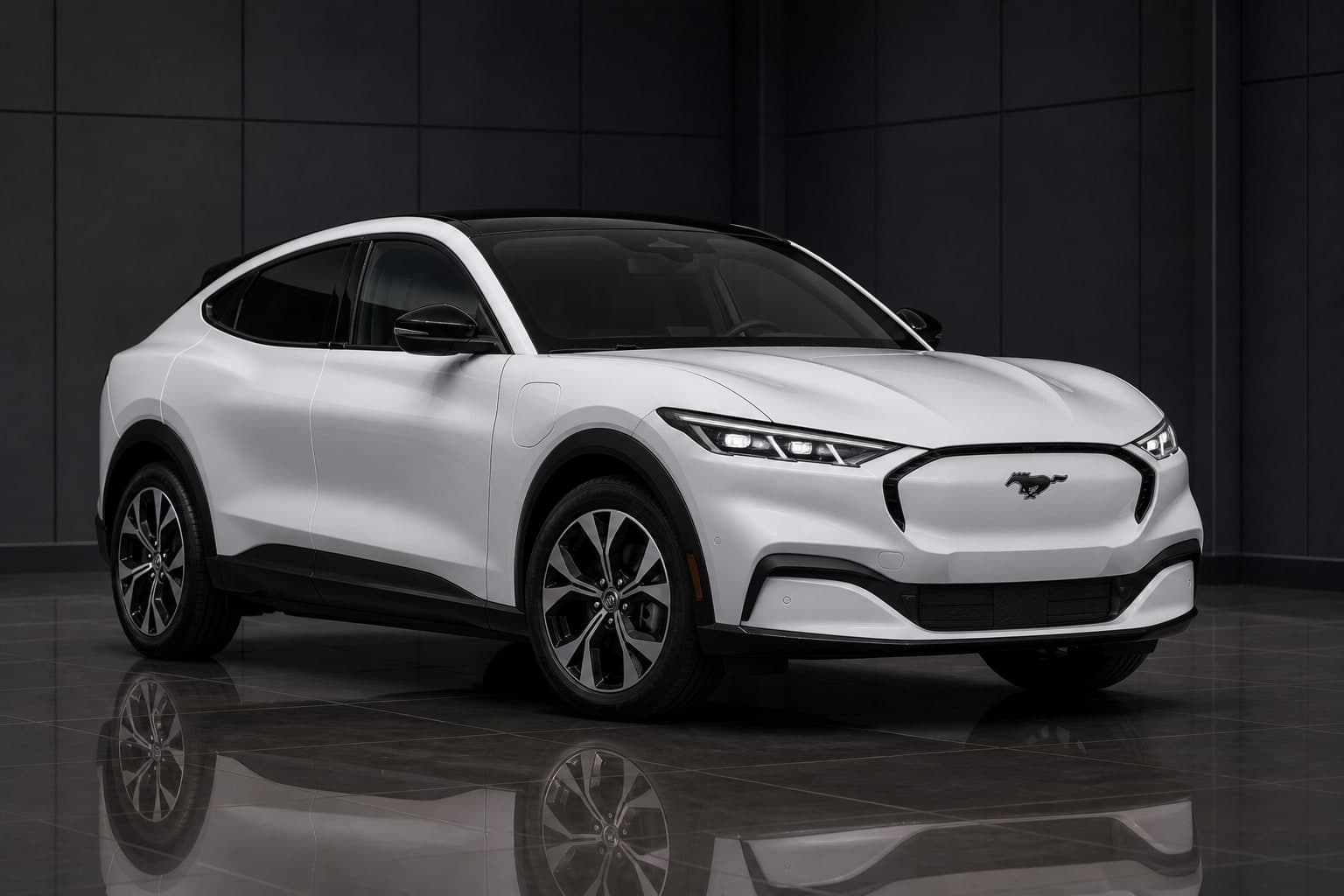
Ford’s two current UK electric models sit at opposite ends of the EV-engineering spectrum — the Mustang Mach-E on a dedicated EV platform (CX727), the Puma Gen-E on an adapted combustion platform — but ownership research on both keeps circling back to the same two things: 12V battery health, and staying current on software/recall campaigns. This guide pulls both themes into one place so you’re not re-reading the same checks twice across two model pages.
Part 1 — 12V battery care
Every EV has two separate battery systems: the high-voltage pack that drives the car, and a conventional 12V battery that wakes the car up, runs the locks, and powers onboard electronics before the high-voltage system engages. A weak or flat 12V battery can leave either Ford EV completely unresponsive even with a fully charged main battery — and on the Mach-E specifically, it’s the root cause of one of the most serious documented issues on this site (see Part 2).
General good practice, both models
- Get the 12V battery load-tested, not just voltage-checked, at every service — a battery can show an acceptable resting voltage and still fail under load.
- If the car will sit unused for more than a week or two, a trickle charger is the simplest prevention.
- A car that won’t wake up, won’t unlock, or shows electrical gremlins (infotainment glitches, warning lights that don’t correspond to an obvious fault) is more often a 12V issue than a high-voltage battery problem — check the cheaper, more common cause first.
Mustang Mach-E specific
If the 12V battery drops below 8.4 volts, affected model years (2021–2025) can lose the power needed for electronic door releases to work — see Part 2 for the full recall detail and the manual override procedure. This is a genuine passenger safety consideration, not just an inconvenience, and is the single most important 12V-related thing to check on this model.
Puma Gen-E specific
Too new for a comparable documented pattern yet, but apply the same general precautions — this is exactly the kind of thing this guide will be updated to reflect as real ownership reports come in.
Part 2 — Recall and software provenance
This is where the two models differ most. The Mach-E has a well-documented, multi-part recall history; the Puma Gen-E doesn’t yet, simply because it’s a much younger model. Treat the difference as a reflection of age, not necessarily of underlying quality — but it does mean the checks below matter far more on a used Mach-E than on a Gen-E.
Mustang Mach-E — what to check on any used example
| Issue | Affected years | What to check |
|---|---|---|
| High-voltage battery main contactor overheating | 2021–2022, Extended Range/GT | Confirm both the software update (recall 22S41) and, if applicable, the hardware replacement of the High Voltage Battery Junction Box (recall 23S56) have been completed. |
| 12V-related door-lock fault | 2021–2025 (very large recall, 197,000+ vehicles) | Confirm the powertrain control module / secondary diagnostic module software update has been applied. Know the manual override regardless: pull the interior door handle once to unlock, a second time to open. |
| BECM software miscalibration after repair | 2023–2025, built July 2023–August 2025 | If the car has had any prior battery-related repair, specifically ask whether a Battery Energy Control Module was replaced or updated, and whether this recall (announced September 2026) has been checked against the VIN. |
How to check: log into your account at ford.co.uk to see recall status for your VIN, or call a dealer directly with the VIN in hand. Do this before assuming any symptom is unrelated to a known issue — with this many distinct campaigns on one model, checking first saves a lot of guesswork.
Puma Gen-E — what we know so far
No comparable recall or software-issue pattern has been widely reported yet, as UK deliveries only began in 2025 and the model received a significant battery/software update for the 2026 model year. Worth knowing:
- Confirm whether a used example is pre- or post-2026-update, since this affects both range and available features (BlueCruise) — not a fault, just a genuine specification difference worth knowing at purchase.
- Ford’s other EV (the Mach-E) has had real software-related recalls, which is a reasonable prompt to check for updates as routine practice on the Gen-E too, even without a specific issue to point to yet.
- This section will be updated as real ownership data comes in.
A general principle for Ford EV ownership
Across both models, the pattern is consistent: known issues on Ford’s EVs have tended to be software- or electronics-related rather than mechanical, and Ford has generally addressed them through updates or recalls rather than owners needing to find independent fixes. That’s a reasonably good sign for long-term ownership — but it also means checking current software and recall status is more valuable on a Ford EV than checking, say, fluid levels would be on a combustion car. Make it the first thing you do at every service, and the first thing you check before buying used.
Related pages on this site
- Ford Mustang Mach-E Owners Club → — full known-issues detail and service schedule.
- Ford Puma Gen-E Owners Club → — full known-issues detail and service schedule.
- Ford & Stellantis — Wet Belt, PowerShift & Provenance Guide → — the equivalent guide for Ford’s combustion and PHEV range.
- 12V battery drain: what to check before assuming a fault → — general cross-brand EV guide.
- How to prove full service history when selling →
Independent resource
Not affiliated with, endorsed by, or sponsored by Ford Motor Company. Recall status, software campaigns and specifications change — always confirm against your handbook (VIN) or an authorised Ford dealer before booking work.
Keep it in one digital service history
Import official DVSA MOT history, log DIY and garage work, and build provenance buyers trust — free to start.